
College of Science & Engineering

Sophia Love
- Doctor of Philosophy (Natural and Physical Sciences)
- sophie.love@jcu.edu.au
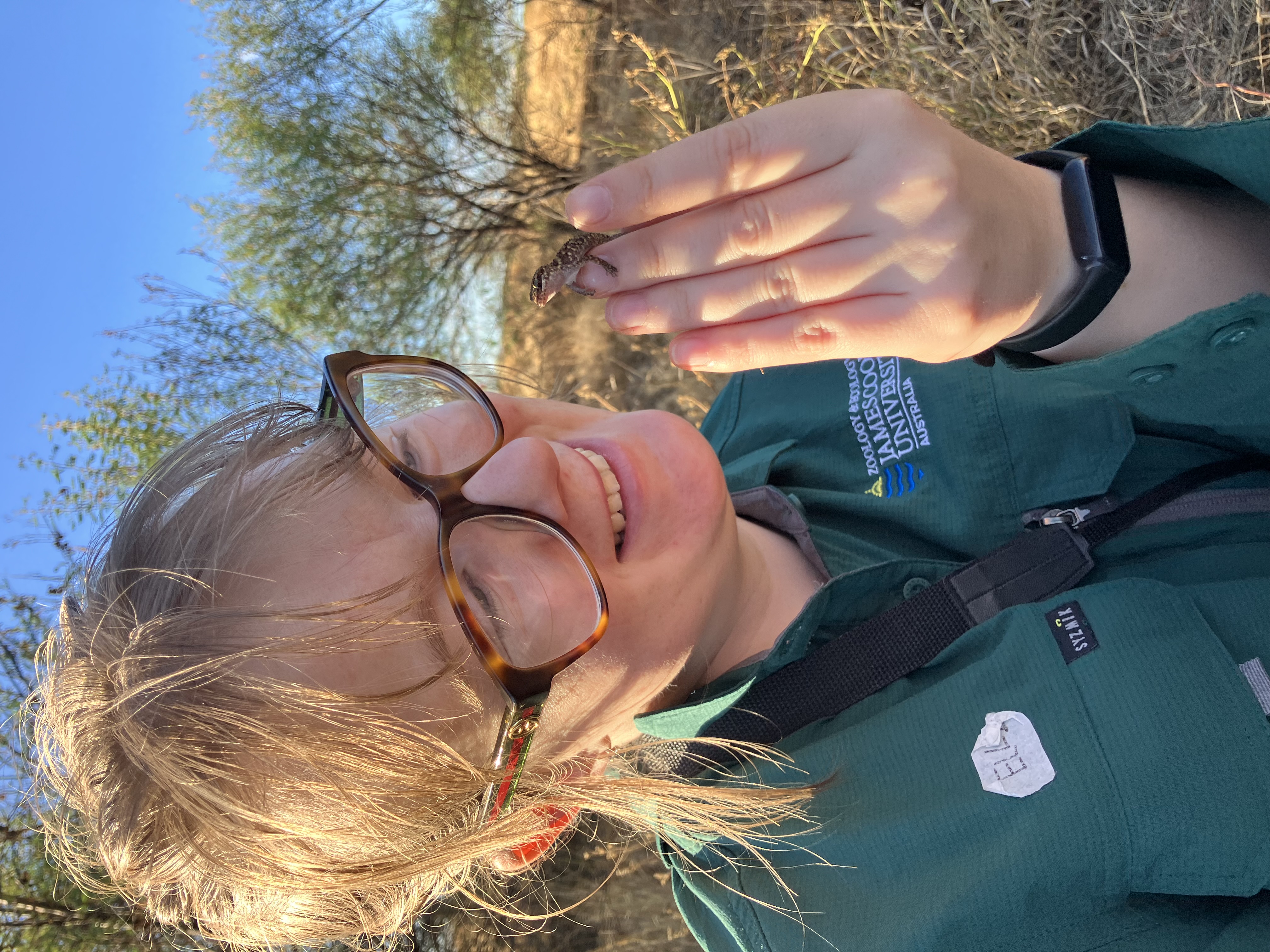
Elle Robertson
- Doctor of Philosophy (Agriculture, Environmental and Related Studies)
- elle.robertson@jcu.edu.au

Jenny Fisher
- Associate Dean, Learning and Teaching
- jenny.fisher@jcu.edu.au

Ambili Narayanan
- Doctor of Philosophy (Natural and Physical Sciences)
- ambili.narayanan@my.jcu.edu.au
Mikaeylah Davidson
- Postdoctoral Research Fellow
- mikaeylah.davidson@jcu.edu.au
Liuxin Chen
- Adjunct Lecturer
- liuxin.chen@jcu.edu.au

Douchan Hanuise
- Doctor of Philosophy (Agriculture, Environmental and Related Studies)
- douchan.hanuise@my.jcu.edu.au

Thomas Napier
- Doctor of Philosophy (Information Technology)
- thomas.napier@jcu.edu.au
Sarah Lawless
- AIMS@JCU Research Fellow: Ocean Governance
- sarah.lawless@jcu.edu.au
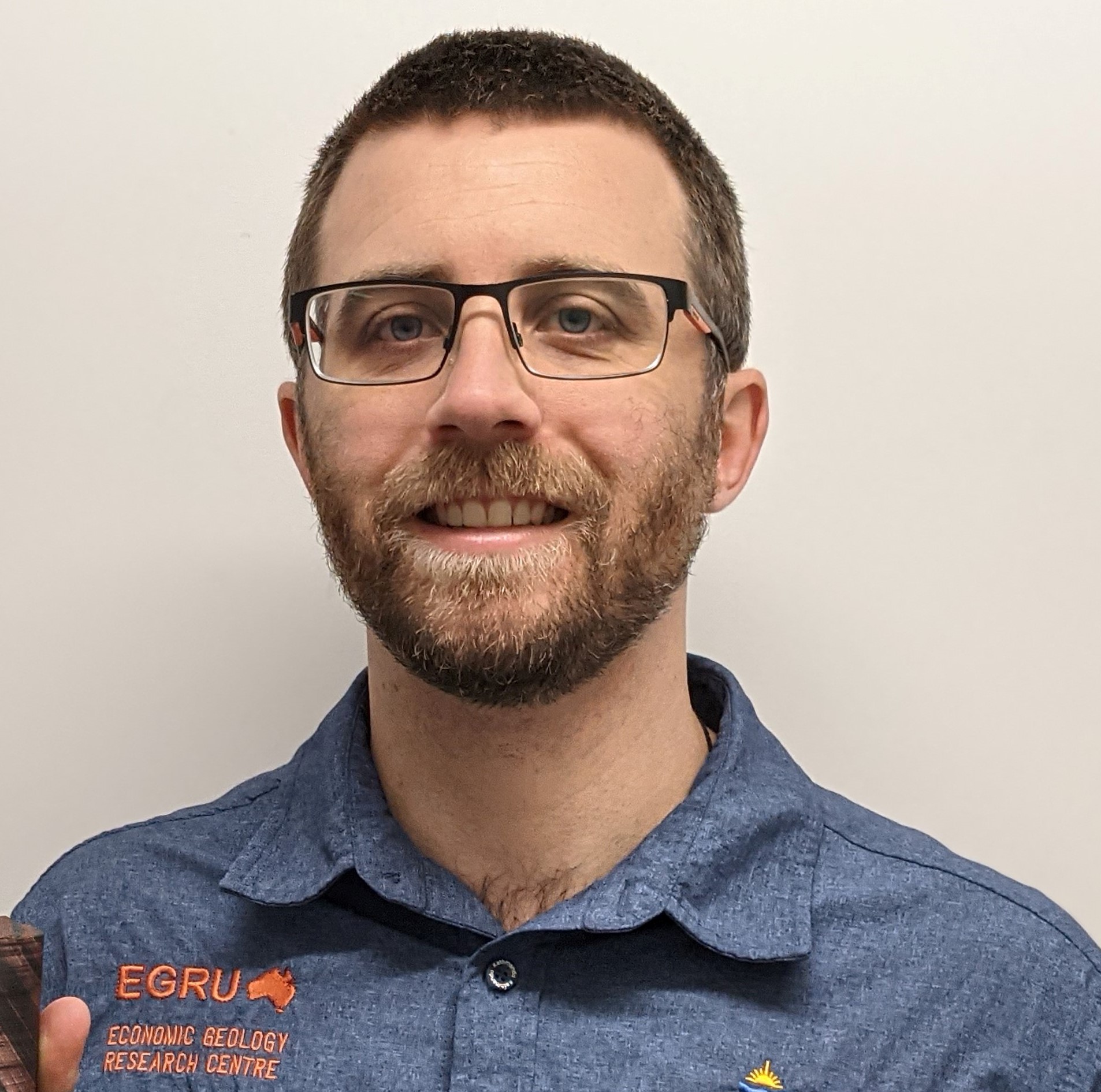
Alex McCoy-West
- Senior Lecturer, Exploration Geochemistry
- alex.mccoywest@jcu.edu.au
Develop the ResPax (digital) Passbook (Old ID 27496)
To develop digital tools for collecting tourism data in the region to enable better decision-making through various data mining approaches.
Investigating the behavioural ecology of diving and feeding in a cryptic marine mammal: the Dugong (Old ID 27881)
As air-breathing, bottom-feeding marine mammals, dugongs must dive to survive and thrive. Quantifying the diving and feeding behaviours of dugongs in three dimensions is a missing link in the science basis for the conservation of this Vulnerable species. This project will use advanced sensing technology to understand how seagrass biomass and dugong activity and energetics influence their diving and feeding behaviors. The resultant improved fine-scale understanding of these behaviors will provide important new information about their risk from vessel strike and the potential energetic consequences of habitat loss associated with extreme weather events and human disturbance.
ResPax Digital Passbook (Phase II) (Old ID 29015)
To continue the Phase I of project to further develop digital tools for collecting tourism data in the region to enable better decisionmaking.
Understanding the ecological significance of fisheries-dolphin interactions along the Sindhudurg coast in Maharashtra, India. (Old ID 26602)
I aim to study the ecological significance of interactions between coastal fisheries and Indian Ocean humpback dolphins (Sousa plumbea) along the Sindhudurg coast of Maharashtra, India. I will use a multi-methods approach to record dolphin foraging behaviour and fisher perceptions towards their operational interactions with dolphins. This study will provide key insights on dolphin foraging strategies, space-use and the impact of dolphin interactions on the socio-economics of coastal fisheries to inform a holistic and inclusive conservation management strategy for S. plumbea. This project will be the first in India, to understand how dolphins survive and adapt to a fishery-dominated landscape.
Monitoring the distribution and abundance of dugongs (and in-water, large marine turtles) within the GBRWHA using a combined aerial observer and imagery approach (Old ID 27811)
This project aims to: (1) to monitor the trends in the abundance and distribution of dugongs within the GBRWHA and (2) contribute to the transition to the use of novel imagery survey technologies to enhance survey methods and accuracy in abundance estimates. The project will be conducted in five main stages which will include: the development of a Traditional Owners engagement strategy and the drafting and submitting regulatory permit applications (stage 1), the development of the survey design and data collection protocols and undertake observer training (stage 2), conduct the dugong observer surveys and imagery experimental work within the GBRWHA (stage 3) and the production of a final report including summary of all survey report findings and advice about the implications of the findings for the conservation and management of dugongs and large marine turtles within the GBRWHA (stage 4).
Exploratory study of effects of sample storage/stabilisation on Cu isotope compositions of groundwater, and linkage between groundwater and proximal soil profiles. (Old ID 29017)
The aims of this collaborative project between JCU and Geoscience Australia are simple. Geoscience Australia have legacy groundwater samples from active bores through their previous hydrogeochemical surveys (e.g. Northern Australia Hydrogeochemical Survey), where both acidified and unacidified samples have been kept in storage, some for up to several years. Copper concentrations measured at/near the time of sampling are variable, with some being in the sub-ppb range and others significantly higher. For some bores, proximal soil and rock samples are also available. This project will leverage all the above towards the following objectives: 1. Analyse Cu concentrations and isotope compositions for a small cohort of legacy groundwater samples (~10). 2. Analyse Cu isotope compositions in proximity-matched soil/rock samples. Where spatially matched soil and/or core rock samples are available, an additional subset of these solid samples will be processed and analysed to characterize their Cu isotope compositions and compare to that of matched groundwater samples. 3. Collate all results and jointly interpret with Geoscience Australia
Sustainable REE extraction from Australian ores using environmentally friendly reagents, advanced characterisation techniques and geological knowledge
This project aims to improve the sustainable extraction of rare earths from Australian ores using environmentally friendly reagents.
Optimising the geophysical ore body model to aid in the discovery of new critical mineral deposits
This project aims to develop advanced geophysical tools that can help exploration companies identify critical mineral resources. Current geophysical exploration methods—such as magnetic, electric, gravimetric, magnetotelluric, radiometric, and seismic surveys—are commonly used in the industry to detect geophysical anomalies. However, many detected anomalies do not contain mineralization due to a lack of tools to identify the specific geophysical signatures of ore bodies.
Our goal is to create tools that enable explorers to distinguish between barren and mineralized anomalies, enhancing the accuracy of mineral discovery. Currently, there is limited knowledge on the specific geophysical responses of mineralized ore bodies. Some preliminary research by CSIRO on IOCG deposits in Cloncurry suggests that combining geological and petrophysical data can model an ore body's geophysical response.
Emerging technologies for advanced geochemical exploration undercover
Isotope geochemistry can provide powerful insights to the sources or process involved in the formation of an ore deposit. Weathering ore bodies produce unique isotopic fingerprints which can be tracked by using groundwater to undertake exploration undercover. There has been increasing commercial interest in searching for Cu a critical element for the green energy transition through this sustainable technique. However, current approaches suffer from several limitations due to the saline nature of groundwater which limits the sample size that can be routinely processed. This project will use automated separation techniques to achieve greater enrichment factors to enable high precision isotope measurements.
High-throughput neutron tomography core scanner for critical minerals resources
This project aims to develop a drill core scanner based on neutron tomography technology.
Start Date:
01 Jan 2011
End Date:
01 Jan 2022
Title:
J.C. Jaegar PhD Scholarship
Start Date:
01 Jan 2010
Start Date:
01 Jan 2013
Title:
PHD, James Cook University
Start Date:
01 Jan 2024
End Date:
01 Jan 2028
Start Date:
01 Jan 2009
End Date:
01 Jan 2010
Start Date:
01 Jan 2018
End Date:
01 Jan 2021
Start Date:
01 Jan 2016
End Date:
01 Jan 2018
Start Date:
01 Jan 2014
End Date:
01 Jan 2016
Title:
English