
Tropical Water & Ecosystems
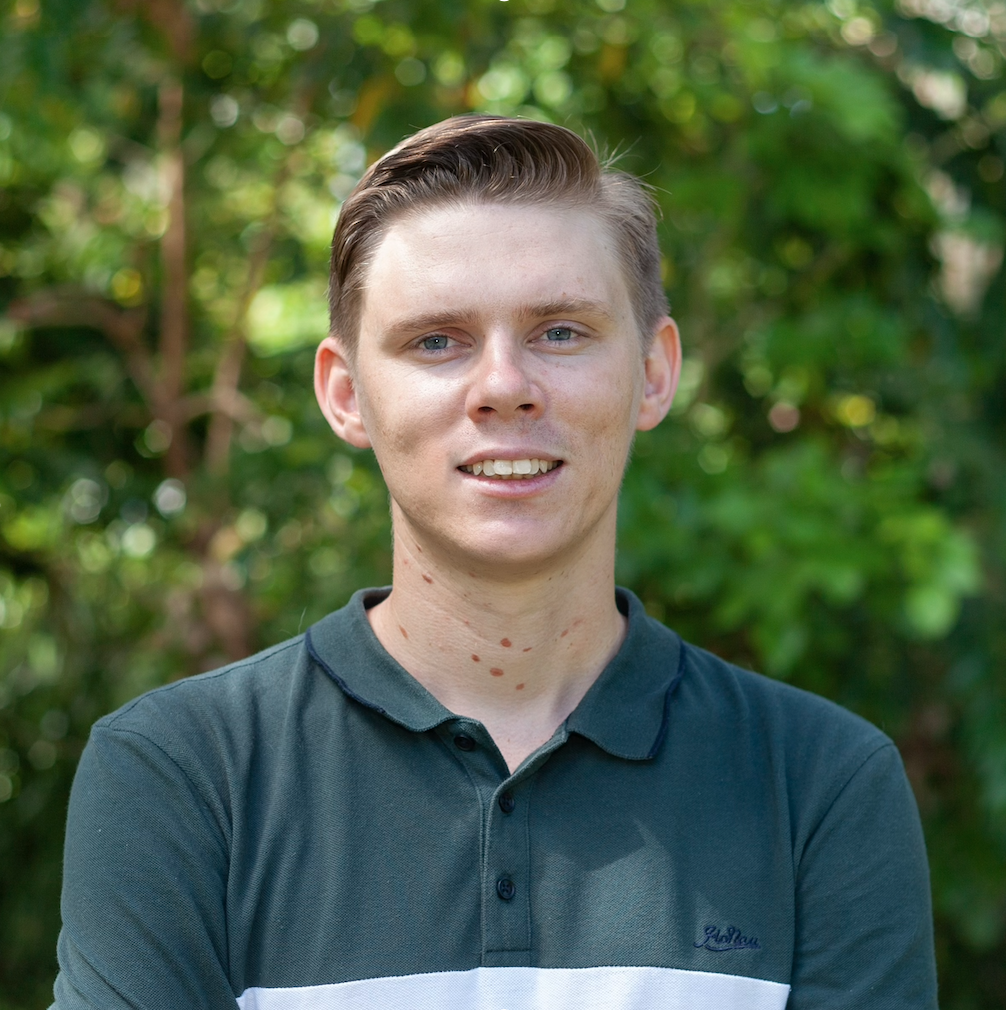
Scott Morrissey
- Research Officer
- scott.morrissey@jcu.edu.au
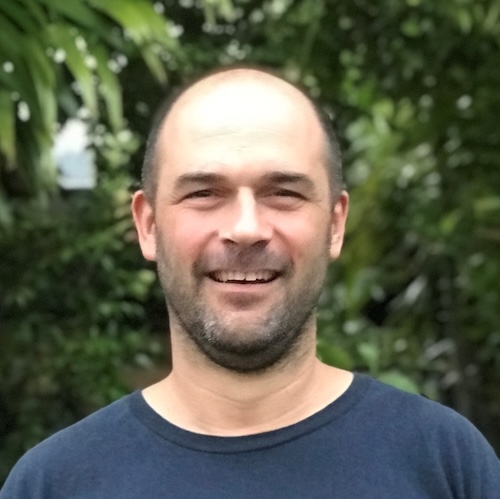
Tim Smith
- Senior Research Officer
- tim.smith2@jcu.edu.au
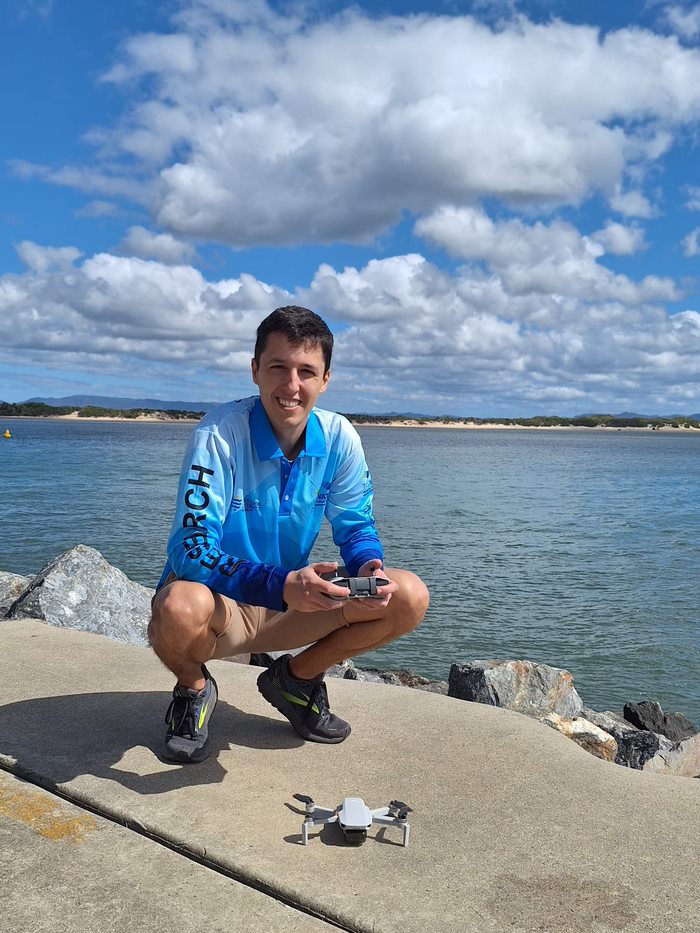
Alejandro Navarro Otero
- Casual Research Worker
- alejandro.navarrootero@jcu.edu.au
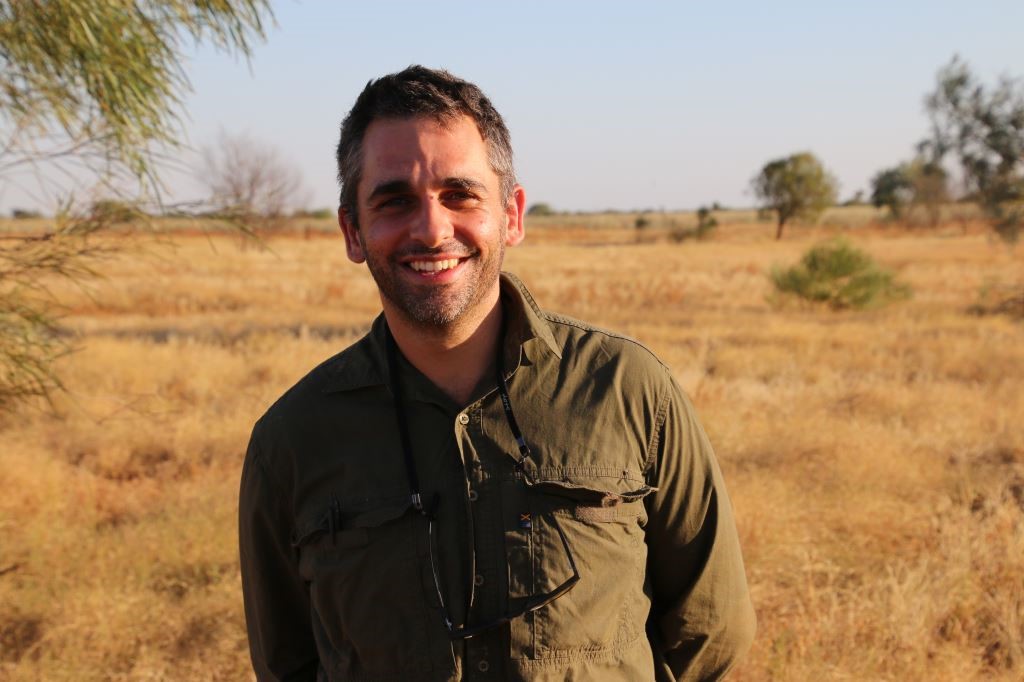
Jack Koci
- Principal Research Officer
- jack.koci1@jcu.edu.au
Sarah McDonald
- Senior Research Officer
- sarah.mcdonald@jcu.edu.au
Emily Webster
- Research Officer
- emily.webster1@jcu.edu.au

Abbi Scott
- Senior Research Officer
- abbi.scott1@jcu.edu.au

Catherine Collier
- Principal Research Officer
- catherine.collier@jcu.edu.au

Rob Coles
- Principal Research Scientist
- rob.coles@jcu.edu.au

Aaron Davis
- Principal Research Officer
- aaron.davis@jcu.edu.au
The role of seagrass dispersal by marine mega-herbivores, dugong (Dugong dugon) and green sea turtles (Chelonia mydas). (Old ID 22411)
Samantha Tol
02 Mar 2014 - 02 Mar 2017
This project will investigate the dispersal mechanisms of tropical seagrasses and determine which mechanisms are most effective for long distance dispersal. It will examine whether marine mega-herbivores (dugongs and green sea turtles) disperse seagrass seeds through their fecal matter and whether those seeds are viable. It will determine how long seagrass fragments, created by abiotic and biotic mechanisms, remain viable and establish new meadows. This information will be used to model which seagrass meadows are at greater risk of slow recovery after a large scale loss. This recovery model will have the potential to highlight which seagrass meadows rely solely on dispersal by marine mega-herbivores for recovery.
Macroinvertebrate Taxonomy and Biological Monitoring (Old ID 27918)
Shelley Templeman
16 Jan 2023 - 30 Sep 2026
Biological sorting an identification of macroinvertebrates from Kakadu national Park in support of research and monitoring programs for the Supervising Scientist Branch.
Seagrass Monitoring and Research Ports North
Michael Rasheed
12 Sep 2025 - 31 Dec 2030
Ports North in partnership with James Cook University’s TropWATER Seagrass Ecology Group have been engaged in seagrass monitoring and research programs in the Ports of Cairns, Mourilyan, Karumba and Thursday Island since at least 2001. The monitoring programs involve annual surveys that are conducted between October and December each year (Thursday Island is conducted in February/March).
underpinning major research initatives and our understanding of tropical seagrass ecology. The monitoring programs:
• Provide a regular update of the marine environmental health of the ports
• Satisfy commitments linked to maintenance dredging and sea disposal approvals
• Provide an assessment of seagrass condition and resilience to inform port management.
In addition to monitoring, the program is utilised and leveraged for broader initiatives and contributions for joint research and activities including providing:
• A key information feed and contribution to regional report cards including Wet Tropics Partnership for Healthy Waterways and for Torres Strait Reporting
• A link to Traditional Owner participation in environmental monitoring and research
• A range of value-added seagrass research projects including leveraged funding from Australian Government and industry funded research programs investigating seagrass recovery and restoration
Southeast Asian Peatlands as a Natural Climate Solution
Sigit Deni Sasmito
23 Jun 2026 - 23 Dec 2026
The Programme aims to support research and strategic analysis on Peatlands in Southeast Asia in order to strengthen the evidence base for philanthropic engagement in peatland conservation and restoration for climate resilience outcomes across the region. The Programme is intended to generate actionable recommendations and investment pathways for philanthropy and other stakeholders to advance climate adaptation and mitigation, biodiversity conservation, ecosystem resilience, and sustainable livelihoods in Southeast Asia.
NESP 3.5: Supporting regional planning in northern Australia: Building knowledge, skills & partnerships for understanding seagrass distribution (Old ID 29021)
Alexandra Carter
01 Feb 2023 - 20 Nov 2026
Northern Australia has vast development opportunities but limited knowledge of the environment to inform decision making. This region has globally significant seagrass habitat, supporting dugong, green turtle, and commercially important fish and prawns. However, knowledge about seagrass habitats for extensive areas of the coast is limited - data is patchy or not freely available, few large-scale mapping surveys have been conducted, and even fewer seagrass long-term monitoring programs exist. This project will address these problems by: 1. Mapping selected benthic habitats, with a focus on seagrass, using methods consistent with previous and ongoing surveys in northern Australia. 2. Establishing a benchmark of seagrass habitats for Traditional Owners, Indigenous communities, rangers, management agencies, ports, industry, and researchers to assess change. 3. Partnering with management agencies and ranger groups to co-design mapping and monitoring methods in remote areas that use new technology such as drones. 4. Compiling and synthesizing historical seagrass data into a publicly available spatial database to create a permanent record. 5. Interpreting and reporting on survey findings, including providing advice on options for establishing monitoring programs.
Molongle Creek Seagrass Monitoring (Old ID 22917)
Skye McKenna
21 Jul 2016 - 31 Dec 2016
The aim of this research is to survey seagrass habitats in areas around Molongle Creek. The objectives include conducting seagrass assessments, comparing results of previous surveys and assessing changes in seagrass distribution and abundance in relation to natural events or human induced activities.
A Forensic Approach to Elucidating the Life History of the Deadly Jellyfish Chironex fleckeri using eDNA. (Old ID 27045)
Scott Morrissey
01 Nov 2020 - 31 Oct 2022
The polyps of the deadly Chironex fleckeri represent the longest-lived stage of jellyfish and are the source of medusa. However, there is almost no information on the benthic polyp stages of this species. Environmental DNA should allow me to detect polyps and therefore identify the sources of jellyfish which will increase our understanding of cubozoan ecology and how to minimise their threat of envenomating humans. Further, oceanographic modelling, that incorporates the decay of eDNA, will provide greater knowledge of ‘DNA’ halos’ that signals proximity to targeted polyp beds and jellyfish aggregations.
Science Partnerships in RRAP (Old ID 27111)
Ian McLeod
01 Jan 2021 - 04 Sep 2024
The Reef Restoration and Adaptation Program (RRAP) is a >$100M multi-institution 10-year research program designed to accelerate the resilience and recovery of corals reefs of the Great Barrier Reef. This project will provide coordination and leadership for the many science programs in the RRAP, support management, deliver milestones and assist research coordination and future planning.
Marine plant survey of the Half Tide Tug Harbour Hay Point (Old ID 27445)
Paul York
01 Sep 2021 - 31 Dec 2021
North Queensland Bulk Ports (NQBP) have engaged the TropWATER to undertake a survey to determine the presence/absence of marine plants within the Half Tide Tug Harbour, located at the Port of Hay Point. Specifically, the survey requires assessment of marine plant distribution in the area proposed for expanded maintenance dredging, as well as a contemporary survey of marine plants in the area currently approved for dredging.
Seagrass Monitoring of Dugong Sanctuary in Torres Strait and Baseline survey/mapping of Torres Strait Eastern Cluster. (Old ID 26894)
Alexandra Carter
25 Jun 2020 - 30 Jun 2021
Seagrass Monitoring of the Dugong Sanctuary and Torres Strait’s western cluster subtidal seagrass, and baseline survey and mapping of Torres Strait’s Eastern Cluster intertidal seagrass.
Subtidal seagrass of western Torres Strait
- 2021
- James Cook University
- Researchers:Alexandra CarterSkye McKenna
Torres Strait Seagrass 2019 Report Card
- 2019
- Researchers:Alexandra CarterCarissa Reason
Monitoring Seagrass within the Reef 2050 Integrated Monitoring and Reporting Program: final report of the Seagrass Expert Group
- 2019
- Great Barrier Reef Marine Park Authority
- Researchers:Alexandra CarterLen McKenzie
Seagrasses in Port Curtis and Rodds Bay 2017: annual long-term monitoring
- 2018
- James Cook University
- Researchers:Alexandra Carter
A framework for defining seagrass habitat for the Great Barrier Reef, Australia
- 2018
- Reef and Rainforest Research Centre
- Researchers:Alexandra CarterLen McKenzie
Torres Strait Seagrass 2018 Report Card
- 2018
- James Cook University
- Researchers:Alexandra Carter
Torres Strait Seagrass Long-term Monitoring: dugong sanctuary, Dungeness Reef and Orman Reefs
- 2018
- James Cook University
- Researchers:Alexandra Carter
Torres Strait Seagrass – Dungeness Reef Baseline Survey and Dugong Sanctuary Long-term Monitoring
- 2017
- James Cook University
- Researchers:Alexandra Carter
Assessment of Key Dugong and Turtle Seagrass Resources in North-west Torres Strait
- 2016
- Reef and Rainforest Research Centre
- Researchers:Alexandra Carter
Start Date:
01 Jan 2009
End Date:
01 Jan 2026
Start Date:
01 Jan 2009
End Date:
01 Jan 2030
Start Date:
01 Jan 2014
End Date:
01 Jan 2030
Start Date:
01 Jan 2021
End Date:
01 Jan 2025
Start Date:
01 Jan 1981
End Date:
01 Jan 1984
Start Date:
01 Jan 1986
End Date:
01 Jan 1988
Start Date:
01 Jan 1973
End Date:
01 Jan 1973
Start Date:
01 Jan 2024
Start Date:
01 Jan 2022
End Date:
01 Jan 2023
Title:
Conference co-chair
Start Date:
01 Jan 2023
End Date:
01 Jan 2023