
Zoology & Ecology

Saul Chemonges
- Adjunct Associate Professor
- saul.chemonges@jcu.edu.au
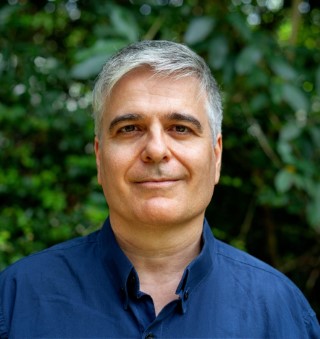
Daniel Montesinos Torres
- Senior Research Fellow
- daniel.montesinos@jcu.edu.au

Claire Gely
- Lecturer, Zoology and Ecology
- claire.gely@jcu.edu.au

Ben Hirsch
- Adjunct Senior Lecturer
- ben.hirsch@jcu.edu.au

Stephen Williams
- Adjunct Professor
- stephen.williams@jcu.edu.au

Myles Menz
- Senior Lecturer, Zoology and Ecology
- myles.menz@jcu.edu.au

Martijn van de Pol
- Associate Professor, Mathematical Modelling
- martijn.vandepol@jcu.edu.au

Slade Allen-Ankins
- Research Fellow
- slade.allenankins@jcu.edu.au

Noel Preece
- Adjunct Associate Professor
- noel.preece@jcu.edu.au

Conrad Hoskin
- Professor
- conrad.hoskin@jcu.edu.au
NESP 4.5: Restoration by design: improving biodiversity outcomes from Australia’s restoration investments
Biodiversity monitoring of restoration projects. It will achieve this by undertaking 3 linked activities.
· Activity 1: stakeholder workshop
· Activity 2: examining methods used for restoration monitoring and evaluation
· Activity 3: evaluating biodiversity outcomes of key restoration projects.
This research is foundational for enhancing biodiversity recovery, strengthening restoration program delivery, encouraging informed restoration investments, and meeting national environmental standards. It directly addresses knowledge gaps around restoration identified in the Australia State of the Environment 2021 report and current national priorities for biodiversity conservation and restoration.
Note that this project is Phase 2 of the ‘Restoration by design’ project. Phase 1 is a small project currently underway (4.5 Phase 1: September 2023 – June 2024) which includes running a co-design workshop (planned for the first quarter of 2024) with a subset of stakeholders identified in this proposal. Project 4.5 Phase 1 is key to Project 4.5 Phase 2 of this project, as it is the formal start of the complex and time-consuming process of identification and consultation with stakeholders. Project 4.5 Phase 2 also aims to begin development of the program logic required for key parts of the project more broadly – specifically, the inclusion/exclusion criteria of restoration monitoring methods (there are many) and the inclusion/exclusion criteria for case studies to include in our detailed analysis here (again, there are many).
NESP 4.12: Mitigating the impacts of extreme weather events on spectacled flying-foxes
Spectacled flying-foxes (SFFs) were listed as Endangered in 2019, following an extreme heatwave in 2018 that resulted in the death of approximately one-third of the population. The mass mortality of Australian flying-foxes at roosts during heatwaves has been well documented, with future extreme heat events considered the greatest threat to their survival. This project aims to improve our understanding of the local thermal environments of SFF roosts across their range, which is a critical aspect of their sensitivity to the increasing risks imposed by climate change. By doing so, this project will improve species management through the provision of tools to mitigate the devastating impacts of future extreme heatwaves and advise managers on effective interventions. This project addresses national priorities by providing adaptive solutions to support the recovery of a threatened species and in developing capacity to help reverse the decline in Australia’s natural environment.
Autoclave for the Northern Australia Plant Biosecurity Facility
The ARC-LIEF funded Northern Australia Plant Biosecurity Facility is to be built during 2024, procurement process is ongoing. The effective approval as a federally recognised quarantine facility requires the purchase of an autoclave to be located within the quarantine glasshouse, as per BC2 quarantine regulations. The proposal's funding was reduced on approval and funding for this essential piece of equipment is lacking.
ARC Industrial Transformation Training Centre in Plant Biosecurity
The Biosecurity Training Centre aims to deliver a solution for Australia’s increasing biosecurity risk through generational change in its workforce coupled with breakthrough technologies. It will launch an innovative training program for future leaders who will build relationships with end users and engage meaningfully with communities for effective implementation strategies. The Centre will provide data-driven systems, behavioural change for adoption and authentic industry engagement. This suite of graduates and technologies will transform the biosecurity sector and protect Australia’s critical agricultural industries.
Eco-evolutionary dynamics and the maintenance of organismal diversity
This project is a collaboration Megan Higgie at JCU and Jan Hrcek of the Czech Academy of Sciences. It is funded by a European Research Council Consolidator Grant (2024-2028) to Jan Hrcek, with Megan Higgie as a named collaborator: the project looks at rapid evolution in species interactions between Drosophila and parasitoid wasp species investigating the mechanisms involved in the maintenance of diversity in communities and variation in populations of tropical rainforests.
Australian tropical rainforests in the face of climate change
This project aims to investigate the roles of increasing atmospheric water stress and rising carbon dioxide in driving changes in tree performance and species composition in Australian tropical rainforests. Forest census plots indicate increasing tree mortality, but the mechanisms through which this is occurring are unknown. Experiments will be conducted to unravel the underlying physiological processes. Community-level behaviour will be investigated with eddy covariance and remotely sensed data. The project expects to generate new knowledge about responses of Australian tropical rainforests to climate change. The expected outcome is an enhanced capacity to understand and manage a unique and highly valued component of the Australian forest estate.
A new combination in Clematicissus Planch (Vitaceae)
- 2006
- National Herbarium of New South Wales
- Researchers:Betsy Jackes
Evaluation of offspring size–number invariants in 12 species of lizard
- 2009
- Wiley-Blackwell
- Researchers:Lin Schwarzkopf
Identification and dynamics of a cryptic suture zone in tropical rainforest
- 2009
- Royal Society Publishing
- Researchers:Conrad Hoskin
Is optimal foraging a realistic expectation in orb-web spiders?
- 2009
- Wiley-Blackwell
- Researchers:Will Edwards
Start Date:
01 Jan 2014
Start Date:
01 Jan 2003
Start Date:
01 Jan 2018
Start Date:
01 Jan 2013
End Date:
01 Jan 2018
Start Date:
01 Jan 2009
End Date:
01 Jan 2013
Start Date:
01 Jan 2006
End Date:
01 Jan 2008
Start Date:
01 Jan 2000
End Date:
01 Jan 2003
Start Date:
01 Jan 2004
End Date:
01 Jan 2009
Start Date:
01 Jan 2024
End Date:
01 Jan 2025
Start Date:
01 Jan 2003
End Date:
01 Jan 2004