
Marine Biology & Aquaculture
Tom Lloyd
- Postdoctoral Research Fellow, Global Ecosystems
- tom.lloyd@jcu.edu.au

Alys Young
- Postdoctoral Research Fellow, Global Ecosystems
- alys.young@jcu.edu.au
William Arlidge
- Postdoctoral Research Fellow in Community-Based Fisheries Co-Management
- william.arlidge@jcu.edu.au

Anna Wilson
- Senior Research Worker
- anna.wilson@jcu.edu.au
Kelly Condon
- Senior Lecturer, Aquaculture (Aquatic Animal Health)
- kelly.condon@jcu.edu.au

Graeme Cumming
- Adjunct Professor
- graeme.cumming@jcu.edu.au

Takahiro Shimada
- Adjunct Senior Research Fellow
- takahiro.shimada@jcu.edu.au

Peter Doll
- Research Fellow, Coral Reef Health Assessments
- peter.doll@jcu.edu.au
Michela Mitchell
- Casual Research Assistant
- michela.mitchell@jcu.edu.au
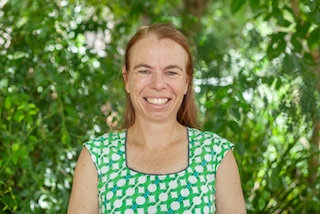
Jan Strugnell
- Professor, Promotional Chair
- jan.strugnell@jcu.edu.au
Biodiversity of the reef-building corals of Ningaloo Reef and the Indian Ocean (Old ID 27907)
Document the species richness of the coral fauna of Ningaloo with a focus on identifying species endemic to the region or vulnerable to threats due to low abundance or limited distributions.
Biodiversity of the reef-building corals of Ningaloo Reef and the Indian Ocean (Old ID 27907)
Document the species richness of the coral fauna of Ningaloo with a focus on identifying species endemic to the region or vulnerable to threats due to low abundance or limited distributions.
Can the epaulette shark 'outwalk' climate change
By simulating various ocean warming conditions within aquarium settings, I have been using cross-disciplinary tools in physiology, genetics, and biomechanics as a proverbial crystal ball to understanding how geographically distinct populations of epaulette sharks will respond to both chronic and acute ocean warming. My project aims to examine the mechanistic underpinnings of physiological performance through epigenetics as it relates to metabolism, and how genes are up/down regulated to influence these performance biomarkers under future warming scenarios across the Great Barrier Reef. If we can gain a fundamental understanding of the performance mechanisms that contribute to resilience and susceptibility of shark and ray species to climate change stressors, we can utilize findings of this research on the epaulette shark as a comparative baseline for other similar species to allow for enhanced conservation measures.
NESP 4.24 - Towards assessing the values of reefs in the southern Gulf of Carpentaria
In this project, existing data and knowledge on reefs in the Gulf of Carpentaria Marine Park and surrounding waters will be compiled and anaysed with the aim of identifying knowledge gaps and providing recommendations for future research priorities. The Gulf of Carpentaria Marine Park, adjacent to the Wellesley Islands, was only recently declared, in 2013. The marine park has National Park and Special Purpose (Trawl) zones that support commercial prawn fisheries, and it is culturally important for the Lardil, Yangkaal, Kaiadlit, and Gangalidda people who have responsibilities for sea country there. The marine park is due for renewal by 2028. The coral reefs in this area were only recently discovered, in the early 2000s, and they remain poorly studies. Only a few reefs have been assessed ecologically, and even then, only briefly. The main source of ecological data is from a citizen science program, Reef Life Survey, where volunteer divers are trained to conduct visual surveys. Using this data, and through meetings/workshops with relevant scientific, management, industry and Indigenous authorities, we will examine what is known about the reefs in this area and their values.
Water flow ecology: How reef structure and water flow shape the world of fishes (Old ID 27855)
This project aims to understand how coral reef fishes interact with their whole environment. Currently, we have some understanding of how fishes interact with the 3D reef, but not the water which flows around it. I will explore how water flow changes around a complex reef and how fishes use this flow. This project will quantify water flow on a biologically relevant scale, a scale which is often overlooked. It will provide a crucial stepping stone to further ecological research on coral reefs.
Spatially integrated Portfolio Approach to support a portfolio of livelihoods. (Old ID 27105)
The Integrated Livelihoods Approach (ILA) provides an approach to diagnose and help navigate interrelated and cumulative impacts, trade-offs and co-benefits of interacting livelihood activities occurring in spatially defined coastal areas. Participatory and interdisciplinary research, integrated governance, negotiation, trust-building, ongoing conflict management, and cross-sectoral and political engagement are central to the ILA. This project will establish the mechanisms for achieving the strengthened networks, integrated governance and policy, and improved planning required to implement an ILA in Western Province, Solomon Islands, with the potential to scale-up to other locations.
Barratta Creek Biodiversity Fund (Old ID 20785)
Barratta Creek is one of the better condition creeks remaining on the Burdekin floodplain but its health is declining, due to the pressures of surrounding development and invasive weeks. This project will study the benefits to the health of the creek of controlling aquatic weeds that infest the system and improving water quality through the establishment of artificial wetlands to treat runoff from cane farms.
Tackling long-term food allergy among children to recurrent tropical allergens (Old ID 21737)
The aim of this research is to study the reactivity of allergens found in commonly consumed tropical foods by Australian children, for the development of improved allergy point-of-care diagnostic platforms for paediatric allergy in the tropics.
Coral Reef Health in the Coral Sea Marine Park (Old ID 24771)
A number of coral reefs occur in the Australian Marine Parks estate, particularly within the Coral Sea Marine Park (CSMP). In 2016 and 2017, coral reefs in the Great Barrier Reef Marine Park and CSMP were impacted by a mass global coral bleaching event. Regular surveys of coral bleaching and associated reef health in the CSMP are needed to inform future marine park management over the next three years to either enable comparisons against historical baselines where bleaching has previously occurred, or set new baselines for areas that aren’t bleached but may be in the future.
GBRF EOI Island Monitoring (Old ID 27698)
The more than 1000 islands and cays in the Great Barrier Reef (GBR) World Heritage Area (GBRMPA spatial data, 2019) support a diverse range of ecological, cultural and economic values. Many are threatened by climate change, but monitoring and management is difficult as many cays are remote and difficult to access. This project will develop and implement an efficient drone-based hierarchical monitoring protocol based on the recognition and use of ‘natural ground control points’ that will enable more rapid and resource efficient capture of reef island status to inform management decisions.
Social-ecological resilience to coastal disasters
- 2005
- American Association for the Advancement of Science
- Researchers:Terry Hughes
Are U.S. coral reefs on the slippery slope to slime?
- 2005
- American Association for the Advancement of Science
- Researchers:Terry Hughes
Globalization, roving bandits, and marine resources
- 2006
- American Association for the Advancement of Science
- Researchers:Terry HughesDavid Bellwood
From corals to canyons: the Great Barrier Reef margin
- 2008
- American Geophysical Union
- Researchers:Rob BeamanTom Bridge
Gillnet mesh selectivity of the sandbar shark (Carcharhinus plumbeus): implications of fisheries management
- 2007
- Oxford University Press
- Researchers:Colin Simpfendorfer
Start Date:
10 Nov 2024
Start Date:
31 Mar 2025
Start Date:
01 Jan 2024
Start Date:
01 Jan 2024
End Date:
01 Jan 2027
Start Date:
01 Jan 2004
End Date:
01 Jan 2006
Start Date:
01 Jan 2007
End Date:
01 Jan 2007
Title:
PhD, James Cook University
Start Date:
01 Jan 2002
End Date:
01 Jan 2005
Start Date:
01 Jan 1996
End Date:
01 Jan 1999