
College of Science & Engineering

Sophia Love
- Doctor of Philosophy (Natural and Physical Sciences)
- sophie.love@jcu.edu.au
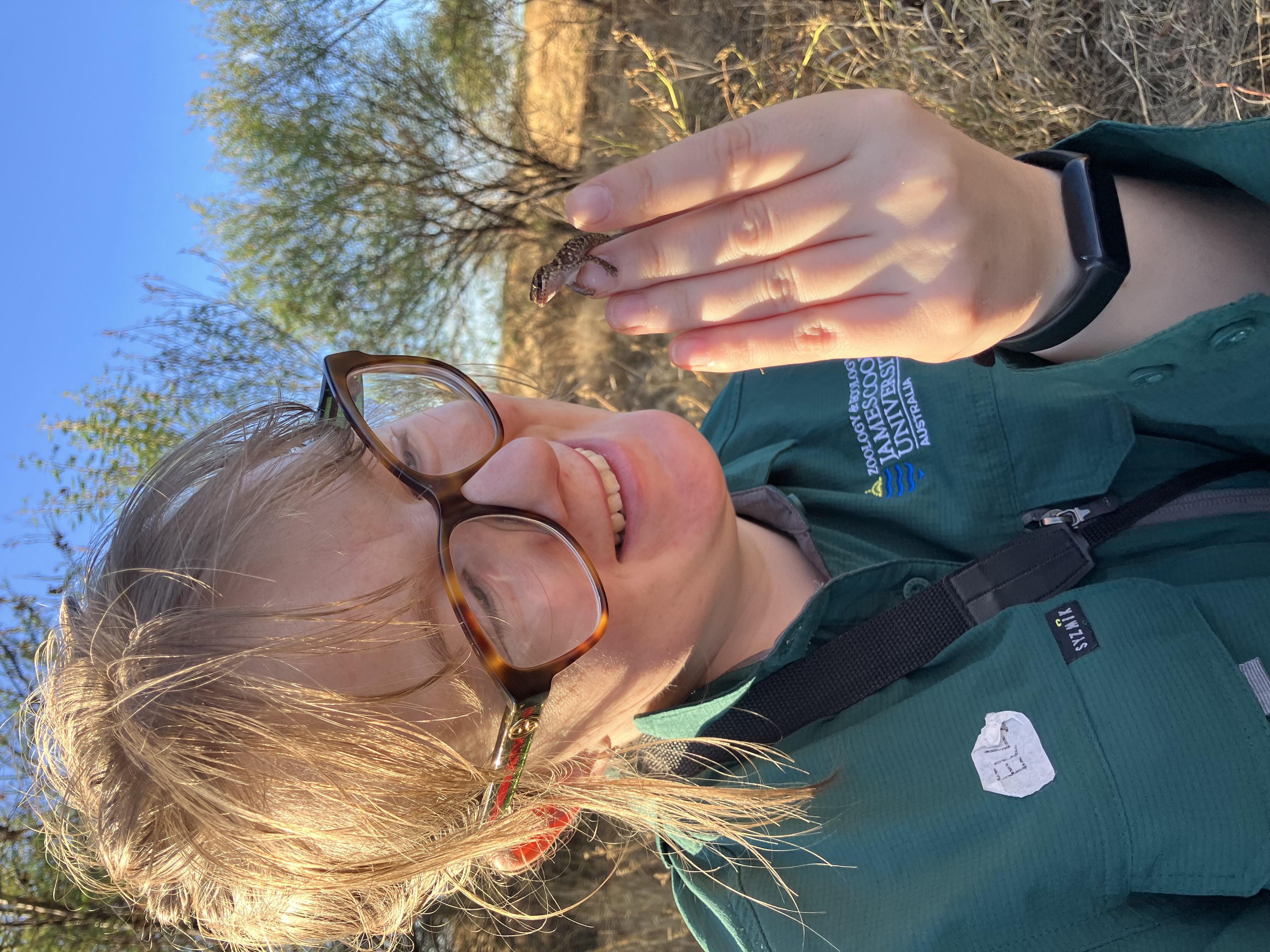
Elle Robertson
- Doctor of Philosophy (Agriculture, Environmental and Related Studies)
- elle.robertson@jcu.edu.au

Romain Vaucher
- Senior Lecturer, Sedimentology
- romain.vaucher@jcu.edu.au

Jenny Fisher
- Associate Dean, Learning and Teaching
- jenny.fisher@jcu.edu.au

Ambili Narayanan
- Doctor of Philosophy (Natural and Physical Sciences)
- ambili.narayanan@my.jcu.edu.au

Sarfaraz Ali
- Postdoctoral Research Fellow
- sarfaraz.ali@jcu.edu.au

Mikaeylah Davidson
- Postdoctoral Research Fellow
- mikaeylah.davidson@jcu.edu.au

Liuxin Chen
- Adjunct Lecturer
- liuxin.chen@jcu.edu.au

Rafael Cabral Carvalho
- Lecturer, Marine Geoscience
- rafael.cabralcarvalho@jcu.edu.au
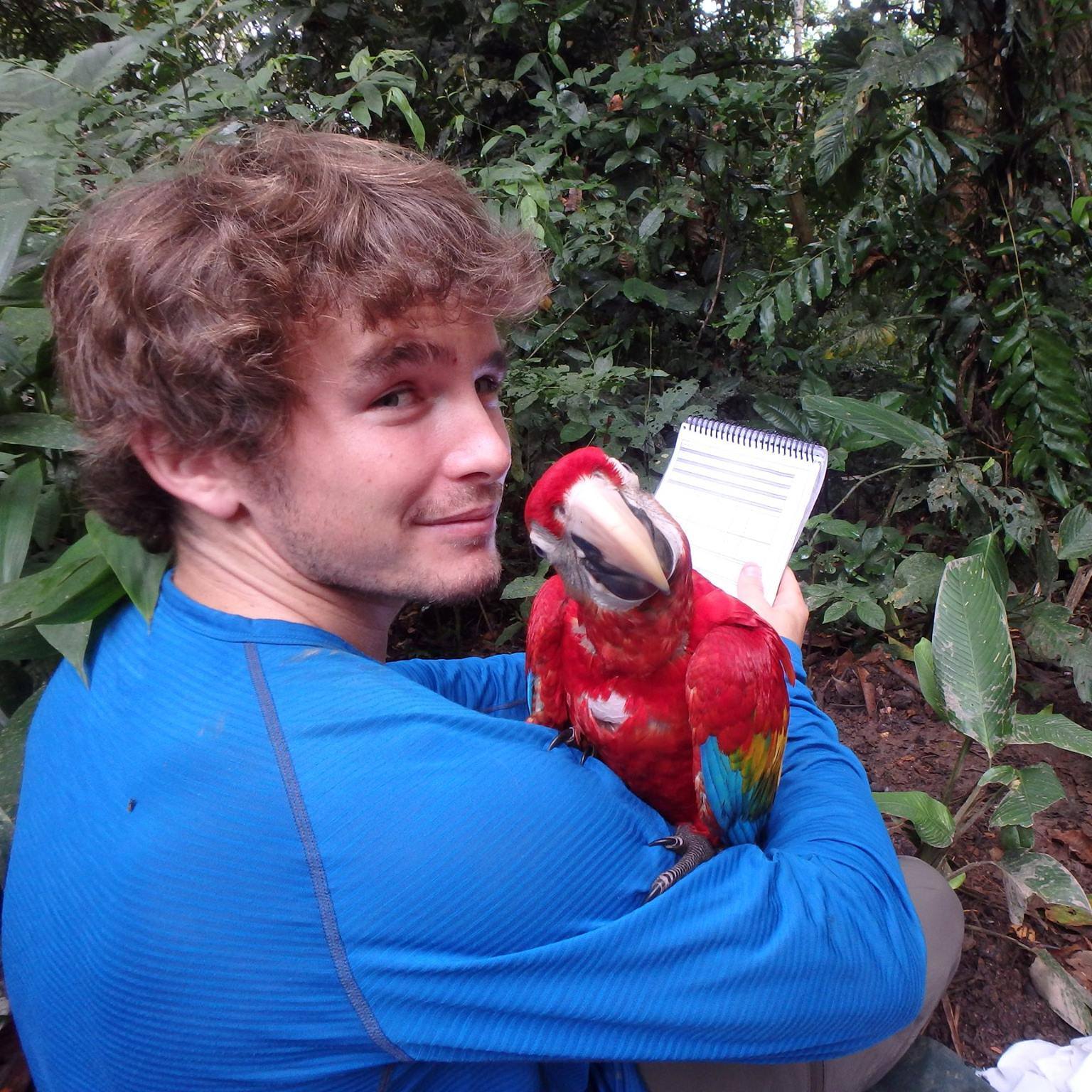
Tom Lloyd
- Postdoctoral Research Fellow, Global Ecosystems
- tom.lloyd@jcu.edu.au
Rare earth corrosion inhibitors in hydrogen production and storage systems
This project is an internally funded project for a near miss ARC Discovery Grant, which was within 10% of those who missed.
This project addresses corrosion and embrittlement of steel in hydrogen storage facilities, a new dimension in the world-wide multi-trillion dollar problem of the corrosion of steel. With the emerging hydrogen economy, new infrastructure for hydrogen storage will need to be constructed. It has been recently found that hydrogen gas can decompose to hydrogen atoms on the surface of the steel on the inner lining of storage vessels, and impregnate the infrastructure, and therefore compromising the integrity of the high pressure storage vessels.
Defects in hydrogen storage facilities can therefore lead to catastrophic failure of hydrogen energy infrastructure.
The project will enhance the capacity of rare earth carboxylate corrosion inhibitors, which are an inexpensive and green solution, to mitigate both corrosion and hydrogen embrittlement of steel, and provide an understanding of the protection process. The benefits of this project will ultimately be a new bulk use for Australia’s abundant rare earth resources and new chemical manufacturing to produce the inhibitors.
The project aligns with JCU’s major theme of “Industries and economies in the tropics” particularly relevant with the proposed Townsville Region Hydrogen Hub, a $70M Australian Government investment. Furthermore, the rare earth metals are classified as critical metals, and the project aligns with the Critical Metals Trailblazer project.
The project requires bulk amounts of corrosion inhibitors for assessment. The most expensive items are lanthanoid salts (all REs required) for the synthesis of lanthanoid carboxylates. Listed costs for rare earth chlorides and nitrates follow as examples, but carbonates and acetates are required for optimising procedures. The metal costs are (quotes are for the least expensive to most expensive chlorides and nitrates): lanthanoid chlorides range from $209/100g for CeCl3 to $1580/5g for ScCl3 while nitrates are $127/100g for Ce(NO3)3 to $975/5g for Sc(NO3)3. For optimum inhibitor systems, all 16 rare earths will need to be. For brevity, we do not quote all prices here, but chlorides total ca $5800, while nitrates total ca $4400. Organic supporting ligands are estimated to cost ca. $3,000. Analysis costs are included below. Travel to Melbourne is planned to meet with our Monash and Deakin collaborators to draft the next grant proposal.
Small equipment grant for water quality monitoring multiparameter instrument
Purchase of a multiparameter water quality monitoring instrument to replace old and no longer fit-for-purpose instruments. The new instrument is required to fulfil the research outcomes of several current projects and will be necesssary for future projects. The projects' monitor and assess water quality across the Great Barrier Reef Lagoon and Gulf of Carpenataria and include CRC for Water Security for Northern Australia, NQBP Ambient Water Quality Monitoring Program, and Whitsundays Water Quality Blueprint for Tourism Operators. The projects are led by JCU and involve collaborations across JCU, other institutions, government, Traditional Owners, NGO's, citizen science.
Examining the role of social behaviour in climate resilience: Red-winged Fairywrens Field Study
Cooperative breeding, characterized by individuals other than the genetic parents assisting in the rearing of offspring, is seen as a resilient strategy for species dealing with environmental variability, including that induced by climate change. Helpers can increase the reproductive success by providing extra food to the young, or the extra help provided may reduce the workload, thereby enhancing future survival or reproduction. I will use a long-term dataset of the red-winged fairy-wren to understand the association between climate and helping behaviour, and determine whether social behaviours are able to buffer against adverse impacts of climatic conditions
Assessment of the sustainability of coral reef fisheries in Indoesia
By applying the model of global reef fish biomass data developed by Zamborain-Mason et. al. (2023), the research will estimate reference points on Indonesia's reef fish biomasses based on local environment covariates such as ocean productivity, sea surface temperature, atoll shape, and the distance between coral reefs and nearest market. Then, a comparison will be made on the current biomass status of coral reef fishes for each site with the reference points to assess the sustainability of the coral reef fisheries in Indonesia.
The Impact of Daily Physical Activity and Sleep on Resting Heart Rate and Resting Heart Rate Variability in Individuals with High and Low Stress Load
It is known that regular physical activity decreases resting heart rate (RHR) and increases resting heart rate variability (HRV), while chronic stress increases RHR and decreases resting HRV. Although it is recommended that stressed individuals exercise to reduce their stress burden, it is unclear if they benefit from exercise to the same extent as those who do not experience stress overload.
A current gap in the literature is the lack of studies investigating cardiac autonomic nervous system (ANS) functioning in individuals with different chronic stress loads. The current project aims to investigate the differences in long-term ANS responses to daily physical activity in people experiencing high versus low chronic stress.
We hypothesize that individuals who experience chronic stress exhibit a blunted autonomic response (less decrease in RHR and less increase in resting HRV) to daily exercise due to an inability to regulate parasympathetic activation effectively. Therefore, in this regard they won’t benefit from regular exercise as much as those who don’t experience chronic stress, owing to their decreased autonomic nervous system (ANS) reactivity.
In order to test this hypothesis, we would like to benefit from the Tesserae dataset.
Effectiveness and reliability of a synthetic data generation
Using YALE supplied data in order to reproduce a prior publication using a bootstrapping method for synthetic data generation.
CodeCraft: Augmented Learning for IT students
This project aims to enhance IT education using augmented reality (AR) technology
A mobile app and dashboard for effective management of early-stage chronic kidney disease
This project is funded by the Northern Australia Regional Digital Health Collaborative (NARDHC). The incidence and prevalence of chronic kidney disease (CKD) varies globally, and people in the lowest socioeconomic quartile have a 60% higher risk of progressive CKD. This project aims to develop a mobile app that detects vulnerable individuals who are at risk of deterioration in renal function and are needing intervention, while also allowing monitoring and appropriate education to those who are progressing steadily. The expected outcome is a novel mobiele analytic app that can improve the management of CKD patients in rural and remote areas for better health outcomes and planning.
Fusion of wearable and environmental sensors for remote monitoring of health and wellbeing in elderly populations
This project is funded by the Northern Australia Regional Digital Health Collaborative (NARDHC). This project aims to develop a smart home health monitoring prototype that improves upon existing technology by fusing information from multiple sensors. The proposed system will use non-invasive wearable sensors, non-contact mmWave technology, and artificial intelligence to monitor key vital signs, physical activity, stress, fatigue, and environmental conditions. The goal of this project is to prototype a comprehensive system for monitoring health and wellbeing in rural and remote Australia, with particular focus on elderly persons.
An Artificial Intelligence Enabled Automatic Detection of Estuarine Crocodiles in Queensland Waterways Using Digital Video
This is a collaborative project between James Cook University (JCU) and the Department of Environment, Science, and Innovation (DESI) to develop an artificial intelligence (AI) based software that leverages digital video for the detection of estuarine crocodiles (C. Porosus) in Queensland's waterways. Building on previous research and utilizing extensive footage from Hartley’s Crocodile Adventures, this project aims to create an AI-based pilot detection system operational in both day and night settings to enhance safety around high-risk waterways.
Organic matter, sodicity and soil structure
- 1998
- Oxford University Press
- Researchers:Paul Nelson
Start Date:
01 Jan 2020
Title:
Best Research Paper Award
Start Date:
01 Jan 2018
Start Date:
01 Jan 2015
End Date:
01 Jan 2017
Start Date:
01 Jan 2022
Start Date:
01 Jan 2022
Start Date:
01 Jan 2021
Start Date:
01 Jan 2018
Start Date:
01 Jan 2014
Start Date:
01 Jan 2013
Start Date:
01 Jan 2010