
College of Science & Engineering

Sophia Love
- Doctor of Philosophy (Natural and Physical Sciences)
- sophie.love@jcu.edu.au
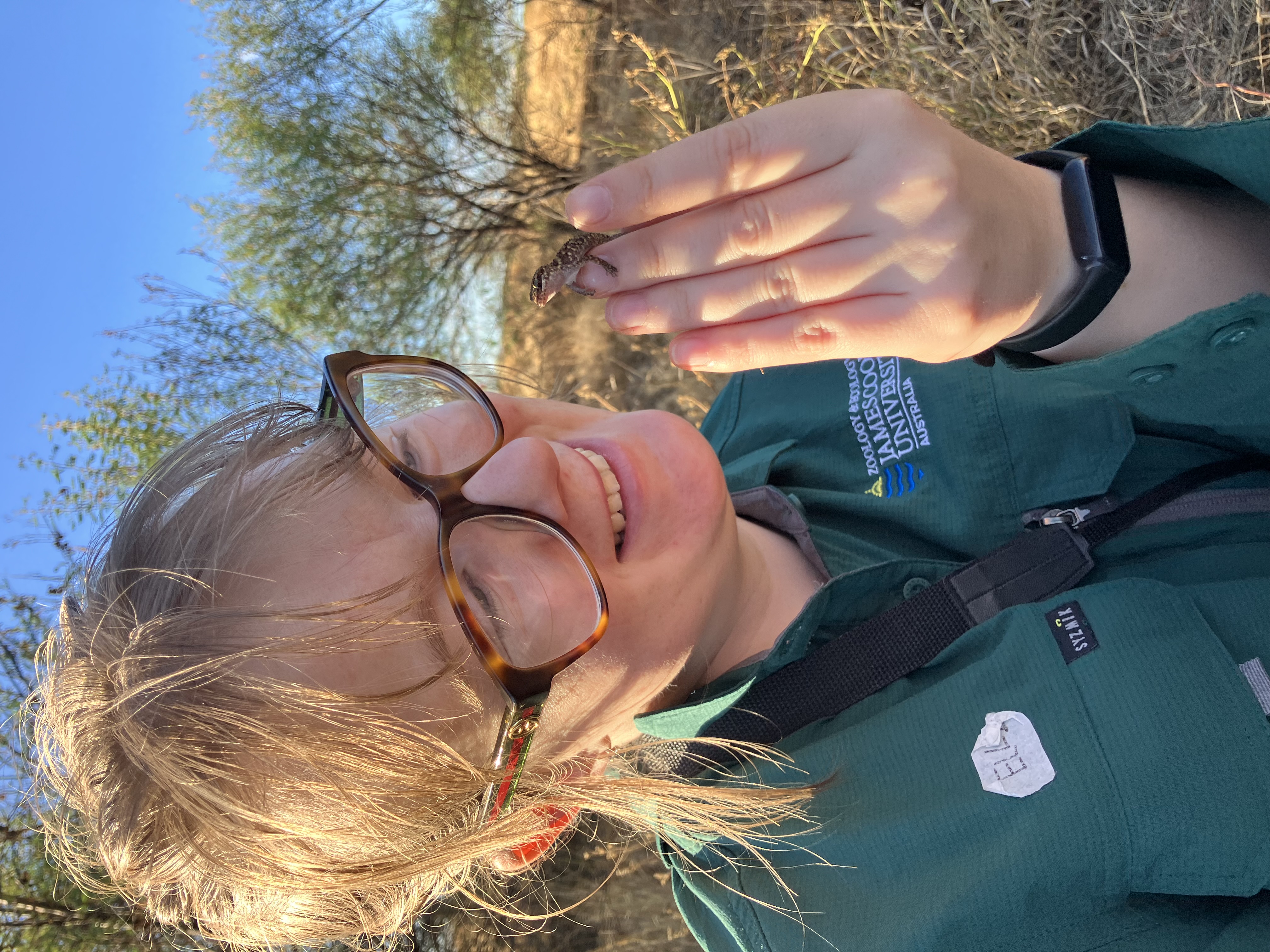
Elle Robertson
- Doctor of Philosophy (Agriculture, Environmental and Related Studies)
- elle.robertson@jcu.edu.au
Romain Vaucher
- Senior Lecturer, Sedimentology
- romain.vaucher@jcu.edu.au
Jenny Fisher
- Associate Dean, Learning and Teaching
- jenny.fisher@jcu.edu.au
Ambili Narayanan
- Doctor of Philosophy (Natural and Physical Sciences)
- ambili.narayanan@my.jcu.edu.au

Sarfaraz Ali
- Postdoctoral Research Fellow
- sarfaraz.ali@jcu.edu.au
Mikaeylah Davidson
- Postdoctoral Research Fellow
- mikaeylah.davidson@jcu.edu.au
Liuxin Chen
- Lecturer
- liuxin.chen@jcu.edu.au
Rafael Cabral Carvalho
- Lecturer, Marine Geoscience
- rafael.cabralcarvalho@jcu.edu.au
Tom Lloyd
- Postdoctoral Research Fellow, Global Ecosystems
- tom.lloyd@jcu.edu.au
Research to inform yellow crazy ant management in the Wet Tropics (Old ID 26714)
Continuation and consolidation of four years of scientific activities to support yellow crazy ant eradication in the Wet Tropics (data analysis, monitoring non-target effects of baiting, probability of detection).
Determinig the abundance of microplastics on nearshore reefs (Old ID 23379)
The overarching aim of my PhD is to quantify plastic pollution coming from north Queensland communities, and how this may influence the GBRWHA. In this proposal, my objective is to identify an indicator speies that can be used to determine the presence and extend of plastic pollution on nearshore reefs. The proposed project will focus on sponges and soft corals because they are non-selective suspension feeding organisms, and likely candidates as natural 'indicators' of plastic presence in the environment. By quantifying microplastics ingested by organisms, this project also aims to illuminate the potential impacts of mircroplastics to benthic reef species.
Geological Services, Geita Gold Mine (Old ID 19263)
The aim of the project is the development of new gold reserves from satellite pits and from the Kukuluma terrain, by building an integrated geological model for the entire tenement area. The area will be mapped, and a regional geological interpretation will be made as a basis for building a genetic model that will enable gold mineralization to be targeted, through ranking existing targets and generating new ones. A training strategy to improve the mine geology team will be implemented.
Dissolved oxygen as a constraint for fish utilising mangrove forests. (Old ID 22654)
This project focuses on understanding how dissolved oxygen (DO) impacts mangrove fish utilisation. In heavily vegetated habitats like mangroves, DO undergoes complex changes brought about by biogeochemical demand. The extent of DO depletion depends on many environmental parameters such as tide, time or day or human activities. Substantial DO depletion could limit the value of mangroves as habitats for fish. Consequently, I aim to: (i) develop an understanding of DO dynamics in mangrove forests; (ii) identify environmental parameters that drive these fluctuations; (iii) investigate how depressed DO impacts fish assemblages and behaviour; and (iv) establish DO thresholds for five fish species occupying mangroves.
Applying new technologies to enhance biosecurity and cattle quality. (Old ID 23456)
The vast natural environment of Northern Australia feeds the cattle industry; however, biosecurity threats have negatively impacted this. Conventional management of such threats such as weeds are not suited to such broad, harsh landscapes. The project will use an Internet of Things network with low-cost environmental sensors, drone mapping and big data analytics to develop and test data-driven, strategic pest management programs - ultimately improving both cattle industry and natural assets.
Applying new technologies to enhance biosecurity and cattle quality. (Old ID 23456)
The vast natural environment of Northern Australia feeds the cattle industry; however, biosecurity threats have negatively impacted this. Conventional management of such threats such as weeds are not suited to such broad, harsh landscapes. The project will use an Internet of Things network with low-cost environmental sensors, drone mapping and big data analytics to develop and test data-driven, strategic pest management programs - ultimately improving both cattle industry and natural assets.
Conservation genomics of the Critically endangered Kuranda Treefrog (Old ID 27603)
This project aims to assess the conservation status of the Critically Endangered Kuranda Treefrog using a population genomics approach. The last sampling for this declining and localised species took place more than 10 years ago, and continuing declines have been detected in the field. It is unclear whether the population is retaining genetic diversity despite the small and declining population size or whether it is rapidly losing genetic diversity. Resolving this will be crucial for the management of this species. In this project I aim to assess genetic diversity, connectivity and population size of this Critically Endangered species using population genomics.
Conservation genomics of the Critically endangered Kuranda Treefrog (Old ID 27603)
This project aims to assess the conservation status of the Critically Endangered Kuranda Treefrog using a population genomics approach. The last sampling for this declining and localised species took place more than 10 years ago, and continuing declines have been detected in the field. It is unclear whether the population is retaining genetic diversity despite the small and declining population size or whether it is rapidly losing genetic diversity. Resolving this will be crucial for the management of this species. In this project I aim to assess genetic diversity, connectivity and population size of this Critically Endangered species using population genomics.
Investigating the behavioural ecology of diving and feeding in a cryptic marine mammal: the Dugong (Old ID 27881)
As air-breathing, bottom-feeding marine mammals, dugongs must dive to survive and thrive. Quantifying the diving and feeding behaviours of dugongs in three dimensions is a missing link in the science basis for the conservation of this Vulnerable species. This project will use advanced sensing technology to understand how seagrass biomass and dugong activity and energetics influence their diving and feeding behaviors. The resultant improved fine-scale understanding of these behaviors will provide important new information about their risk from vessel strike and the potential energetic consequences of habitat loss associated with extreme weather events and human disturbance.
Expanding Traditional Owner led seagrass monitoring and restoration in the Girringun TUMRA
Girringun elders and rangers have discussed the emerging Australian blue carbon market and are interested to learn more about what it means for Girringun clans and the health of their country. While progress has been made to include blue carbon in international and national policy and finance mechanisms, the full integration of coastal management activities as part of a climate mitigation strategy has not yet been realised. Estimates of organic carbon storage by seagrass meadows considering inter-habitat variability are essential to understand their potential to sequester carbon dioxide (CO2) and derive robust global and regional estimates of blue carbon storage. Girringun Aboriginal Corporation sees this project as an opportunity to investigate the potential to improve the health of our coast, trial new technology to map seagrass/ blue carbon habitat, estimate carbon value in sea country, increase ranger skills, and learn more about carbon storage in the TUMRA region and how emissions can be reduced in sea country.
The project is designed to use a two-way knowledge approach, incorporating Indigenous knowledge (IK) and western science and technology in the Girringun TUMRA. Through this project GAC aims to continue their collaboration with JCU and CDU and form a new partnership with UQ. GAC have chosen these university partners due to their scientific expertise in seagrass and carbon research and experience working with Traditional Owners and Indigenous Ranger groups. This project includes Traditional Owners for six coastal clan groups in the Girringun TUMRA.
Seasonal acclimation of thermal performance in two species of reef-building corals
- 2020
- Inter-Research
- Researchers:Mia Hoogenboom
Automatic sorting of Dwarf Minke Whale underwater images
- 2020
- Molecular Diversity Preservation International (MDPI)
- Researchers:Dmitry Konovalov
Start Date:
01 Jan 2024
End Date:
01 Jan 2024
Start Date:
01 Jan 2020
End Date:
01 Jan 2025
Start Date:
01 Jan 2023
End Date:
01 Jan 2025
Start Date:
01 Jan 2018
End Date:
01 Jan 2020
Title:
JCU Distinguished Professor
Start Date:
01 Jan 2010
Start Date:
01 Jan 2018
Start Date:
01 Jan 2010
End Date:
01 Jan 2015
Start Date:
01 Jan 2004
End Date:
01 Jan 2006