
College of Science & Engineering

Sophia Love
- Doctor of Philosophy (Natural and Physical Sciences)
- sophie.love@jcu.edu.au
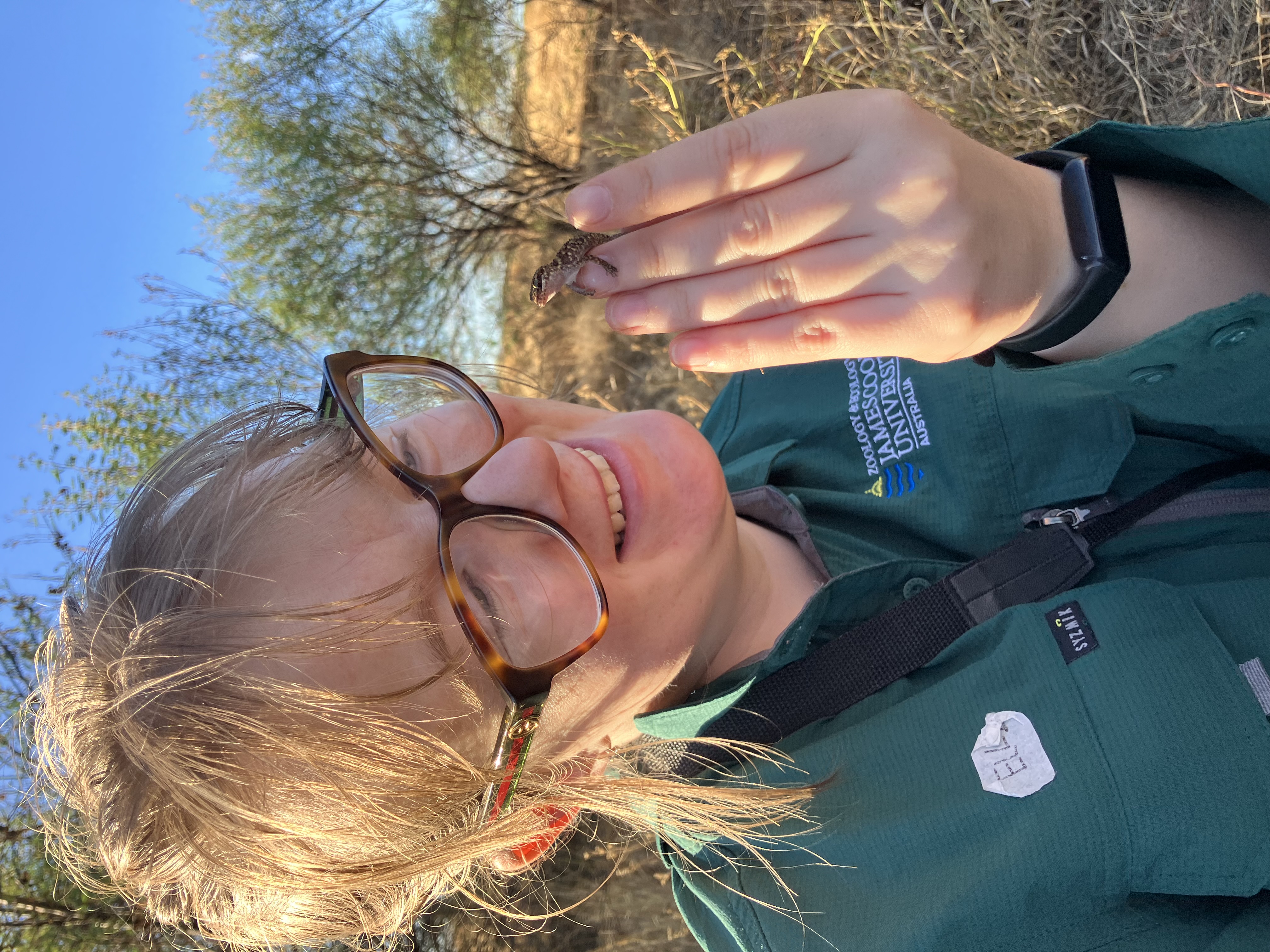
Elle Robertson
- Doctor of Philosophy (Agriculture, Environmental and Related Studies)
- elle.robertson@jcu.edu.au
Romain Vaucher
- Senior Lecturer, Sedimentology
- romain.vaucher@jcu.edu.au

Jenny Fisher
- Associate Dean, Learning and Teaching
- jenny.fisher@jcu.edu.au

Ambili Narayanan
- Doctor of Philosophy (Natural and Physical Sciences)
- ambili.narayanan@my.jcu.edu.au

Sarfaraz Ali
- Postdoctoral Research Fellow
- sarfaraz.ali@jcu.edu.au
Mikaeylah Davidson
- Postdoctoral Research Fellow
- mikaeylah.davidson@jcu.edu.au

Liuxin Chen
- Lecturer
- liuxin.chen@jcu.edu.au
Rafael Cabral Carvalho
- Lecturer, Marine Geoscience
- rafael.cabralcarvalho@jcu.edu.au
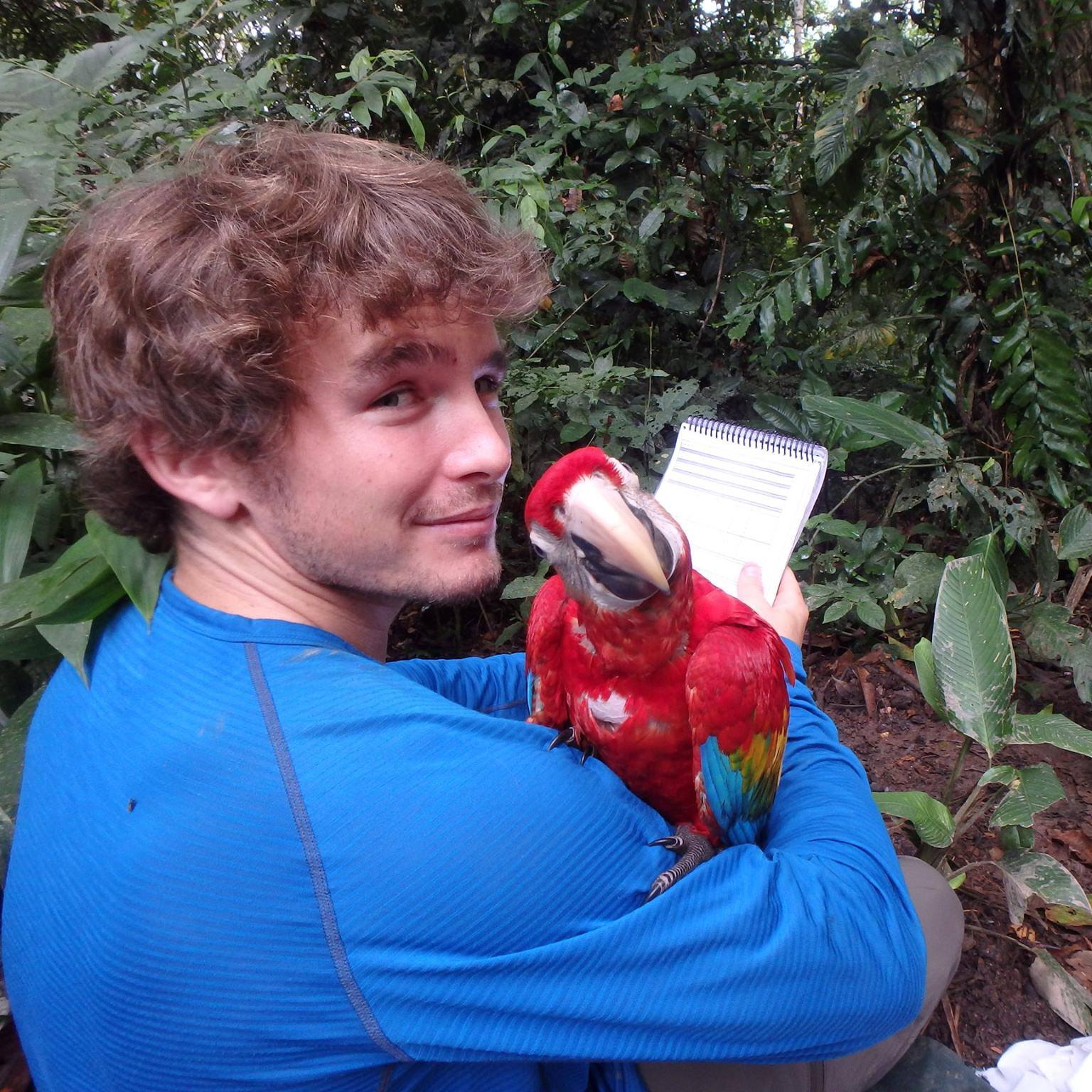
Tom Lloyd
- Postdoctoral Research Fellow, Global Ecosystems
- tom.lloyd@jcu.edu.au
CoTS responses to elevated temperature and bleaching
This study combines laboratory experiments and field surveys to assess how changing environmental and habitat conditions will affect crown-of-thorns starfish (CoTS). More specifically, this study will examine behavioural responses of CoTS to temperature (e.g., assessing whether feeding is suppressed), as well as feeding preferences for bleached versus unbleached corals.
Developing Core Bioinformatics Capacity at the Australian Institute of Tropical Health and Medicine (Old ID 23197)
Cost effective next generation sequencing is now a reality, meaning the bottleneck for research projects has shifted from data generation to data analysis. Researchers at the Australian Institute of Health and Tropical Medicine (AITHM) are engaged in an increasing number of high-impact research projects that require timely access to high-throughput bioinformatics best-practices methodologies. This proposal outlines strategies to develop support for projects requiring bioinformatics within AITHM.
An investigation of multiple paternity in the endangered narrow sawfish, Anoxypristis cuspidata (Old ID 23312)
This genetics-based project will investigate multiple paternity in the endangered narrow sawfish for the first time. Sawfishes are arguably the most vulnerable of all marine fishes. Despite this, most aspects of their ecology and reproductive behaviour are poorly understood. A bycatch event of 25 pregnant females in Princess Charlotte Bay has provided a rare opportunity to explore multiple paternity in this species across a large number of litters. Using neutral molecular markers (microsatellites), this study will fill an important knowledge gap and provide information critical to effective conservation and management of this endangered species.
Improving the extraction process for QCIDE ™ oil (Old ID 26192)
This project involves data-logging to quantify process variables, and taking samples of hydrosol to determine the state of steam-biomass contact to determine oil yield and areas for process improvement.
Machine-learning based monitoring system for cyanobacterial blooms in tropical freshwater reservoirs
This project calls for the development of machine learning methods for the surveillance and monitoring of cyanobacteria in tropical reservoirs. The project will integrate data from multiple length scales (e.g. point samples, optical sensors at fixed locations, colour and/or multispectral imagery from remotely piloted aircraft, and satellite-based remote sensing). There is the opportunity to develop innovative ML methods and combine applied research (to develop useful industrial applications) and fundamental research (to create new ML algorithms and incorporate innovative approaches to handle, for instance, sparsely labelled data, multiple input modalities, etc). There is also the opportunity to develop new optical or electrical sensors for in-situ measurements.
Machine-learning based monitoring system for cyanobacterial blooms in tropical freshwater reservoirs
This project calls for the development of machine learning methods for the surveillance and monitoring of cyanobacteria in tropical reservoirs. The project will integrate data from multiple length scales (e.g. point samples, optical sensors at fixed locations, colour and/or multispectral imagery from remotely piloted aircraft, and satellite-based remote sensing). There is the opportunity to develop innovative ML methods and combine applied research (to develop useful industrial applications) and fundamental research (to create new ML algorithms and incorporate innovative approaches to handle, for instance, sparsely labelled data, multiple input modalities, etc). There is also the opportunity to develop new optical or electrical sensors for in-situ measurements.
Machine-learning based monitoring system for cyanobacterial blooms in tropical freshwater reservoirs
This project calls for the development of machine learning methods for the surveillance and monitoring of cyanobacteria in tropical reservoirs. The project will integrate data from multiple length scales (e.g. point samples, optical sensors at fixed locations, colour and/or multispectral imagery from remotely piloted aircraft, and satellite-based remote sensing). There is the opportunity to develop innovative ML methods and combine applied research (to develop useful industrial applications) and fundamental research (to create new ML algorithms and incorporate innovative approaches to handle, for instance, sparsely labelled data, multiple input modalities, etc). There is also the opportunity to develop new optical or electrical sensors for in-situ measurements.
Incorporating cyanobacteria into black solider fly waste diets as an effective bloom biomass cleanup strategy.
This research will provide insights into the feasibility of using Townsville City Council cyanobacterial waste as a sustainable Black Soldier Fly Larvae (BSFL) feedstock, with potential benefits including waste valorization, improved sustainability and the future development of scalable solutions for commercial feed applications.
Modelling Catchment Hydrology and Nutrient Fluxes to Forecast Cyanobacterial Blooms in In Ross River Reservoir
The project focuses on developing an integrated modelling framework for forecasting cyanobacterial blooms in tropical reservoirs. It combines surface water modelling (SWAT or similar) with groundwater modelling (MODFLOW or similar) to capture the coupled dynamics of catchment hydrology, nutrient transport, and reservoir inflows. These physical models are further integrated with remote sensing datasets and machine learning approaches (e.g., Random Forest, GNN, LSTM) to identify bloom drivers and improve prediction. Additionally, sub-seasonal to seasonal (S2S) climate forecasts are incorporated to extend predictive lead times, enabling an early warning system for effective reservoir and water quality management.
Modelling Catchment Hydrology and Nutrient Fluxes to Forecast Cyanobacterial Blooms in In Ross River Reservoir
The project focuses on developing an integrated modelling framework for forecasting cyanobacterial blooms in tropical reservoirs. It combines surface water modelling (SWAT or similar) with groundwater modelling (MODFLOW or similar) to capture the coupled dynamics of catchment hydrology, nutrient transport, and reservoir inflows. These physical models are further integrated with remote sensing datasets and machine learning approaches (e.g., Random Forest, GNN, LSTM) to identify bloom drivers and improve prediction. Additionally, sub-seasonal to seasonal (S2S) climate forecasts are incorporated to extend predictive lead times, enabling an early warning system for effective reservoir and water quality management.
Carbon nanofiber based electrochemical biosensors: a review
- 2010
- R S C Publications
- Researchers:Yang Liu
Thermal and asphyxia exposure risk to freshwater fish in feral-pig-damaged tropical wetlands
- 2018
- Wiley-Blackwell
- Researchers:Nathan Waltham
Is the global era of massive infrastructure projects coming to an end?
- 2018
- Yale School of Forestry and Environmental Studies
- Researchers:William Laurance
Modelling environmental impacts of agriculture, focusing on oil palm
- 2018
- Burleigh Dodd Science Publishing
- Researchers:Paul NelsonHanShe Lim
Start Date:
01 Jan 2024
End Date:
01 Jan 2024
Start Date:
01 Jan 2020
End Date:
01 Jan 2025
Start Date:
01 Jan 2023
End Date:
01 Jan 2025
Start Date:
01 Jan 2018
End Date:
01 Jan 2020
Title:
JCU Distinguished Professor
Start Date:
01 Jan 2010
Start Date:
01 Jan 2018
Start Date:
01 Jan 2010
End Date:
01 Jan 2015
Start Date:
01 Jan 2004
End Date:
01 Jan 2006