
College of Science & Engineering

Sophia Love
- Doctor of Philosophy (Natural and Physical Sciences)
- sophie.love@jcu.edu.au
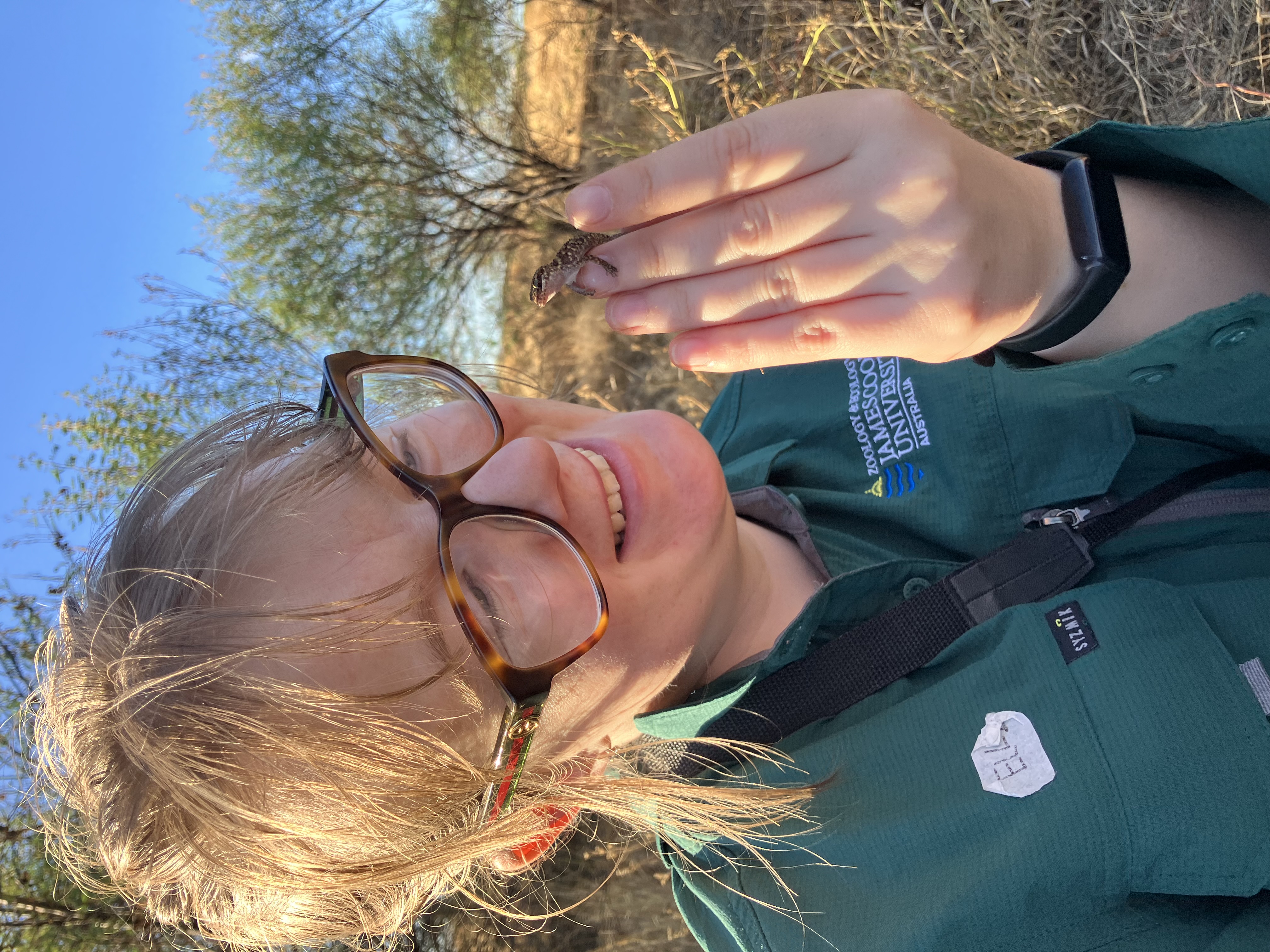
Elle Robertson
- Doctor of Philosophy (Agriculture, Environmental and Related Studies)
- elle.robertson@jcu.edu.au
Romain Vaucher
- Senior Lecturer, Sedimentology
- romain.vaucher@jcu.edu.au

Jenny Fisher
- Associate Dean, Learning and Teaching
- jenny.fisher@jcu.edu.au

Ambili Narayanan
- Doctor of Philosophy (Natural and Physical Sciences)
- ambili.narayanan@my.jcu.edu.au

Sarfaraz Ali
- Postdoctoral Research Fellow
- sarfaraz.ali@jcu.edu.au

Mikaeylah Davidson
- Postdoctoral Research Fellow
- mikaeylah.davidson@jcu.edu.au
Liuxin Chen
- Lecturer
- liuxin.chen@jcu.edu.au
Rafael Cabral Carvalho
- Lecturer, Marine Geoscience
- rafael.cabralcarvalho@jcu.edu.au
Tom Lloyd
- Postdoctoral Research Fellow, Global Ecosystems
- tom.lloyd@jcu.edu.au
Collaborative science for monitoring of Northern Territory marine megafauna (Old ID 27097)
This project will be a partnership between Indigenous rangers (Gumurr-Marthakal Rangers, Larrakia Rangers), national park managers (Kakadu National Park and Cobourg Marine Park) and scientists (Charles Darwin, Macquarie, James Cook and Edith Cowan Universities, Australian Institute of Marine Science, Taronga Conservation Society) to provide fundamental information on the ecology of northern Australian marine megafauna to design and support collaborative regional biodiversity monitoring programs that inform effective environmental management. We will conduct cutting edge seascape genetics and movement ecology research to map population connectivity and critical habitat areas and collaboratively develop methods for ongoing data collection, sharing and analysis. We have dual aims of developing (1) the best science for conservation management and decision making for marine megafauna and (2) the most appropriate approaches for cross-cultural and trans-disciplinary collaboration with Indigenous Traditional Owners and managers.
Exploring the impact of reproduction rates on carbon footprint in southeast Australian dairy herds
The project aimed to quantify the potential improvements in greenhouse gas emissions through improved reproductive rates in North Victoria and Gippsland dairy region.
Use of oaten hay to support sustainable development of dairy production (AgriFutures Australia
The project aimed to educate and promote the use of Australian oaten hay in the export market through forage quality, rumen fermentation, digestibility, weight gain and milk production studies. The findings will be useful for fodder exporters and the broader public and bring collaboration opportunities with key experts in the Australian export fodder and dairy industries.
Analysis of dairy greenhouse gas emission cost and mitigation strategies
The project aims to investigate variations of input parameters’ effect on dairy farm enteric methane emissions estimation
Methane Emissions Project
The project explored the methane emission in different feeding systems used in Murray Dairy region.
How do interactions during grazing influence dairy herd performance
This project was designed to develop thresholds to predict the grazing, standing, walking, and lying behaviour of dairy cows from motion sensor (IceTag) output.
Use of oaten hay to support sustainable development of dairy production
The project will utilise international literature review, in vitro rumen fermentation experiment, dairy cattle experiments, and case study modelling to quantify and demonstrate oaten hay carbohydrates value proposition to total mixed ration based dairy production, with a specific aim to use oaten hay to optimise production and efficiency.
NESP 4.5: Restoration by design: improving biodiversity outcomes from Australia’s restoration investments
Biodiversity monitoring of restoration projects. It will achieve this by undertaking 3 linked activities.
· Activity 1: stakeholder workshop
· Activity 2: examining methods used for restoration monitoring and evaluation
· Activity 3: evaluating biodiversity outcomes of key restoration projects.
This research is foundational for enhancing biodiversity recovery, strengthening restoration program delivery, encouraging informed restoration investments, and meeting national environmental standards. It directly addresses knowledge gaps around restoration identified in the Australia State of the Environment 2021 report and current national priorities for biodiversity conservation and restoration.
Note that this project is Phase 2 of the ‘Restoration by design’ project. Phase 1 is a small project currently underway (4.5 Phase 1: September 2023 – June 2024) which includes running a co-design workshop (planned for the first quarter of 2024) with a subset of stakeholders identified in this proposal. Project 4.5 Phase 1 is key to Project 4.5 Phase 2 of this project, as it is the formal start of the complex and time-consuming process of identification and consultation with stakeholders. Project 4.5 Phase 2 also aims to begin development of the program logic required for key parts of the project more broadly – specifically, the inclusion/exclusion criteria of restoration monitoring methods (there are many) and the inclusion/exclusion criteria for case studies to include in our detailed analysis here (again, there are many).
NESP 4.12: Mitigating the impacts of extreme weather events on spectacled flying-foxes
Spectacled flying-foxes (SFFs) were listed as Endangered in 2019, following an extreme heatwave in 2018 that resulted in the death of approximately one-third of the population. The mass mortality of Australian flying-foxes at roosts during heatwaves has been well documented, with future extreme heat events considered the greatest threat to their survival. This project aims to improve our understanding of the local thermal environments of SFF roosts across their range, which is a critical aspect of their sensitivity to the increasing risks imposed by climate change. By doing so, this project will improve species management through the provision of tools to mitigate the devastating impacts of future extreme heatwaves and advise managers on effective interventions. This project addresses national priorities by providing adaptive solutions to support the recovery of a threatened species and in developing capacity to help reverse the decline in Australia’s natural environment.
Modelling plasma devices on femtosecond to millisecond timescales for compact particle-accelerator applications.
Australia-Germany Joint Research Cooperation Scheme 2023:
Short-term exchange of researchers between JCU and DESY, collaborating on plasma wakefield acceleration (PWFA) research and development. JCU student to benefit from DESY experimental and simulation expertise as world leaders in PWFA, and DESY postdoc to benefit from JCU expertise on charged-particle transport theory.
Mining distinct and contiguous sequential patterns from large vehicle trajectories
- 2020
- Elsevier BV
- Researchers:Ickjai Lee
Climate change, ecosystems and abrupt change: science priorities
- 2020
- Royal Society
- Researchers:Terry Hughes
End Date:
01 Jan 2013
Title:
Membership in Veterinary Pathology, The Australian and New Zealand College of Veterinary Scientists
End Date:
01 Jan 2021
Start Date:
01 Jan 2022
Reseracher:
Stephanie Baker
(Senior Lecturer, Electronic Systems and Internet of Things Engineering)
Start Date:
01 Jan 2012
End Date:
01 Jan 2016
Start Date:
01 Jan 2016
Reseracher:
Stephanie Baker
(Senior Lecturer, Electronic Systems and Internet of Things Engineering)
Start Date:
01 Jan 2017
End Date:
01 Jan 2021
Start Date:
01 Jan 2006
End Date:
01 Jan 2009
Start Date:
01 Jan 2022
End Date:
01 Jan 2022
Start Date:
01 Jan 2024
End Date:
01 Jan 2024