
Tropical Water & Ecosystems
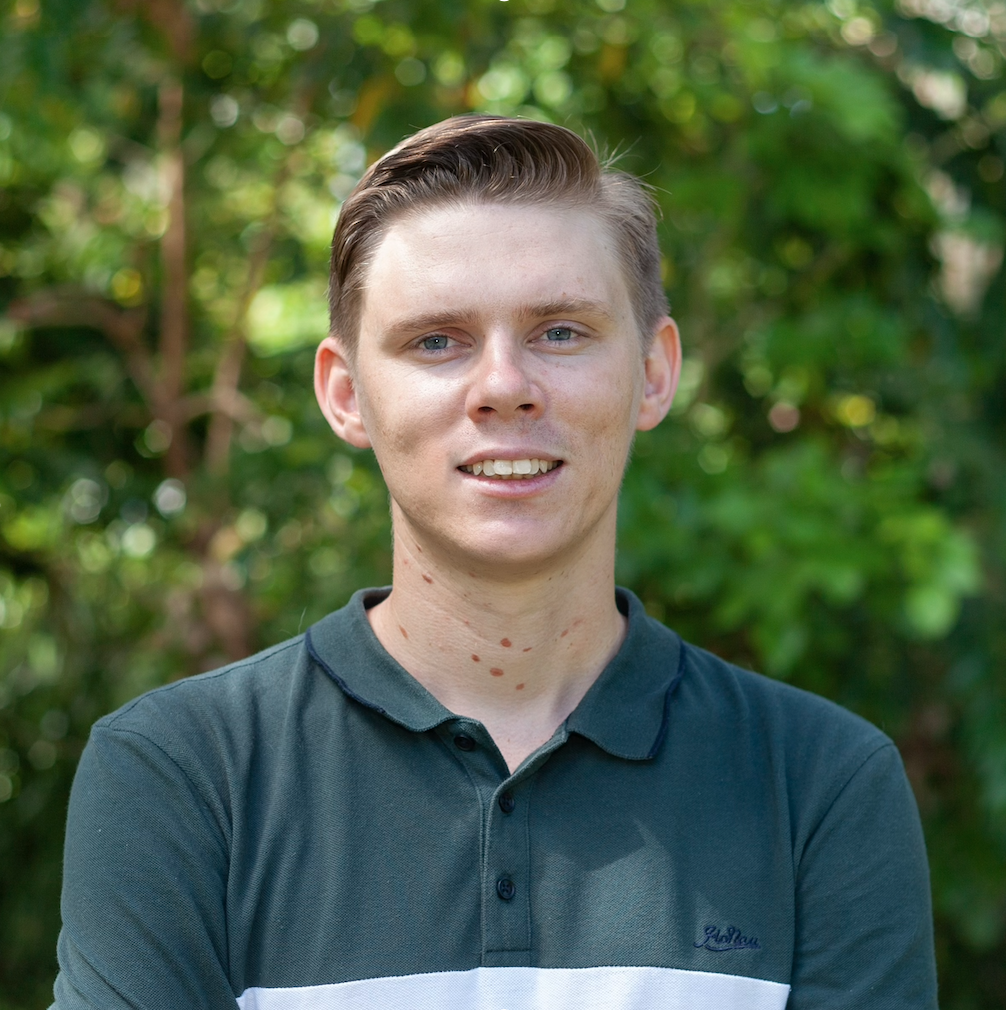
Scott Morrissey
- Research Officer
- scott.morrissey@jcu.edu.au
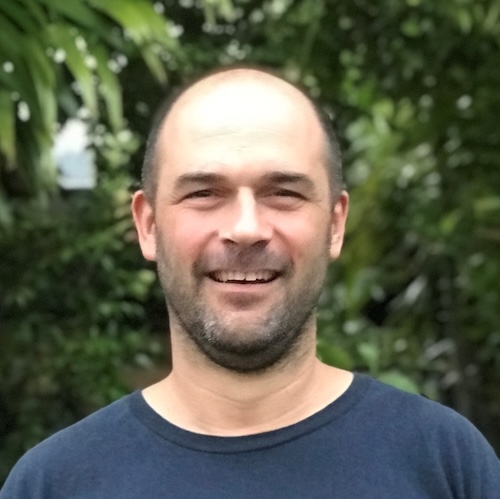
Tim Smith
- Senior Research Officer
- tim.smith2@jcu.edu.au
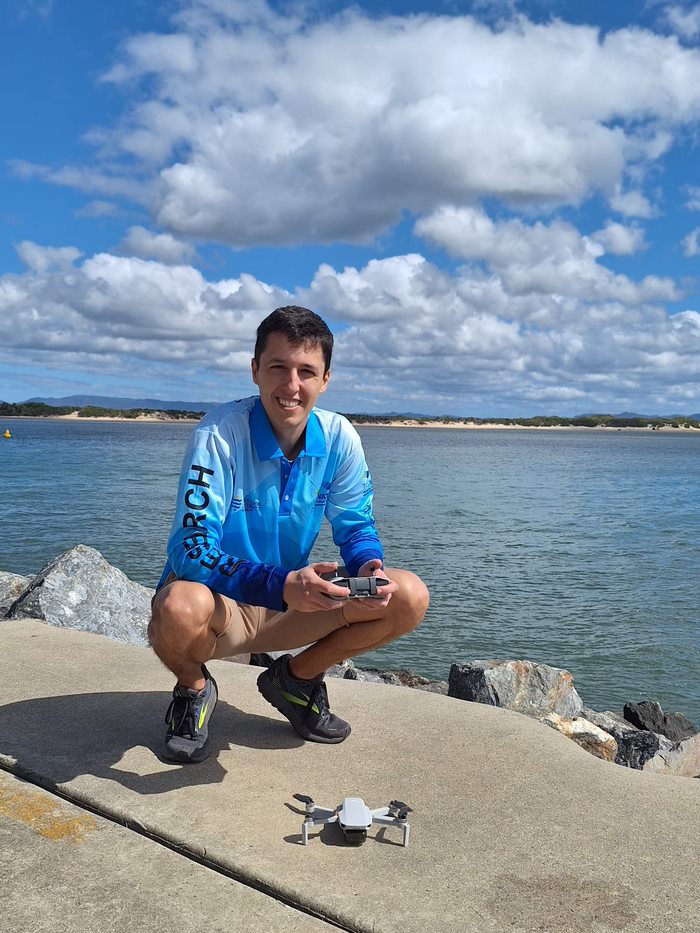
Alejandro Navarro Otero
- Casual Research Worker
- alejandro.navarrootero@jcu.edu.au
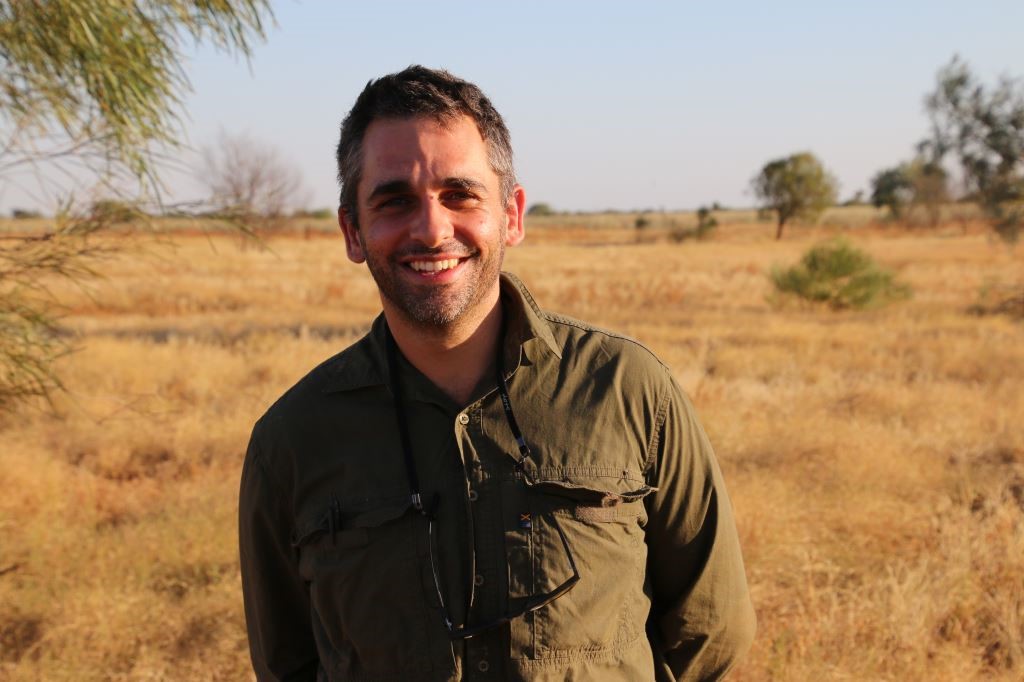
Jack Koci
- Principal Research Officer
- jack.koci1@jcu.edu.au
Sarah McDonald
- Senior Research Officer
- sarah.mcdonald@jcu.edu.au
Emily Webster
- Research Officer
- emily.webster1@jcu.edu.au

Abbi Scott
- Senior Research Officer
- abbi.scott1@jcu.edu.au

Catherine Collier
- Principal Research Officer
- catherine.collier@jcu.edu.au

Rob Coles
- Principal Research Scientist
- rob.coles@jcu.edu.au

Aaron Davis
- Principal Research Officer
- aaron.davis@jcu.edu.au
Enhancing biosecurity efforts in the Torres Strait: Science for Caring for Country
This project aims to engage Indigenous rangers from two Torres Strait islands, a high-biosecurity region, in hands-on workshops on environmental DNA methods, a technology that is transforming biosecurity monitoring
Macroinvertebrate Taxonomy and Biological Monitoring (Old ID 27918)
Biological sorting an identification of macroinvertebrates from Kakadu national Park in support of research and monitoring programs for the Supervising Scientist Branch.
Seagrass Monitoring and Research Ports North
Ports North in partnership with James Cook University’s TropWATER Seagrass Ecology Group have been engaged in seagrass monitoring and research programs in the Ports of Cairns, Mourilyan, Karumba and Thursday Island since at least 2001. The monitoring programs involve annual surveys that are conducted between October and December each year (Thursday Island is conducted in February/March).
underpinning major research initatives and our understanding of tropical seagrass ecology. The monitoring programs:
• Provide a regular update of the marine environmental health of the ports
• Satisfy commitments linked to maintenance dredging and sea disposal approvals
• Provide an assessment of seagrass condition and resilience to inform port management.
In addition to monitoring, the program is utilised and leveraged for broader initiatives and contributions for joint research and activities including providing:
• A key information feed and contribution to regional report cards including Wet Tropics Partnership for Healthy Waterways and for Torres Strait Reporting
• A link to Traditional Owner participation in environmental monitoring and research
• A range of value-added seagrass research projects including leveraged funding from Australian Government and industry funded research programs investigating seagrass recovery and restoration
Exploring Nature Based Economies with the Lama Lama Rangers
This project aims to upskill the Lama Lama Rangers to conduct seagrass monitoring using boat based and drone methods. Using the knowledge from these surveys we aim to explore nature based economy and blue carbon opportunities on Lama Lama Sea Country.
NESP 3.5: Supporting regional planning in northern Australia: Building knowledge, skills & partnerships for understanding seagrass distribution (Old ID 29021)
Northern Australia has vast development opportunities but limited knowledge of the environment to inform decision making. This region has globally significant seagrass habitat, supporting dugong, green turtle, and commercially important fish and prawns. However, knowledge about seagrass habitats for extensive areas of the coast is limited - data is patchy or not freely available, few large-scale mapping surveys have been conducted, and even fewer seagrass long-term monitoring programs exist. This project will address these problems by: 1. Mapping selected benthic habitats, with a focus on seagrass, using methods consistent with previous and ongoing surveys in northern Australia. 2. Establishing a benchmark of seagrass habitats for Traditional Owners, Indigenous communities, rangers, management agencies, ports, industry, and researchers to assess change. 3. Partnering with management agencies and ranger groups to co-design mapping and monitoring methods in remote areas that use new technology such as drones. 4. Compiling and synthesizing historical seagrass data into a publicly available spatial database to create a permanent record. 5. Interpreting and reporting on survey findings, including providing advice on options for establishing monitoring programs.
Addressing Whitsunday turbidity issues through sediment source tracing
JCU Internal Grant Support Scheme - MCR. Please see attached Application Form.
Blue carbon under heatwave: how vegetation governs greenhouse gas exchange in coastal wetlands under extreme heat
Coastal wetlands store globally significant 'blue carbon', yet their response to intensifying heatwaves is poorly understood. The work develops a mechanistic understanding of how warming reshapes coastal wetland carbon function, informing blue carbon accounting, conservation, and Australia's climate commitments.
Molongle Creek Seagrass Monitoring (Old ID 22917)
The aim of this research is to survey seagrass habitats in areas around Molongle Creek. The objectives include conducting seagrass assessments, comparing results of previous surveys and assessing changes in seagrass distribution and abundance in relation to natural events or human induced activities.
Port of Cairns 2026 Dredge Spoil Disposal Area Benthic Study
This study will undertake benthic flora and fauna as well as sediment (particle size distribution (PSD) only) monitoring at the Port of Cairns DSDA following the same or comparable methodology of previous studies (undertaken at the previous disposal area) conducted in 2020 (BMT 2020a) and 2016 (Advisian 2016). Note previous surveys did not consider flora and thus monitoring of this aspect must be appropriately considered and designed including field, laboratory (if applicable) and data analysis methodology, and analyse data to assess and highlight spatial and temporal patterns in benthic communities and sediment PSD at and adjacent the DSDA to accept or reject the abovementioned LMDMP impact hypothesis (Section 2). It is acknowledged that this is the first time this study has been conducted at the DSDA and thus temporal analysis and discussion is not possible. However, previous studies conducted at the former disposal site (DMPA) and related results and patterns should be mentioned and used whenever possible and appropriate
A Forensic Approach to Elucidating the Life History of the Deadly Jellyfish Chironex fleckeri using eDNA. (Old ID 27045)
The polyps of the deadly Chironex fleckeri represent the longest-lived stage of jellyfish and are the source of medusa. However, there is almost no information on the benthic polyp stages of this species. Environmental DNA should allow me to detect polyps and therefore identify the sources of jellyfish which will increase our understanding of cubozoan ecology and how to minimise their threat of envenomating humans. Further, oceanographic modelling, that incorporates the decay of eDNA, will provide greater knowledge of ‘DNA’ halos’ that signals proximity to targeted polyp beds and jellyfish aggregations.
Coral decline threatens fish biodiversity in marine reserves
- 2004
- National Academy of Sciences
- Researchers:Maya Srinivasan
Mid-late Holocene sea-level variability in eastern Australia
- 2008
- Wiley-Blackwell
- Researchers:Stephen Lewis
Title:
Honours Thesis Examination
Start Date:
01 Jan 2021
End Date:
01 Jan 2021
Title:
Masters Thesis Examination
Start Date:
01 Jan 2021
End Date:
01 Jan 2021
Title:
Guest Lecture - EV1005
Start Date:
01 Jan 2023
End Date:
01 Jan 2023
Title:
Guest Lecture - EV1005
Start Date:
01 Jan 2022
End Date:
01 Jan 2022
Start Date:
01 Jan 2023
End Date:
01 Jan 2023
Start Date:
01 Jan 2022
End Date:
01 Jan 2022
Title:
Honours Thesis Examination
Start Date:
01 Jan 2022
End Date:
01 Jan 2022
Start Date:
01 Jan 2023
End Date:
01 Jan 2023
Start Date:
01 Jan 2024
End Date:
01 Jan 2024
Start Date:
01 Jan 2008