
JCU Singapore

Yuto Yasuda
- Lecturer Psychology
- yuto.yasuda@jcu.edu.au
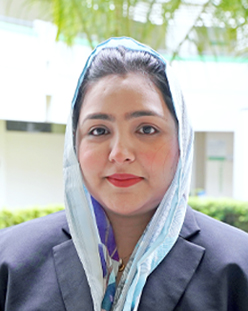
Hina Munir
- Lecturer Business
- hina.munir@jcu.edu.au

Lijuan Shen
- Senior Lecturer Information Technology
- lijuan.shen@jcu.edu.au
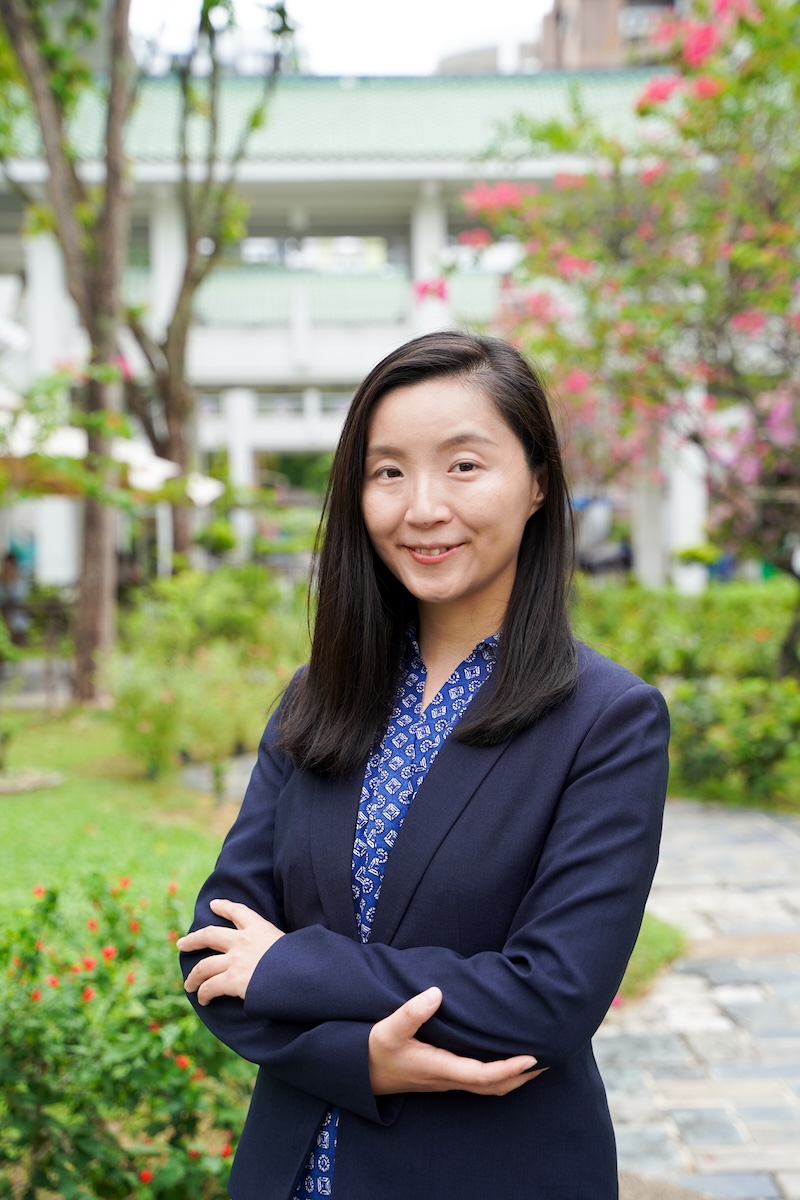
Cindy Liu
- Senior Lecturer (Business)
- cindy.liu@jcu.edu.au

Jonathan Chia
- Lecturer Psychology
- jonathan.chia@jcu.edu.au

Erik Hormann
- Lecturer Mathematics
- erik.hormann@jcu.edu.au

Jennifer Chong
- Lecturer Business (Accounting)
- jennifer.chong@jcu.edu.au

Barry Tse
- Sessional Lecturer
- barry.tse@jcu.edu.au

Kaiqin Chan
- Associate Professor
- kaiqin.chan@jcu.edu.au

Caroline Wong
- Associate Dean Learning & Teaching / Associate Professor
- caroline.wong@jcu.edu.au
Dolphin-watching tourism as an alternative or supplemental livelihood to marginalised artisanal fishers in Indonesia
Zilmiyah Kamble
01 Jul 2019 - 30 Dec 2020
Jointly funded by Conservation Strategy Fund (Indonesia) & James Cook University (JCUA-JCUS). This project reflects on testimonials of marginalized artisanal fishers, who have adopted dolphin-watching tourism as a supplementary livelihood in Kiluan, Lampung in Indonesia. Predominantly, marginalized, owing to extreme poverty, unsafe working conditions, for a diminishing resource against powerful industrial large-scale fishers; these fishers’ merit to be included in discourses of empowerment and livelihoods. Dolphin-watching tourism is occupationally close and has the potential of being an ideal supplementary livelihood, this study explored to ascertain its potential to contribute to social empowerment and eliminate injustices.
Regenerative cross- border tourism post COVID 19
Zilmiyah Kamble
01 Jan 2021 - 31 Dec 2021
This project was funded as a JCUS-JCUA cross campus collaboration grant. This exploratory study aims to investigate opportunities for regenerative tourism in SIJORI (Singapore, Johor, and Riau Islands) context. Given calls for a paradigm shift towards ‘regenerative’ tourism, a system that goes beyond sustainability and its shortfalls. Regenerative tourism is a system that places importance on societal wellbeing and the environment and provide social, environmental and economic benefits without increasing concerns for climate change.
Why does your study matter? Developing doctoral writing with Legitimation Code Theory
Daniel O'Sullivan
14 May 2024
Why does your study matter? Developing doctoral writing with Legitimation Code Theory - This research focuses on raising student awareness of how to articulate and construct the rationale for a doctoral thesis. Rationale statements do not necessarily appear as a stable section or chapter in a thesis in the way that, for instance, the literature review does. This can make it an obscured and overlooked aspect of the thinking and writing process early in the research process. The workshop that forms the basis of this project seeks to address this blind spot. The workshop aims to improve doctoral writing by developing a teaching approach using Legitimation Code Theory (LCT), a framework for educational research and practice (Maton 2014). The session draws insights and examples from doctoral work conducted originally at the University of Sydney (Wilmot 2019) and will be taught in three different international contexts: the UK (Durham University), Singapore (James Cook University) and South Africa (Rhodes University). The workshop tutors are experts in the use of LCT in educational contexts and include the author of the PhD study on which the project is based.
Effects of Visitor Health Risk Perception, Destination Image and Future Travel Intentions post COVID-19
Zilmiyah Kamble
21 Apr 2020 - 30 Apr 2021
This research project investigates the effects of perceived health risk on destination image and on travel intention and the relationships between perceived health risks and travel intention to Singapore and other ASEAN destinations. The target population of this study is inbound visitors to ASEAN who had revised their travel plans due to COVID-19 pandemic. The study employs mixed methods approach and will be conducted over three phases.
Life history of the critically endangered ray bottlenose wedgefish Rhynchobatus australiae (Old ID 26572)
Neil Hutchinson
01 Jan 2020 - 31 Mar 2023
Management and conservation efforts for threatened species can be hampered by the lack of age, growth and maturity (life history) information. The bottlenose wedgefish, Rhynchobatus australiae, is a large coastal ray that is found throughout the Indo-Pacific. It is the most commonly caught wedgefish and it is retained in fisheries for its high valued fins and meat. It is classified as Critically Endangered by the IUCN Red List and faces an extremely high risk of extinction. However there is limited life history information available globally. This project will further the biological knowledge available for this species and can be used to help implement effective management and conservation measures.
Seafood Consumption and Production Trends – Singapore Market Study
Sook Rei Tan
01 Aug 2021 - 31 Dec 2021
The research project seeks to provide WWF-Singapore with detailed information around trends in seafood supply and apparent
consumption in Singapore, with a focus at the species level. The analysis will also involve the calculations around the volume of
certified and non-certified seafood imported into and exported from Singapore, disaggregated by species. The analysis will also seek
to both identify the sectors and respective major buyers that are importing seafood, and calculate seafood import volume (down to
species level) for each identified sector/buyer. Finally, the analysis will also seek to cover total production volume of local
aquaculture farms, disaggregated by species, and the market share of individual farms. The results from this study will be used to
inform WWF-Singapore’s seafood strategy
Seafood Consumption and Production Trends – Singapore Market Study
Susan Kueh
01 Aug 2021 - 31 Dec 2021
The research project seeks to provide WWF-Singapore with detailed information around trends in seafood supply and apparent
consumption in Singapore, with a focus at the species level. The analysis will also involve the calculations around the volume of
certified and non-certified seafood imported into and exported from Singapore, disaggregated by species. The analysis will also seek
to both identify the sectors and respective major buyers that are importing seafood, and calculate seafood import volume (down to
species level) for each identified sector/buyer. Finally, the analysis will also seek to cover total production volume of local
aquaculture farms, disaggregated by species, and the market share of individual farms. The results from this study will be used to
inform WWF-Singapore’s seafood strategy
A pilot study to analyze whether changes in bacteria microbial community using flow cytometry and pathogen eDNA can be employed to monitor and predict disease outbreaks in commercial fish farms in Singapore
Susan Kueh
04 Apr 2024 - 04 Apr 2025
AIM:
Can changes in bacteria microbial community using flow cytometry and pathogen eDNA be used as a proxy for predicting disease outbreaks in commercial fish farms in Singapore?
CONTEXT:
The aquaculture industry is constantly jeopardized by diseases which can result in insignificant economic losses due to poor growth performance and mortality. Fish diseases are caused by a wide range of infectious organisms, including viruses, bacteria, fungi, protozoan, and metazoan parasites. Microbial communities can change rapidly in aquatic environments and adversely impact fish health and water quality such that efficient and reliable monitoring methods are needed to inform the management of aquaculture production. Conventional total bacteria plate counts are commonly used to monitor bacteria load and serve as an indicator for managing water exchange, but this is a tedious technique for large sample sizes. Flow cytometry (FCM) and eDNA monitoring are fast gaining traction for fast and reliable high throughput analysis of large sample sizes. Environmental DNA sampling methodology represents the new frontier of research, where water, soil, and biofilms are collected for DNA analysis of potential environmental pathogens. Total bacteria counts are an indicator of water quality and microbial loads are highly correlated with suspended solids from land runoffs that can harbor aquatic pathogens (sea snow). This study will compare whether eDNA molecular analysis with FCM for total viable bacteria counts is a rapid, reliable, and efficient tool to improve disease monitoring to predict the presence of pathogens that may cause an outbreak.
METHODOLOGY:
Representative water samples will be collected once weekly from selected farm sites ( Singapore Aquaculture Technologies SAT) for analysis using FCM and eDNA, for 6 months. Fish samples will be examined using histopathology to provide an overview of general fish health and the presence of any significant disease. Depending on an initial site visit assessment and interview with farms, a panel of up to 5 significant pathogens of interest to fish farms may be included in the eDNA monitoring panel. The final sampling design will be developed based on issues that partner farms wish to investigate. Up to 6 water and 6 fish samples will be collected each week for analysis, giving an overall total of 144 water and 144 fish samples. A monthly report will be made available to partner farms to assist them in making management decisions. Trends in viable bacteria counts and pathogen loads will be correlated to farm production data and general fish health.
Effects of black soldier fly larvae (Hermetia illucens) reared from heterogeneous food waste as a supplement to fishmeal-limited diets on growth indices, hepatosomatic responses and immuno-responses of Barramundi in grow-out phase
Susan Kueh
01 Mar 2023 - 31 Jul 2026
NTU has contacted TFI for assistance in running a feeding trial with barramundi using black soldier fly larvae (BSFL) as sustainable replacement for fish meal (FM) in feed. The trial will be carried out in the JCUS Aquaculture Teaching and Research Lab over a 3 month period. The project will evaluate the effects of dietary BSFL as a FM replacement on the growth performance, histological effects on fish gut and immune responses of barramundi. Results will be published in peer reviewed journal.
Establishing blood biochemistry reference intervals for juvenile Asian Seabass
Susan Kueh
01 Mar 2024 - 31 Dec 2024
Asian Seabass, Lates calcarifer is one of the most important farmed fish species in Singapore and SE Asia. Like for many other intensively farmed animals, diseases remain one of the main threats to sustainable aquaculture of this species. Diseases are more prevalent in juvenile L. calcarifer due to less developed immunity. Histopathology is commonly used for screening fish for disease and health certifications. However, organ pathology maybe preceded by changes in blood biochemistry days to weeks ahead of clinical signs and visible pathology. In human and domesticated animal species, blood biochemistry has been established as a reliable and economical method to monitor organ function, general health, and guide disease management, but has yet to be established for aquaculture species. This study aims to build on the blood reference intervals published by Chew et al., 2023, and extend them to biochemical parameters indicative of organ function for important organs such as the liver and kidney. Biochemistry will be correlated to histopathological evaluations of healthy reference population of L. calcarifer, for a more robust evaluation of health status.
Title:
Green Open Access Award
Start Date:
01 Jan 2024
Start Date:
01 Jan 2024
Start Date:
01 Jan 2024
Start Date:
01 Jan 2023
End Date:
01 Jan 2025
Start Date:
01 Jan 2021
End Date:
01 Jan 2023
Start Date:
01 Jan 2021
End Date:
01 Jan 2023
Title:
Adjunct Lecturer, Kaplan
Start Date:
01 Jan 2021
End Date:
01 Jan 2023
Start Date:
01 Jan 2021
End Date:
01 Jan 2023
Start Date:
01 Jan 2018
End Date:
01 Jan 2021
Title:
Special Commendation Award
Start Date:
01 Jan 2024