
Medicine
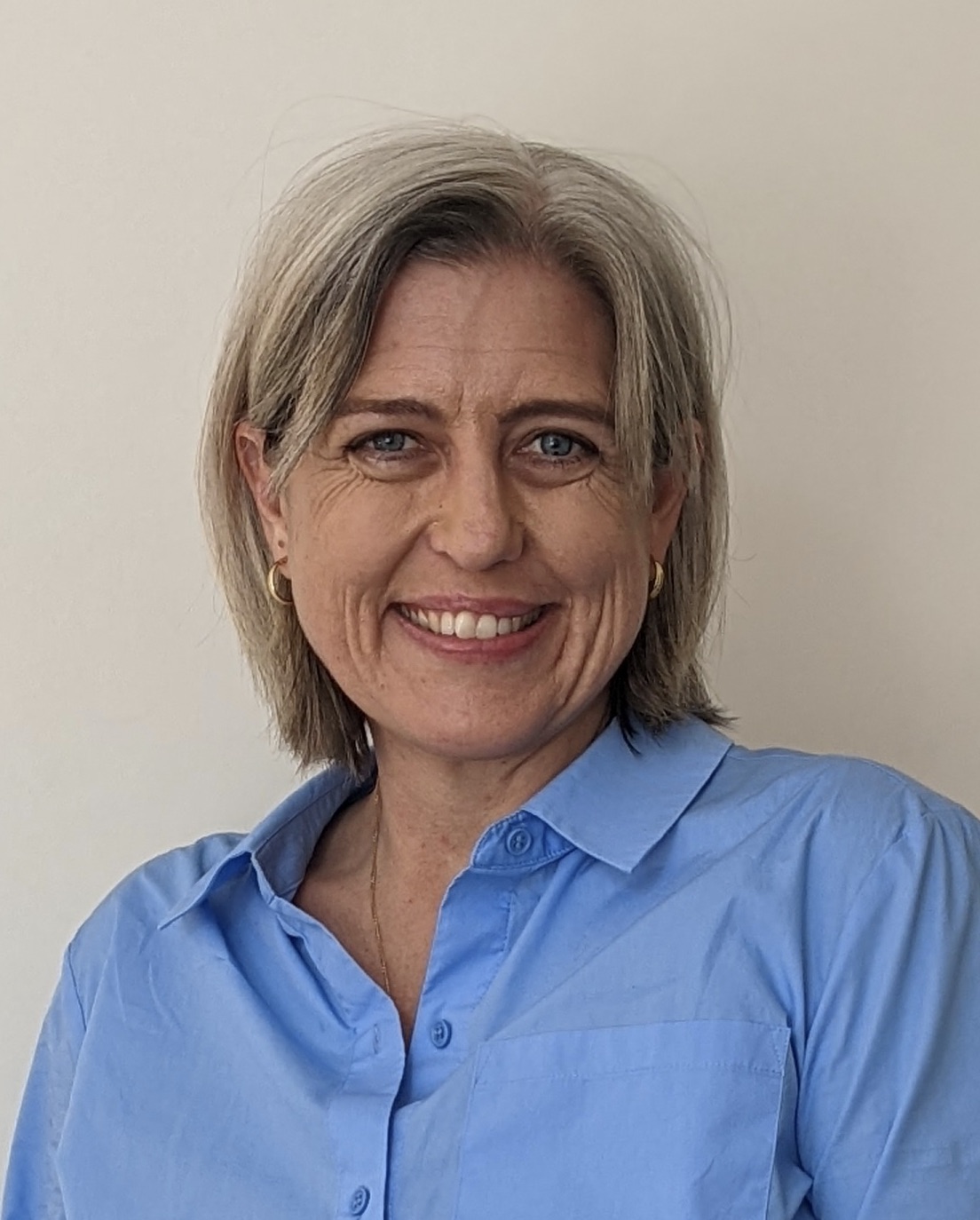
Erin Waters
- JCU Associate Professor
- erin.waters@jcu.edu.au

Shiv Thanigaimani
- Senior Research Fellow, Peripheral Vascular Disease (PVD)
- shiv.thanigaimani@jcu.edu.au

Alkira Deren
- Clinical Research Officer
- alkira.venn@jcu.edu.au

Michael Robinson
- JCU Lecturer
- michael.robinson@jcu.edu.au

Nalita Turner
- Research Officer
- nalita.turner@jcu.edu.au

Bunmi Malau-Aduli
- JCU Professor
- bunmi.malauaduli@jcu.edu.au
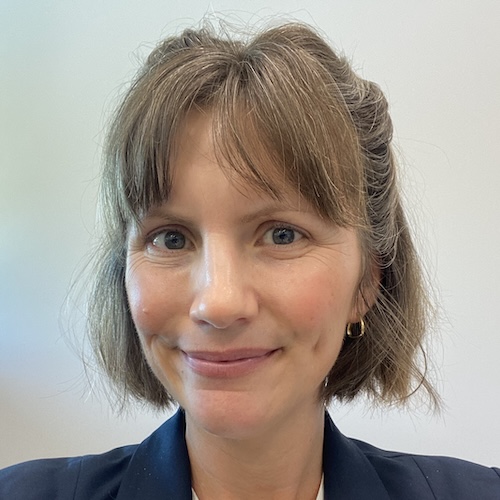
Jenna Graffini
- Research Project Manager
- jenna.graffini@jcu.edu.au

Mel Muscat
- Adjunct Research Fellow
- melody.muscat@jcu.edu.au
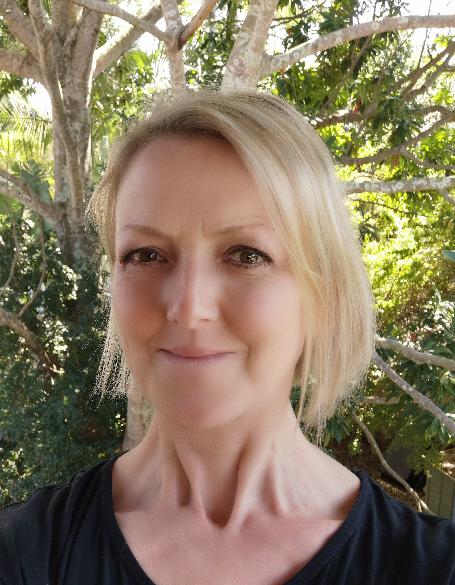
Yvonne Hornby-Turner
- Adjunct Research Fellow
- yvonne.hornbyturner@jcu.edu.au

Geoffrey Dobson
- Professor
- geoffrey.dobson@jcu.edu.au
Australian Defence Force Heat Tolerance Testing (Old ID 20420)
Melissa Crowe
01 Jun 2012 - 01 Jun 2017
This agreement will enable Dr Melissa Crowe and associated staff of the Institute of Sport and Exercise Science at JCU to provide heat tolerance testing for member of the Australian Defence Force who may have suffered heat stroke in accordance with policy from the Australian Defence Force Joint Health Command.
Independent evaluation of the Structured Operational Research and Training Initiative on Ebola conducted in Liberia and Sierra Leone (Old ID 26156)
Karen Carlisle
20 Mar 2018 - 20 Jun 2018
In 2016, TDR conducted SORT iT courses in Sierra Leone and Liberia, with the aim of strengthening research capacity following the Ebola outbreak. Funding was provided by the UK Department for International Development (DFID). The purpose of this evaluation is to (1) Evaluate the process of implementation, short and intermediate-term impact of SORT-iT work in Liberia and Sierra Leone. (2) To develop and pilot a framework for independent impact evaluations of SORT-iT. The findings will inform future rounds of SORT-iT in both countries. Furthermore the pilot framework will focus on low cost and easy-to-use tools to foster wider and continued application.
The Interest In Ongoing Medical Research (Old ID 22835)
Ronny Gunnarsson
01 Jul 2016 - 28 Feb 2018
Most people perceive that they are clever enough to understand research if they just can get the information. This study aims to clarify if the population in Far North Queensland is interested to know about ongoing medical research in the area. An automated information system will also be trialled.
Piloting a continuous quality improvement framework to strengthen quality of care in Aboriginal residential aged care (Old ID 27413)
Yvonne Hornby-Turner
02 Nov 2021 - 31 Dec 2024
This study responds to concerns raised in The Royal Commission report, 2021 that the Australian aged care system struggles to effectively manage people with complex care needs. Continuous Quality Improvement (CQI) is a method designed to improve the capacity and readiness of health services/staff to meet pre-determined goals/standards, and the quality of treatment and care, and implement health interventions. This project aims to assess the suitability of the CQI model for improving the quality of care in Aboriginal and Torres Strait Islander Residential Aged Care Facilities (RACF) by developing and implementing a CQI framework for Aboriginal and Torres Strait Islander RACF.
So like your Mum! Is the health and nutrition of mothers in far north Queensland reflected in the growth and nutrition of their children in early life? (Old ID 21713)
Dympna Leonard
01 Jan 2015 - 31 Aug 2017
Factors in ‘the First Thousand Days’ from conception, through pregnancy and up to age 2 years, influence health through life. A mother’s health and nutrition, and early feeding of her baby ‘program’ for later health, predisposing to good health and development, or to early anaemia with associated developmental delay, or to increased susceptibility to chronic disease in adult life. This research will use linked routine health service data for approximately 5,400 mother and baby pairs, including about 970 babies of Aboriginal and/or Torres Strait Islander mothers, born over a two year period. The study will examine antenatal and early life factors in relation to child growth and early childhood anaemia.
Evaluation of QAIHC Sexual Health and Wellbeing Project. (Old ID 27405)
Karen Carlisle
22 Oct 2021 - 22 Jan 2023
The overall goal of the QAIHC Sexual Health and Wellbeing Project is to improve Sexually transmissible infection (STI) and blood borne virus (BBVs) services in QAIHC Member Services and to work towards reducing the number of Aboriginal and Torres Strait Islander positive notifications. To help achieve this, support is provided for Member Services to implement models of care aimed to increase client engagement, education opportunities, as well as improve screening, notification and treatment rates. Tools, resources and support are provided to participant health services to implement sexual health and wellbeing activities that are culturally safe, led by Aboriginal and Torres Strait Islander health workers and tailored to the Aboriginal and Torres Strait Islander model of care. The aim of this work is to evaluate the implementation, impact and outcomes of the QAIHC Sexual Health and Wellbeing Project.
Understanding the experience of women in a tuberculosis hot spot in Solomon Islands to effectively find, treat and care for people with tuberculosis. (Old ID 28952)
Michelle Redman-MacLaren
01 Nov 2022 - 15 Aug 2024
• TB remains at unacceptable rates in East Kwaio, Malaita, Solomon Islands. There still are many more undiagnosed cases, or new cases, known to occur amongst people living in mountainous areas. • Women are central to the care of children and family members, including being responsible for growing food. They experience tuberculosis, and care of people with tuberculosis, differently to men and children because of these responsibilities. • Barriers to finding, testing and treating TB remain due to social and cultural challenges faced by women, health system exclusion and geographic isolation. The aim of this qualitative study is to explore and describe women's experience of tuberculosis in East Kwaio, Solomon Islands to determine how to effectively test, treat and support people with tuberculosis.
Indroducing Mitochondrial Donation into Australia: Healthy Outcomes Pilot and Evaluation (MitoHOPE)
Andrew Mallett
01 Jan 2023 - 31 Dec 2027
MitoHOPE is an Australian wide mitochondrial donation and reproduction options program designed to safely meet the needs of people who have mitochondrially coded mitochondrial disease.
Mitochondrially coded mitochondrial disease (mito hereafter), is matrilineally inherited, and can cause life-long illness, suffering and debility. It often shortens life. Mitochondrial donation is a reproductive technology that can reduce the chances of mito being passed on to children.
Participants: The focus of this project is Australian citizens who have a diagnosis of mito or are nearing diagnosis, are of reproductive age and seeking to build their families, but are concerned about the possible impacts of mito disease being passed on to future children.
Intervention: MitoHOPE has formed a consortium with MonashIVF and other agencies to provide safe yet efficient access to reproductive options for women, including mitochondrial donation. MitoHOPE will establish two world class laboratories that will refine mitochondrial donation technologies – one for research purposes, the other embedded in MonashIVF for use in the later treatment phase of the project.
Outcome: MitoHOPE aims to increase health practitioner knowledge about mito, and shorten the diagnostic odyssey often experienced by those with mito. It aims to refine the existing technology and offer safe mitochondrial donation to women with mito across Australia. MitoHOPE has collaborated and will continue to do so with mito consumer organisations to achieve the best service experience for consumers.
Research into the lived experiences of Australian South Sea Islander people, including levels of disadvantage (DES1231850)
Michelle Redman-MacLaren
05 Apr 2024 - 02 May 2025
This contract research will explore lived experiences of Australian South Sea Islander people, including levels of disadvantage, using an exploratory qualitative research methodology and methods to build upon existing ABS data (including Index of Relative Socio-Economic Disadvantage), peer-reviewed literature and reports. The Queensland Government (Department of Environment and Science) in partnership with Multicultural Affairs Queensland are working with the Queensland United Association of South Sea Islander Communities (QUASSIC) to understand the experiences of Queensland South Sea Islanders. There is a lack of current and relevant data to evidence how it is to live as a South Sea Islander in Queensland. The President and of QUASSIC and the Research Lead of the QUASSIC Research Institute approached Redman-MacLaren (PI) to submit this application.
The study will identify and analyse existing data to inform the design, implementation and reporting of an exploratory, qualitative study to answer the research question: What are the lived experiences of Australian South Sea Islander people in two regional Queensland communities, including levels of disadvantage?
Informed by the Melanesian-developed Tok Stori research methodology, multigenerational family interviews will be facilitated by emerging South Sea Islander researcher, Ms Zia Quakawoot, with South Sea Islander families in Rockhampton and Bundaberg. These communities have been chosen as current health research is occurring in Mackay region (large SSI community) and we wish to explore a broad range of experiences while reducing risk of research fatigue. The stages of the research will be: 1) community engagement in Rockhampton and Bundaberg to ensure community support; 2) multigenerational family stories (min. n=8; approx. 24 people); participatory data analysis (with Quakawoot & QUASSIC leaders); Community meetings to discuss findings & recommendations; and 4) report submitted to Qld Govt.
Development of bivalent degraders targeting Aurora kinase A for the treatment of polycystic kidney disease (Old ID 31137)
Andrew Mallett
01 Jan 2023 - 31 Dec 2025
Autosomal Dominant Polycystic Kidney Disease (ADPKD) is the most common, potentially fatal, monogenic disease. It is characterised by hyperproliferative formation of fluid-filled cysts from renal epithelia, which progressively ablate healthy renal tissue requiring dialysis or renal transplant to prevent death. It affects 1 in 500-1000 Australians and makes up 5% of end stage renal disease patients. The only approved therapy is a drug called tolvaptan, which inhibits the vasopressin receptor, thereby treating a symptom. Unsurprisingly, tolvaptan has only modest benefits, increasing patient lifespan by ~2.6 years at a cost of US$744K per quality-of-life-year gained. The drug has considerable side effects, including the potential for liver toxicity, with a borderline cost-benefit-risk profile. Consequently, ~24% patients discontinue use. Recently, a Phase II/III trial of Sanofi’s heralded breakthrough therapy, venglustat, was halted due to failure to prevent cyst growth. Rapamycin has also failed in clinical trials previously. As such, any therapeutic treatment that could halt/slow disease progression would be paradigm-shifting to meet this unmet need. We have shown that ADPKD can be halted by genetic ablation of Aurora kinase A (AURKA). Thus, AURKA is a key driver of this disease. We have now developed a small molecule that potently degrades AURKA at low nanomolar levels. This targeted protein degrader (TPD), which we call TPD100, is on the precipice of a significant value inflexion point that will be realized through the combination of its current in vitro cell-based and in vivo potency, combined with a future strong intellectual property position, and evidence of efficacy and safety in ADPKD animal models. This grant will support the development of a novel and patent-protected TPD that is safe and efficacious in ADPKD animal models with once-weekly subcutaneous dosing, representing a very attractive investment package as we progress towards a human ADPKD therapy.
Current Management of Peripheral Artery Disease: Focus on Pharmacotherapy
- 2022
- Adis International
- Researchers:Jonathan Golledge
Why are bleeding trauma patients still dying? Towards a systems hypothesis of trauma
- 2022
- Frontiers Research
- Researchers:Jodie MorrisHayley Letson
Start Date:
01 Jan 2012
Start Date:
01 Jan 2012
Start Date:
01 Jan 2009
Start Date:
01 Jan 2009
Start Date:
01 Jan 2007
Start Date:
01 Jan 2002
Start Date:
01 Jan 2002
Start Date:
01 Jan 1996
Start Date:
01 Jan 2002
End Date:
01 Jan 2009
Start Date:
01 Jan 2003
End Date:
01 Jan 2004