
College of Medicine & Dentistry
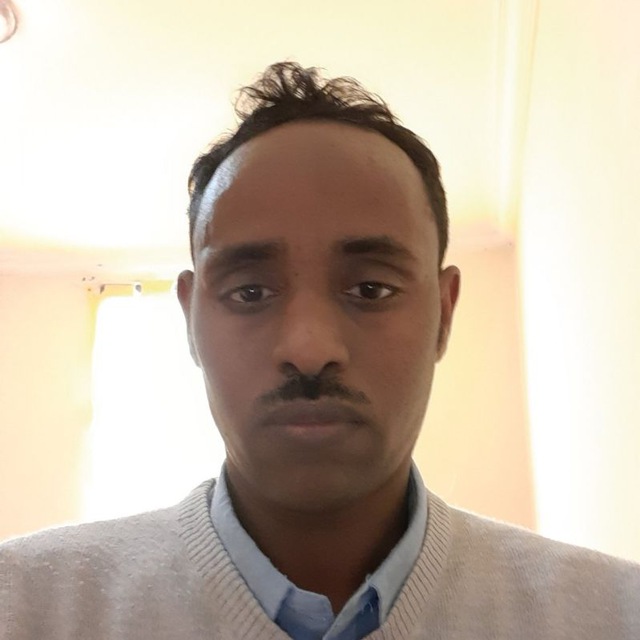
Semagn Abate
- Doctor of Philosophy (Health)
- semagn.abate@my.jcu.edu.au

Fahmida Begum Mina
- Doctor of Philosophy (Medical, Molecular and Veterinary Sciences)
- fahmidabegum.mina@my.jcu.edu.au

Hannah Woodall
- Doctor of Philosophy (Medical, Molecular and Veterinary Sciences)
- hannah.woodall@my.jcu.edu.au

Jessica Scott
- Doctor of Philosophy (Medical, Molecular and Veterinary Sciences)
- jessica.scott2@jcu.edu.au

Brittany Moller
- Doctor of Philosophy (Health)
- brittany.moller@my.jcu.edu.au

Amanda Mackay
- Rural Pharmacy Liaison Officer
- amanda.mackay@jcu.edu.au

Nathan Dawes
- Associate Dean, Learning and Teaching
- nathan.dawes@jcu.edu.au

Donald Whaleboat
- Associate Dean, Aboriginal and Torres Strait Islander Health
- donald.whaleboat@jcu.edu.au

Anna Kokavec
- Senior Lecturer, Medical Education, Student Support and Professional Practice
- anna.kokavec@jcu.edu.au
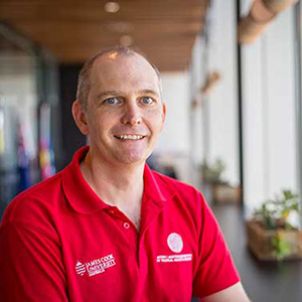
Aaron Hollins
- Head, School of Rural and Remote Health
- aaron.hollins@jcu.edu.au
An evaluation of resilience in medical students on rural rotations
Resilience, defined as the ability to adapt and recover from stress, adversity, and challenges, is an essential attribute for medical students and professionals (Fletcher & Sarkar, 2013). It serves as a critical factor in sustaining mental well-being, maintaining academic performance, and preventing burnout in the demanding context of medical training (McKinley et al., 2019; Tempski et al., 2015). The pathway to becoming a doctor is marked by a significant academic workload, emotional challenges, and high expectations, all of which contribute to heightened stress levels (Dyrbye et al., 2014).
Rural clinical rotations are integral to many medical training programs, and offer students unique learning experiences and exposure to a diverse patient population. often present distinct challenges, such as isolation from peer support and limited resources, which can influence students' mental health and overall resilience (McGrail et al., 2017). While these experiences can enhance clinical skills and encourage a commitment to rural practice (Sen Gupta et al., 2013), they may also place additional stress on students that can impact their resilience (Wearne & Baker, 2012).
Previous studies have suggested that rural experiences can contribute positively to resilience by fostering adaptability, independence, and confidence - qualities that contribute to a doctor's ability to manage complex situations effectively (Smith et al., 2018). However, the intensity and unfamiliarity of rural placements can also heighten emotional and psychological stress (Johnson & Wright, 2021). While some students thrive in these environments, others may experience heightened stress that challenges their coping mechanisms (MacLeod et al., 2021). Understanding these varied outcomes is essential for developing strategies to support medical students and ensure their well-being throughout their training.
Measurement of resilience in medical education research has often relied on validated tools such as the Connor-Davidson Resilience Scale (CD-RISC). The CD-RISC has been widely used due to its comprehensive assessment of resilience, covering aspects like perseverance, confidence under pressure, and adaptability (Connor & Davidson, 2003; Campbell-Sills & Stein, 2007).
This study aims to investigate the impact of rural clinical rotations on the resilience of medical students at James Cook University across different training stages (2nd, 4th, and 6th years). Such insights are invaluable for shaping medical curricula that promote psychological resilience, enhance academic performance, and support retention in rural healthcare practices. By identifying how resilience changes throughout these rotations, medical schools can tailor interventions that strengthen students' coping mechanisms, ultimately contributing to their long-term professional and personal development.
Objectives
• To measure and compare the levels of resilience in 2nd, 4th, and 6th-year medical students before and after their rural clinical rotations.
• To assess any correlations between changes in resilience and year of study or demographic variables (e.g., age, gender, prior rural experience).
Broadening an understanding of learners who think differently in medical education
A reflective study of catering for diversity of learning styles in medical training.
Health policy: outcomes for rural residents’ access to maternity care
- 2009
- National Rural Health Alliance
- Researchers:Sarah Larkins
The benefits of community participation in rural health service development: where is the evidence?
- 2009
- National Rural Health Conference Proceedings
- Researchers:Judy TaylorSarah Larkins
Expanding medical education in general practice
- 2003
- Royal Australian College of General Practitioners
- Researchers:Richard HaysTarun Sen Gupta
Stress, personal and educational problems in vocational training: a prospective cohort study
- 2003
- Royal Australian College of General Practitioners
- Researchers:Sarah LarkinsRichard Hays
Ruralising medical curricula: the importance of context in problem design
- 2003
- Wiley-Blackwell
- Researchers:Richard HaysTarun Sen Gupta
Isolation, flexibility and change in vocational training for general practice: personal and educational problems experienced by general practice registrars in Australia
- 2004
- Oxford University Press
- Researchers:Sarah LarkinsJulie ParisonRichard Hays
The practical value of the standard error of measurement in borderline pass/fail decisions
- 2008
- Blackwell Publishing
- Researchers:Richard HaysTarun Sen Gupta
The determinants of quality in procedural rural medical care
- 2005
- Deakin University Press
- Researchers:Richard Hays
Start Date:
01 Jan 2022
End Date:
01 Jan 2027
Start Date:
01 Jan 2020
End Date:
01 Jan 2022
Start Date:
01 Jan 2019
End Date:
01 Jan 2021
Title:
French
Title:
English
Start Date:
01 Jan 2020
End Date:
01 Jan 2020
Start Date:
01 Jan 2010
End Date:
01 Jan 2021
Start Date:
01 Jan 2013
End Date:
01 Jan 2015
Start Date:
01 Jan 2007
End Date:
01 Jan 2008
Start Date:
01 Jan 2006
End Date:
01 Jan 2007