
College of Medicine & Dentistry
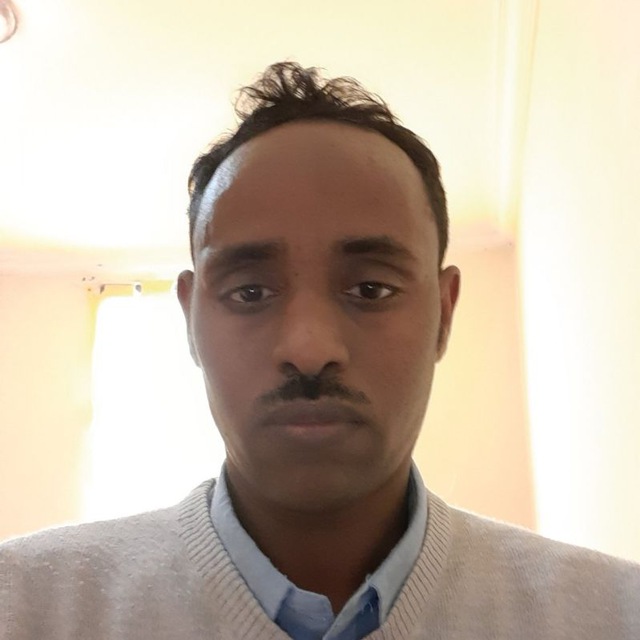
Semagn Abate
- Doctor of Philosophy (Health)
- semagn.abate@my.jcu.edu.au

Fahmida Begum Mina
- Doctor of Philosophy (Medical, Molecular and Veterinary Sciences)
- fahmidabegum.mina@my.jcu.edu.au

Hannah Woodall
- Doctor of Philosophy (Medical, Molecular and Veterinary Sciences)
- hannah.woodall@my.jcu.edu.au

Jessica Scott
- Doctor of Philosophy (Medical, Molecular and Veterinary Sciences)
- jessica.scott2@jcu.edu.au

Brittany Moller
- Doctor of Philosophy (Health)
- brittany.moller@my.jcu.edu.au
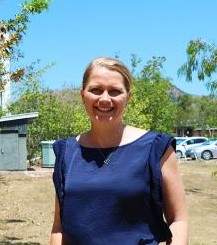
Amanda Mackay
- Rural Pharmacy Liaison Officer
- amanda.mackay@jcu.edu.au

Nathan Dawes
- Associate Dean, Learning and Teaching
- nathan.dawes@jcu.edu.au

Donald Whaleboat
- Associate Dean, Aboriginal and Torres Strait Islander Health
- donald.whaleboat@jcu.edu.au

Anna Kokavec
- Senior Lecturer, Medical Education, Student Support and Professional Practice
- anna.kokavec@jcu.edu.au
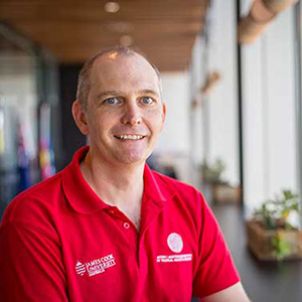
Aaron Hollins
- Head, School of Rural and Remote Health
- aaron.hollins@jcu.edu.au
Project: Development of rural generalist medicine: An international comparison - the Qld Case Study
I am receiving no research grant for this project but have been told by JCU Contracts that I need to complete this GECO. This component of the project is to interview registrars and supervisors in TCHHS, CWHHS and DDHHS regarding the Rural Generalist Medicine program.
Beyond the bump: Leveraging social media to build positive perinatal mental health in regional, rural and remote North Queensland women
This project aims to codesign, develop, and evaluate a preventative intervention to address mental health among perinatal women in regional, rural, and remote (RRR) areas. Co-designed with RRR perinatal parents and mental health professionals, the intervention will deliver a established psychotherapeutic techniques that are effective for preventing perinatal depression and anxiety (psychoeducation and behavior change on health literacy, interpersonal therapy) at-scale, tailored to the unique needs of the RRR maternity and mental health system. The evaluation will assess the feasibility, reach, engagement, and acceptability of the intervention, enabling a future larger-scale efficacy and implementation trial.
Evaluation of NQPHN's mental health stepped care model
The NQPHN is commissioning JCU/PAHL to undertake an evaluation of their new mental health stepped care model. This project aims to evaluate the implementation and effectiveness of the model by: (1) Assessing service delivery against the Quintuple Aims Health Framework, (2) Evaluating partnership effectiveness and integration across providers, and (3) Analysing the economic impact and return on investment.
Parasitic Disease Wastewater Surveillance to Inform Public Health Action in Remote Northern Queensland
External advisor on community engagement and culturally safe protocols for a TAAHC funded research project.
Intestinal parasites are chronic preventable infectious disease of poverty which disproportionately affects Aboriginal and Torres Strait Islander communities in northern Australia. Surveillance for these diseases is time consuming costly, difficult and intrusive, requiring faecal and blood testing of community members. This project is a proof-of-concept study to validate and pilot the use of wastewater testing for the surveillance of important intestinal parasites, including strongyloidiasis, whipworm, giardiasis, and amoebic dysentery infecting people in northern Queensland. The use of wastewater sampling will augment the capacity for public health surveillance by facilitating timely and cost-efficient parasitic disease surveillance simultaneously in multiple communities.
Understanding culturally safe and responsive healthcare practices.
PhD project conducted in partnership with Indigenous Allied Health Australia (IAHA) to develop standards for culturally responsive healthcare practices.
Professionally Psyched: A Podcast to Build Professional Identity
This project is funded by a Scholarship of Learning and Teaching grant and aims to build and strengthen student identification with psychology as a profession, increase retention and belongingness with JCU Psychology, and develop more confident graduates.
The Indigo Project
Funded research project partnered with The Indigo Project, an online therapy practice for mental health.
Parasitic Disease Wastewater Surveillance to Inform Public Health Action in Remote Northern Queensland
Intestinal parasites are chronic, preventable infectious diseases of poverty that disproportionately affect Aboriginal and Torres Strait Islander communities in northern Australia. Public Health Surveillance for these diseases is time-consuming, costly, difficult and intrusive, requiring faecal and blood testing of community members. This project will validate and pilot the use of wastewater testing for the surveillance of important intestinal parasites, including strongyloidiasis, whipworm, giardiasis, and amoebic dysentery infecting people in north Queensland. The use of wastewater sampling will augment the capacity for public health surveillance by facilitating time and cost-efficient parasitic disease surveillance simultaneously in multiple communities.
Validating a culturally safe model for general practice consultations with Aboriginal and Torres Strait Islander people, to assess the cultural safety of a general practitioner.
This project seeks to validating a culturally safe model for general practice consultations with Aboriginal and Torres Strait Islander people, in order to explore if the cultural safety of a general practitioner can be objectively assessed.
Competency Renewal Project
We aim to characterise the competencies [knowledge, skills, attributes] required by public health graduates to effectively contribute to the workforce and meet existing and emergent public health needs.
● Identify and synthesise competencies required by public health graduates to address current and future public health requirements.
● Develop a preliminary framework mapping graduate competencies that may allow them to contribute to Australia's public health workforce effectively.
● Establish validity and conduct a formative evaluation of a national competency framework for public health graduates.
This programme of work will be conducted over three phases. A co-design approach incorporating qualitative and quantitative methods will address the overall aim and objectives.
Phase 1: Interviews: 3-4 months (aim end July 2024)
Phase 2: Competency extraction: 3-4 months (aim: end November 2024)
Phase 3: Modified Delphi: 4-5 months (aim: end June 2025)
NB: Timelines estimates based on the plan outlined below, accounting for iterative feedback from the CAPHIA community and governance decision making as well as summer break shutdown Dec 2-24 – January 2025.
Phase 1: Semi-structured interviews with public health industry experts will be conducted. Experts will include public health professionals, educators and academics, professional associations, employers working within public health organisations, government agencies, healthcare providers, and non-governmental community organisations within the field. Across all participant groups, semi-structured interviews will allow in-depth descriptions and open-ended discussions regarding the competencies required by public health graduates to effectively contribute to the workforce and meet existing and emergent public health needs.
[Phase 1 - Output – Comprehensive list of contemporary skills and knowledge required by public health graduate vis a vis the perceptions of multiple stakeholders].
Phase 2: This phase will extract competencies from existing health and public health competency frameworks. A search strategy will be developed to identify relevant frameworks. A global search will then be conducted. Following extraction, a framework synthesis will guide the analysis and triangulation of the interview data and new data derived from the existing public health-related competency frameworks. Once an association between themes is determined, public health graduates' skills, knowledge and attributes will be grouped under overarching competency domains. These domains will form the preliminary framework, including individual competencies and competency descriptors.
[Phase 2 – Output – A preliminary competency framework - a synthesis of new and existing competencies relevant to the public health workforce [including graduates] in 2024]
Phase 3: A modified Delphi technique will be used as an accepted method of building consensus among public health experts regarding the acceptability and applicability of the preliminary competency framework. The Delphi process will involve i) recruitment and consenting of participants to the Delphi panel and ii) two rounds of consultation on the proposed competency framework. Finally, a formative framework evaluation will be conducted via focus groups with public health experts. As part of this final step, the utility of the competency framework as a contemporary best practice public health competency framework for Australasia will be assessed.
[Phase 3 – Output – A validated competency framework that characterises the knowledge, skills, and application public health graduates will need to contribute effectively to the workforce and meet existing and emergent public health needs].
The quality of procedural rural medical practice
- 2005
- Australian Rural Health Education Network
- Researchers:Richard Hays
Factors to consider in smoking interventions for Indigenous women
- 2006
- CSIRO Publishing
- Researchers:Sarah Larkins
Improving diabetes care in an urban Aboriginal medical centre
- 2005
- CSIRO Publishing
- Researchers:Sarah Larkins
Community participation in rural primary health care: intervention or approach
- 2010
- CSIRO Publishing
- Researchers:Sarah LarkinsJudy Taylor
A review of the evaluation of clinical teaching: new perspectives and challenges
- 2000
- Wiley-Blackwell
- Researchers:Richard Hays
The accountability of clinical education: its definition and assessment
- 2000
- Wiley-Blackwell
- Researchers:Richard Hays
Start Date:
01 Jan 2022
End Date:
01 Jan 2027
Start Date:
01 Jan 2020
End Date:
01 Jan 2022
Start Date:
01 Jan 2019
End Date:
01 Jan 2021
Title:
French
Title:
English
Start Date:
01 Jan 2020
End Date:
01 Jan 2020
Start Date:
01 Jan 2010
End Date:
01 Jan 2021
Start Date:
01 Jan 2013
End Date:
01 Jan 2015
Start Date:
01 Jan 2007
End Date:
01 Jan 2008
Start Date:
01 Jan 2006
End Date:
01 Jan 2007