
Tropical Futures Institute Limited
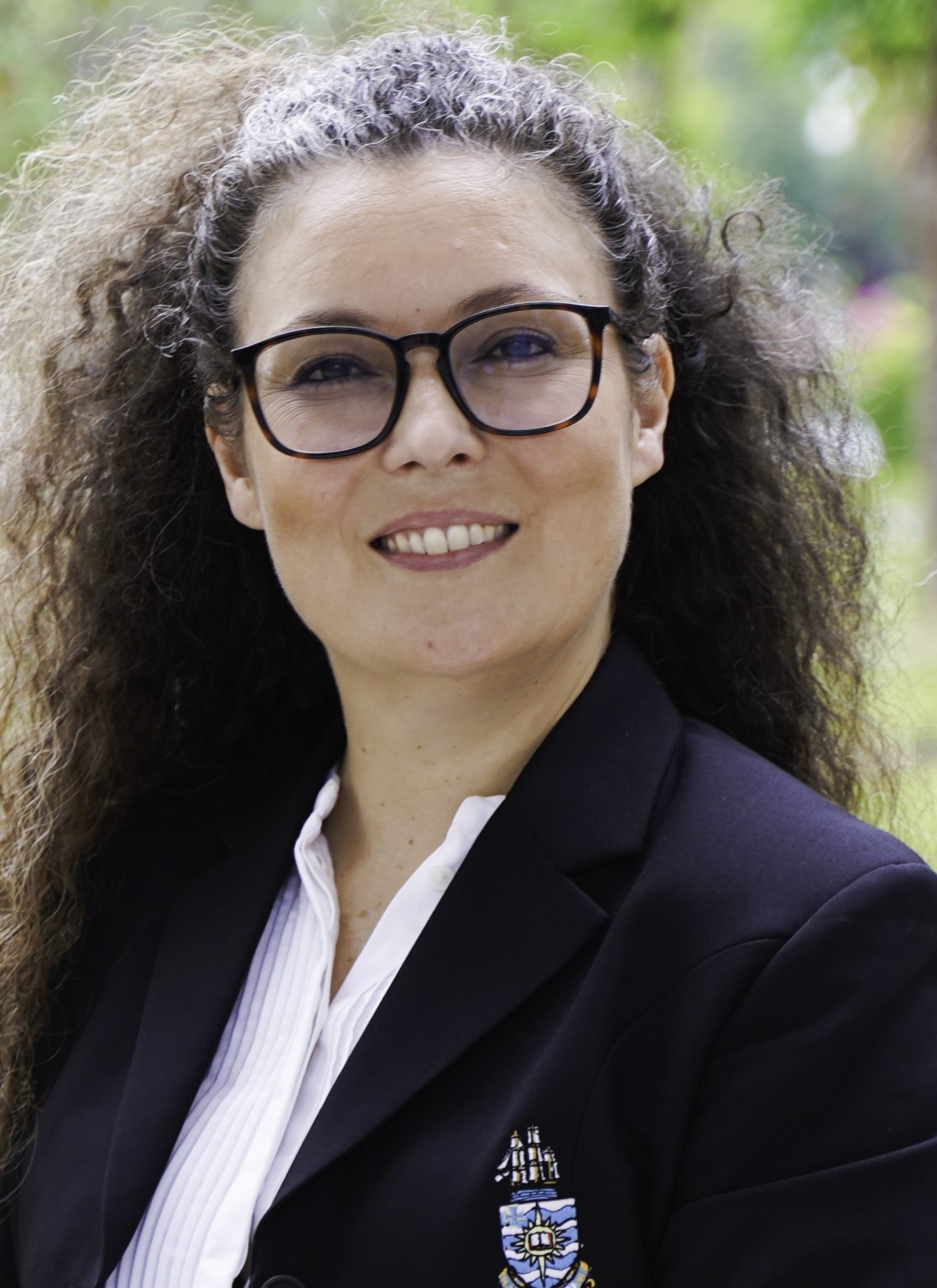
Maura Carrai
- Senior Research Fellow - Aquaculture Molecular Health
- maura.carrai@jcu.edu.au
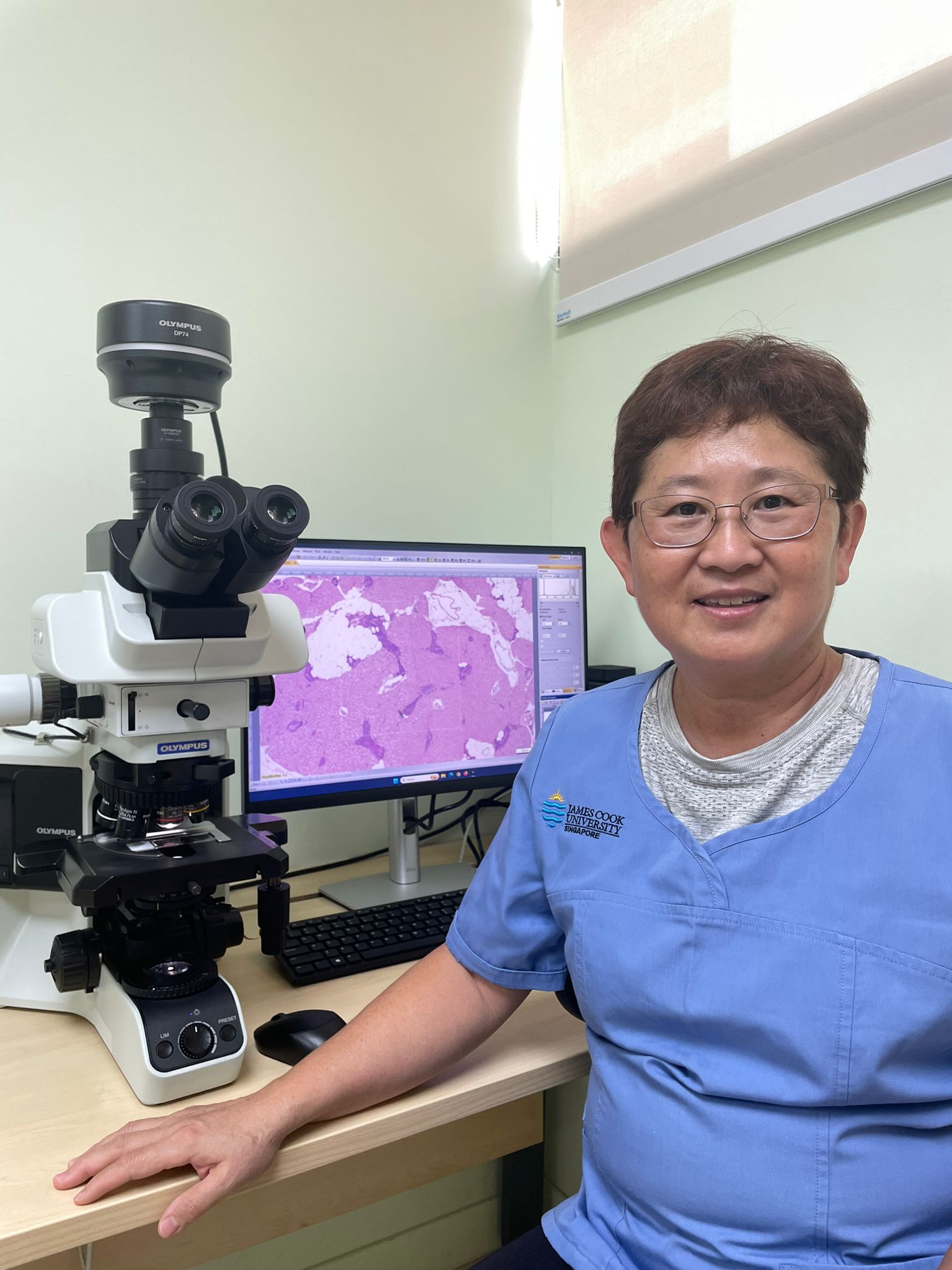
Susan Kueh
- Associate Professor (Aquatic Animal Health)
- susan.kueh@jcu.edu.au

Joseph Angelo
- Senior Manager Laboratory
- joseph.angelo@jcu.edu.au

Xueyan Shen
- Associate Professor
- xueyan.shen@jcu.edu.au

Jose Domingos
- Professor/Principal Research Fellow Aquaculture and Deputy Director TFI
- jose.domingos1@jcu.edu.au

Thimo Ruethers
- Senior Research Fellow Human Health & Aging
- thimo.ruethers@jcu.edu.au
James Loh
- Associate Professor / Principal Research Fellow Aquaculture
- james.loh@jcu.edu.au
A pilot study to analyze whether changes in bacteria microbial community using flow cytometry and pathogen eDNA can be employed to monitor and predict disease outbreaks in commercial fish farms in Singapore
AIM:
Can changes in bacteria microbial community using flow cytometry and pathogen eDNA be used as a proxy for predicting disease outbreaks in commercial fish farms in Singapore?
CONTEXT:
The aquaculture industry is constantly jeopardized by diseases which can result in insignificant economic losses due to poor growth performance and mortality. Fish diseases are caused by a wide range of infectious organisms, including viruses, bacteria, fungi, protozoan, and metazoan parasites. Microbial communities can change rapidly in aquatic environments and adversely impact fish health and water quality such that efficient and reliable monitoring methods are needed to inform the management of aquaculture production. Conventional total bacteria plate counts are commonly used to monitor bacteria load and serve as an indicator for managing water exchange, but this is a tedious technique for large sample sizes. Flow cytometry (FCM) and eDNA monitoring are fast gaining traction for fast and reliable high throughput analysis of large sample sizes. Environmental DNA sampling methodology represents the new frontier of research, where water, soil, and biofilms are collected for DNA analysis of potential environmental pathogens. Total bacteria counts are an indicator of water quality and microbial loads are highly correlated with suspended solids from land runoffs that can harbor aquatic pathogens (sea snow). This study will compare whether eDNA molecular analysis with FCM for total viable bacteria counts is a rapid, reliable, and efficient tool to improve disease monitoring to predict the presence of pathogens that may cause an outbreak.
METHODOLOGY:
Representative water samples will be collected once weekly from selected farm sites ( Singapore Aquaculture Technologies SAT) for analysis using FCM and eDNA, for 6 months. Fish samples will be examined using histopathology to provide an overview of general fish health and the presence of any significant disease. Depending on an initial site visit assessment and interview with farms, a panel of up to 5 significant pathogens of interest to fish farms may be included in the eDNA monitoring panel. The final sampling design will be developed based on issues that partner farms wish to investigate. Up to 6 water and 6 fish samples will be collected each week for analysis, giving an overall total of 144 water and 144 fish samples. A monthly report will be made available to partner farms to assist them in making management decisions. Trends in viable bacteria counts and pathogen loads will be correlated to farm production data and general fish health.
Effects of black soldier fly larvae (Hermetia illucens) reared from heterogeneous food waste as a supplement to fishmeal-limited diets on growth indices, hepatosomatic responses and immuno-responses of Barramundi in grow-out phase
NTU has contacted TFI for assistance in running a feeding trial with barramundi using black soldier fly larvae (BSFL) as sustainable replacement for fish meal (FM) in feed. The trial will be carried out in the JCUS Aquaculture Teaching and Research Lab over a 3 month period. The project will evaluate the effects of dietary BSFL as a FM replacement on the growth performance, histological effects on fish gut and immune responses of barramundi. Results will be published in peer reviewed journal.
Establishing blood biochemistry reference intervals for juvenile Asian Seabass
Asian Seabass, Lates calcarifer is one of the most important farmed fish species in Singapore and SE Asia. Like for many other intensively farmed animals, diseases remain one of the main threats to sustainable aquaculture of this species. Diseases are more prevalent in juvenile L. calcarifer due to less developed immunity. Histopathology is commonly used for screening fish for disease and health certifications. However, organ pathology maybe preceded by changes in blood biochemistry days to weeks ahead of clinical signs and visible pathology. In human and domesticated animal species, blood biochemistry has been established as a reliable and economical method to monitor organ function, general health, and guide disease management, but has yet to be established for aquaculture species. This study aims to build on the blood reference intervals published by Chew et al., 2023, and extend them to biochemical parameters indicative of organ function for important organs such as the liver and kidney. Biochemistry will be correlated to histopathological evaluations of healthy reference population of L. calcarifer, for a more robust evaluation of health status.
Supercharging barramundi production through advanced selective breeding for improved disease resistance, growth and fillet traits
Barramundi, or Asian seabass, Lates calcarifer, is the major aquaculture species farmed in Singapore and has wide consumer acceptance
due to its white, firm flesh. The barramundi currently farmed in Singapore, however, have not been significantly improved through
simultaneous selection to be resistant to major diseases (like scale drop disease), faster growth, or fillet characteristics. This project will use
gold standard breeding methodologies that utilise genomics, industrial-scale phenotyping and cutting-edge digital technologies to select for
barramundi that are more productive, have whiter flesh and possess a lower risk to farming due to disease in Singaporean waters.
Outcomes from the project will be barramundi that have average survival to scale drop disease of 60%, grow 15% faster, and have
increased fillet yields and white flesh colouration.
Project Smiling Gecko CAMBODIA - What Gaps can we impact?
JCU's mission is to create a brighter future for life in the Tropics, and this project aims to increase JCU's impact on livelihoods in remote communities in SE Asia.
By working with NGO Smiling Gecko Cambodia (SGC) which supports the needy population in Cambodia, the team can contribute to their self sustaining, ecologically and economically vibrant activities that aligns with UN SDG goals 4(quality education), 12 (responsible consumption & production), 14 (life below water) and 17 (partnerships for the goals).
SGC runs a school for 500 students, a farm house resort that employs several hundred employees, grows food crops, and runs tilapia ponds at their 105-hectare site that benefits 30,000 Cambodians in surrounding villages. SGC is committed to continuing growth and seeking partnerships with universities to develop programs for the continuing education of its young community.
The team seeks to identify how we can partner with SGC to identify gaps where we can make a difference to the local population, and where we can make an impact on their operation by building capacity. We propose a 3 days/ 2 nights site study and stakeholder engagement in October 2025. The immediate output will be a blue print for our future work with SGC and other remote communities, how we participate in their continual growth and showcase as a working model for other remote communities in SE Asia. We will seek suitable future funding opportunities from international financial institutions such as the World Bank or the Asian Development Bank.
Conference Attendance - Diseases in Asian Aquaculture 22-27 Sept 2025
Present at 12th Diseases in Asian Aquaculture Symposium and bid for 13th DAA to be held in Singapore in 2028
A robust flow-cytometric protocol for assessing growth rate of hatchery-reared barramundi Lates calcarifer larvae
- 2012
- Wiley-Blackwell
- Researchers:Jose DomingosDean Jerry
Whole-genome shotgun sequence assembly enables rapid gene characterization in the tropical fish barramundi, Lates calcarifer
- 2015
- Wiley-Blackwell
- Researchers:Jose DomingosDean Jerry
Potential for adaptation to climate change in a coral reef fish
- 2016
- Blackwell Publishing
- Researchers:Jose Domingos
Start Date:
01 Jan 2022
End Date:
01 Jan 2026
Start Date:
01 Jan 2023
End Date:
01 Jan 2024
Start Date:
01 Jan 2019
End Date:
01 Jan 2020
Start Date:
01 Jan 2018
End Date:
01 Jan 2020
Start Date:
01 Jan 2017
End Date:
01 Jan 2020
Start Date:
01 Jan 2017
End Date:
01 Jan 2017