
College of Science & Engineering

Sophia Love
- Doctor of Philosophy (Natural and Physical Sciences)
- sophie.love@jcu.edu.au
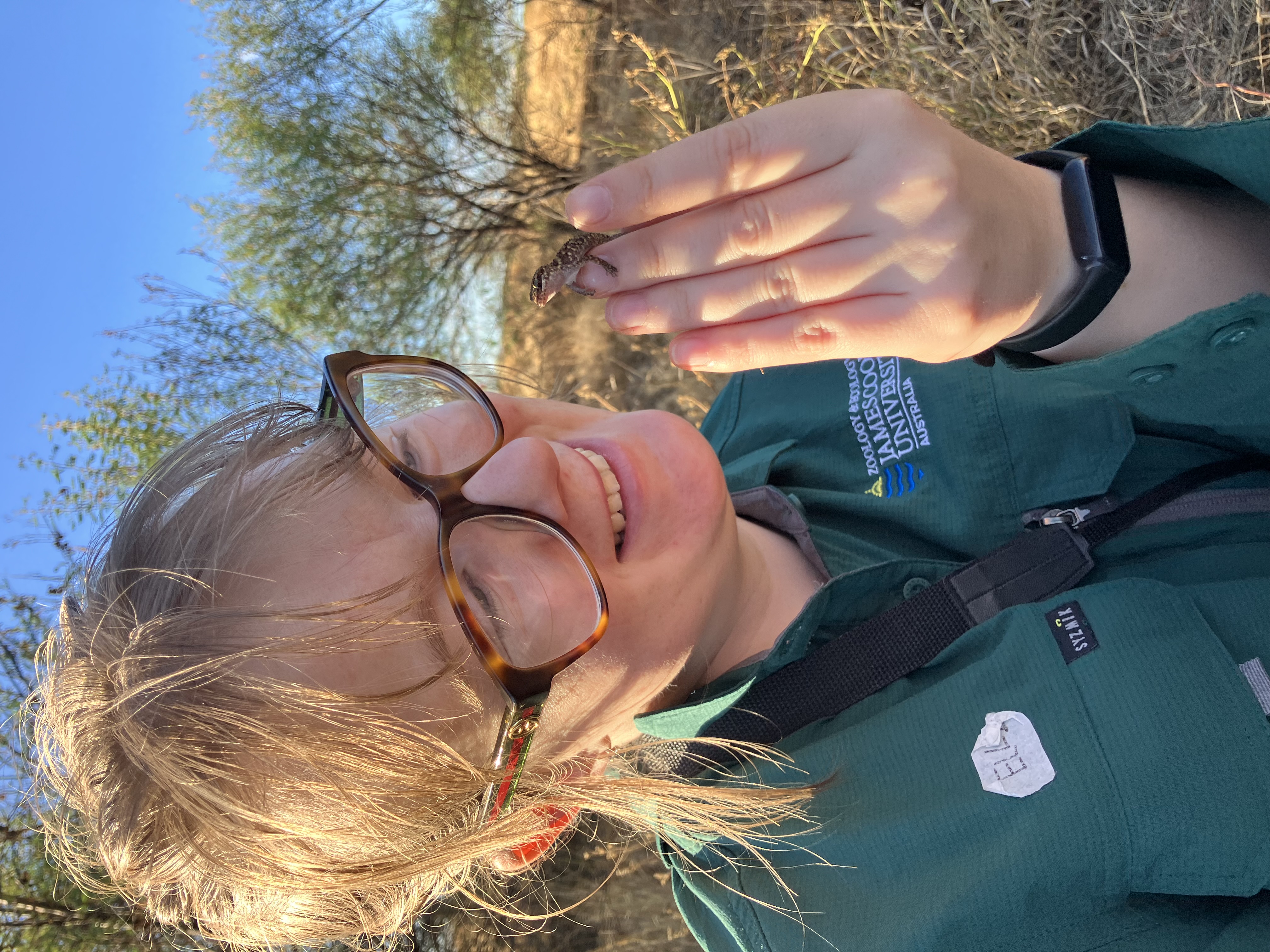
Elle Robertson
- Doctor of Philosophy (Agriculture, Environmental and Related Studies)
- elle.robertson@jcu.edu.au

Jenny Fisher
- Associate Dean, Learning and Teaching
- jenny.fisher@jcu.edu.au

Ambili Narayanan
- Doctor of Philosophy (Natural and Physical Sciences)
- ambili.narayanan@my.jcu.edu.au

Mikaeylah Davidson
- Postdoctoral Research Fellow
- mikaeylah.davidson@jcu.edu.au

Liuxin Chen
- Adjunct Lecturer
- liuxin.chen@jcu.edu.au

Douchan Hanuise
- Doctor of Philosophy (Agriculture, Environmental and Related Studies)
- douchan.hanuise@my.jcu.edu.au

Thomas Napier
- Doctor of Philosophy (Information Technology)
- thomas.napier@jcu.edu.au
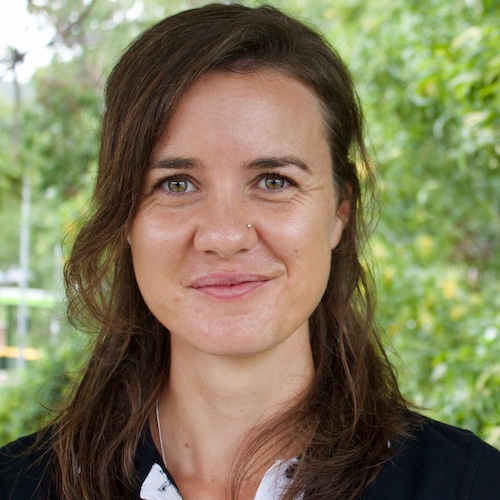
Sarah Lawless
- AIMS@JCU Research Fellow: Ocean Governance
- sarah.lawless@jcu.edu.au

Alex McCoy-West
- Senior Lecturer, Exploration Geochemistry
- alex.mccoywest@jcu.edu.au
From reference genome to resilience: determining the future of Southern Ocean benthos in light of climatic change
Climate change effects such as rising ocean temperatures, freshening of the ocean and altered current regimes will impact the dispersal, connectivity and subsequent genetic diversity of Southern Ocean benthic invertebrates. This project will utilize the most advanced DNA sequencing technology to investigate historical and contemporary connectivity (source sink dynamics) and population demography of the seastar Glabraster antarctica between East Antarctica and the Kerguelen Plateau. The outcome of this research will determine the susceptibility of benthic invertebrates to climate change impacts. These findings will inform future management of the Kerguelen Plateau.
Forever chemicals accidentally produced in a modern cleaner atmosphere
The world is reliant on chemicals -- but many have detrimental impacts on the ozone layer and climate. Replacements have been developed that have no ozone depletion or global warming potential. However, their atmospheric breakdown products may not be so safe. We will combine cutting-edge laboratory experiments and state-of-the-art global models to quantify how 'clean' these replacements truly are.
Harnessing the full potential of genomic data to investigate the adaptability of Southern Ocean benthos to climatic change
This project applies the most advanced DNA sequencing technology to investigate the population dynamics of a Southern Ocean benthic invertebrate. The outcome of this extended research includes detecting the past and present day population connectivity patterns with precise detail and uncovering the genomic architecture of the species, thus revealing their adaptability to climate change. This project will inform conservation management strategies for Southern Ocean ecosystems.
Hub Mission Leader (Old ID 27433)
Delivering the Hub Mission focused on threatened and migratory species and threatened ecological communities. As stated in the Resilient Landscapes Hub research scope, the Activity Outcomes related to the cross-cutting Mission includes: i Delivering tools and advice to support the conservation of habitat important for priority threatened species, threatened ecological communities and migratory species; ii Updating the National list of threatened ecological communities and species; iii Improving detection of cryptic, ‘difficult’ and other data deficient species; and iv Monitoring and supporting the management of species / community recovery post extreme events. Service to be provided by Professor Helene Marsh, a researcher of international repute able to drive multidisciplinary outcomes, deliver outputs into national information repositories and guide relevant investment across the four research hubs.
Digital Twin
Digital Twin in Education is an emerging approach that creates a dynamic digital representation of a learner, educator, or educational environment using data from learning activities, assessments, behaviours, and interactions. By continuously integrating and analysing educational data, digital twins can support personalised learning, monitor student progress, predict learning outcomes, and enable data-driven decision-making. When combined with Artificial Intelligence, digital twins have the potential to provide adaptive interventions and improve teaching, learning, assessment, and student engagement.
Fingerprinting environmentally sustainable ores using neodymium isotopes (Old ID 27841)
The rare earth elements (REE) are a critical resource as the world transitions to an energy system dominated by green energy. However, current extraction methods rely on strong acid leaching, which has the potential to create environmental contamination. Alternative REE extraction methodologies, including phyto‐extraction (using plants) and bacteria induced bioleaching are currently being investigated. This project aims to utilise radiogenic and stable neodymium isotopes to characterise the isotopic fractionations induced during different REE extraction techniques. This isotopic fingerprinting will provide a method to verify more sustainably generated REE concentrates, enabling the Australian REE industry to be positioned as a world leading environmental producer.
Global assessment of dugong status and trends (Old ID 29025)
This desktop project contributes to the Conservation and Management Plan for the Memorandum of Understanding on the Conservation and Management of Dugongs (Dugong dugon) and their Habitats throughout their range (CMS Dugong MOU) by determining the distribution and abundance of dugong populations to provide a base for future conservation efforts and actions.
Linking continental emergence and climatic evolution on the Early Earth (Old ID 26941)
This project aims to constrain the timing and extent to which the continents were emergent (above sealevel) at different times in Earth’s history and its impact on climatic evolution, which remains poorly understood. Continental emergence was a pivotal moment in the development of our habitable planet, because it controls the influx of bioessential elements (like phosphorus) to the oceans. Using innovative geochemical techniques, expected outcomes of this work include a detailed record of changes in ocean chemistry and a time integrated model of the amount of emergent crust on the early Earth. Documenting the impact of changes in the solid Earth on the evolution of life is of the highest interest to society in Australia and abroad.
Investigating combined stressors in bees: insecticides and thermal stress (Old ID 27283)
Insecticide use poses a risk to non-target insects including bees. The effects of these compounds is all the more worrying given that honey bees prefer nectar containing traces of the naturally derived insecticide class – the neonicotinoids. This project will expand upon previous bodies of work to investigate the preference of stingless bee species Tetragonula hockingsi when provided with the choice between an insecticide laced food source and a sucrose solution. This project will also explore the combined effects of insecticide exposure and increasing temperature on bees.
Investigating the effects of insecticide exposure, pathogens, and heat stress on bee diversity, abundance, and health (Old ID 28974)
Bees are threatened by multiple stressors including insecticide exposure, disease, loss of habitat, and climate change. Studies investigating stressors facing Australian bees are becoming more common, but many knowledge gaps still exist and while some studies document the effects of stressors in isolation, they stop short of investigating the effects of stressors in combination. My project will investigate how the stressors of insecticide exposure, pathogens and heat stress affect native bee diversity, abundance, and health, as well as investigate whether bee hotels cause increased pathogen and parasitism prevalence, and predation rates in native bees.
Start Date:
01 Jan 2025
End Date:
01 Jan 2025
Start Date:
01 Jan 2022
Start Date:
01 Jan 2020
Title:
Postdoctoral Paper Medal
Start Date:
01 Jan 2018
Start Date:
01 Jan 2018
End Date:
01 Jan 2023
Start Date:
01 Jan 2022
End Date:
01 Jan 2022
Start Date:
01 Jan 2019
End Date:
01 Jan 2021
Start Date:
01 Jan 2026
Start Date:
01 Jan 2018
End Date:
01 Jan 2021