
College of Science & Engineering

Sophia Love
- Doctor of Philosophy (Natural and Physical Sciences)
- sophie.love@jcu.edu.au
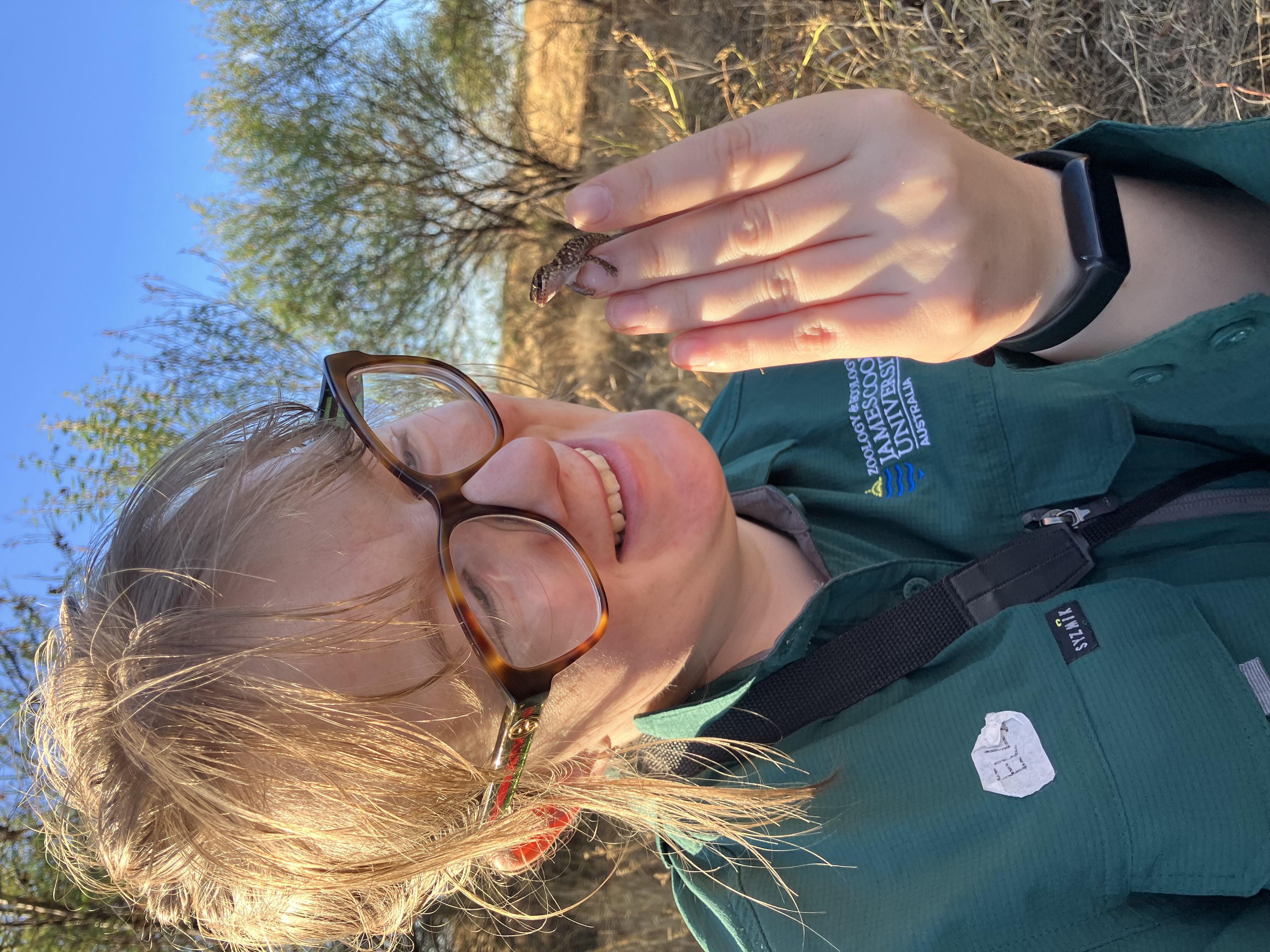
Elle Robertson
- Doctor of Philosophy (Agriculture, Environmental and Related Studies)
- elle.robertson@jcu.edu.au
Jenny Fisher
- Associate Dean, Learning and Teaching
- jenny.fisher@jcu.edu.au
Ambili Narayanan
- Doctor of Philosophy (Natural and Physical Sciences)
- ambili.narayanan@my.jcu.edu.au
Liuxin Chen
- Adjunct Lecturer
- liuxin.chen@jcu.edu.au

Douchan Hanuise
- Doctor of Philosophy (Agriculture, Environmental and Related Studies)
- douchan.hanuise@my.jcu.edu.au

Thomas Napier
- Doctor of Philosophy (Information Technology)
- thomas.napier@jcu.edu.au
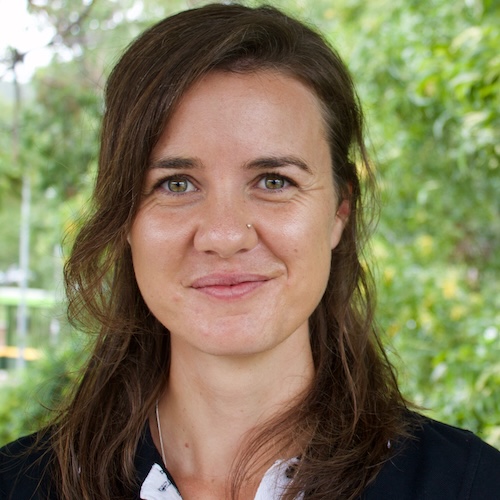
Sarah Lawless
- AIMS@JCU Research Fellow: Ocean Governance
- sarah.lawless@jcu.edu.au
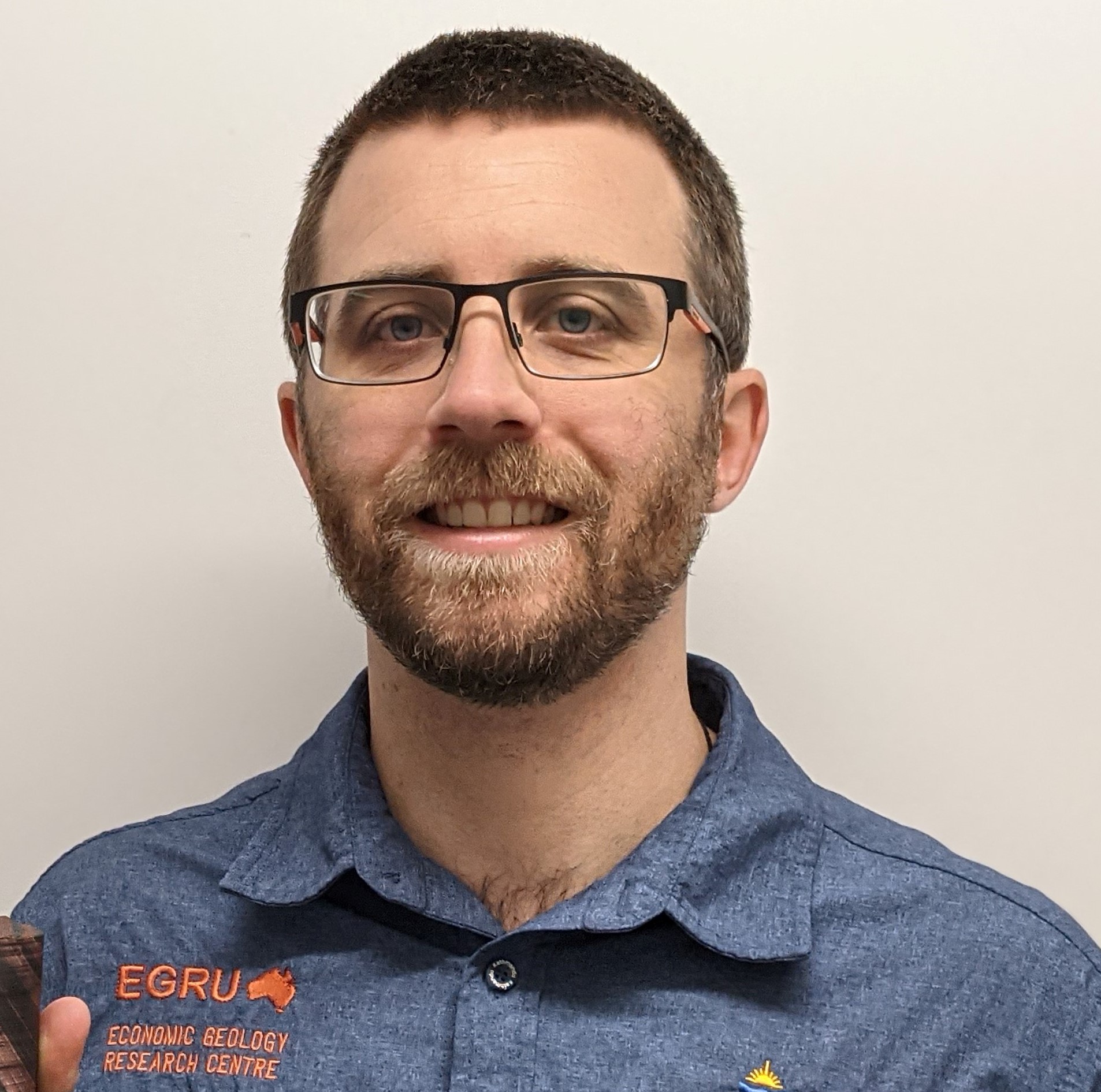
Alex McCoy-West
- Senior Lecturer, Exploration Geochemistry
- alex.mccoywest@jcu.edu.au

David Blair
- Adjunct Professor
- david.blair@jcu.edu.au
AIMS@JCU Research Fellowship
Sarah’s research is supported under a AIMS@JCU fellowship. The AIMS@JCU program is a strategic partnership between JCU and the Australian Institute of Marine Science. Sarah is the first social scientist engaged under this program, where she contributes to a key research area of common interest - improving governance of changing oceans.
Early Career Researcher Grant - Blue carbon markets: preventing or fuelling marine tenure insecurity?
Internal grant awarded by the Centre for Sustainable Tropical Fisheries and Aquaculture (CSTFA) at James Cook University to support my investigation of blue carbon markets, including where markets may enable tenure security, leading to improved stewardship of blue carbon ecosystems, food and livelihood security, poverty reduction, and social equity.
Marine sediment geochemical survey: Coastal waters of southeastern Brazil
This project involves comprehensive geochemical fingerprinting of sediments from a marine environment to trace the potential distribution of exogenous components from a tailings dam failure. JCU is leading the systematic multi-instrument (XRD, XRF, ICP-MS, MC-ICP-MS) geochemical and isotopic characterization of approximately 200 samples. This includes quantifying the mineralogy, major, trace and volatile element concentration analysis, coupled with high-precision O-Sr-Nd-Fe isotope composition analyses.
Using a two-way knowledge exchange to illuminate the population dynamics of the dugong in the Gulf of Carpentaria
Dugongs are marine mammals with immense ecological and cultural significance, occurring in 40 countries in the Indo-Pacific. They are gardeners of seagrass beds and a major component of Indigenous culture. Their reliance on shallow seagrass beds exposes them to anthropogenic threats, e.g. pollution and boat disturbance. Dugongs are in decline in most of their range and are classified as vulnerable to extinction, with the populations in Australia representing a stronghold with an estimated 165,000 animals. My PhD project will use next-generation sequencing methods to assess genetic diversity, connectivity and health of dugongs in Australia, with a special focus on the remote and little-studied dugong populations in Western Australia and the Northern Territory. Indigenous Traditional Owners in remote northern Australia, such as the Kimberley region, have recently listed the genetic health and connectivity of dugongs as a top priority in their wildlife management plans. Within the next year, I am planning to actively travel to remote locations to give in-person workshops on tissue sampling of dugongs, starting a collaboration with Indigenous communities and rangers. I will then return to the same communities with my results, fostering a two-way knowledge exchange that encourages effective dugong conservation management and collaboration between different sea countries in Australia. As my PhD projects rely heavily on the retrieval of high-quality DNA, this hands-on approach is necessary to ensure proper handling of samples. During the first year, I will focus on collecting as many dugong samples as possible to ensure that all populations are well-represented and we can determine fine-scale population structure in Australian dugongs. At the end of my PhD, I will be able to assess important conservation parameters such as level of inbreeding, population fragmentation and migration along the entire Australian coast.
Develop an autonomous AI vehicle damage assessment tool (Phase II) (Old ID 27223)
Improvement upon the project 1 developed method for automated detection, identification and categorisation of vehicle panel damage by developing a user interface and video vision. Semantic segmentation and deep learning networks will be further refined and developed for the next evolution/iteration of the software platform.
Imaygi Maalu (Unchartered waters): The governance and management of the Torres Strait fisheries into the future (Old ID 26723)
The key objective of this project is to investigate existing national and international research knowledge on the management of fisheries that have recognised Indigenous interests, how this knowledge interfaces with commercial enterprises, and sustains the health of the fisheries and the cultural traditions of the Indigenous people. Accommodating such components into existing legal frameworks remain a challenge for various governments and is a challenging matter in many of the world's fisheries. The Torres Strait fisheries is no different and exists in a complex legislative framework.
Develop the ResPax (digital) Passbook (Old ID 27496)
To develop digital tools for collecting tourism data in the region to enable better decision-making through various data mining approaches.
Big Data for Sustainable Tropical Agriculture and Aquaculture (Old ID 22865)
Agri- and Aqua-cultural industries in Australia and around the world are lagging behind their business counterparts when it comes to creating efficiencies and increasing profitability using Big Data technologies. Big Data refers to the volume, variety and velocity that data can be collected. Barriers imposed by geography, social fabric and technological limitations such as poor mobile phone coverage and inadequate links to modern day storage devices such as the cloud has impeded the adoption of Big Data technologies in northern Australia. This project will explore how Big Data and other digital technologies can enhance the sustainability of Agricultural and Aquaculture systems in the Tropics.
Investigating the behavioural ecology of diving and feeding in a cryptic marine mammal: the Dugong (Old ID 27881)
As air-breathing, bottom-feeding marine mammals, dugongs must dive to survive and thrive. Quantifying the diving and feeding behaviours of dugongs in three dimensions is a missing link in the science basis for the conservation of this Vulnerable species. This project will use advanced sensing technology to understand how seagrass biomass and dugong activity and energetics influence their diving and feeding behaviors. The resultant improved fine-scale understanding of these behaviors will provide important new information about their risk from vessel strike and the potential energetic consequences of habitat loss associated with extreme weather events and human disturbance.
ResPax Digital Passbook (Phase II) (Old ID 29015)
To continue the Phase I of project to further develop digital tools for collecting tourism data in the region to enable better decisionmaking.
Corneal avascularity is due to soluble VEGF receptor-1
- 2006
- Nature Publishing Group
- Researchers:Helene Marsh
Electron transport coefficients in O2 magnetron discharges
- 2005
- Institute of Physics Publishing
- Researchers:Ron White
Start Date:
01 Jan 2001
Start Date:
01 Jan 2017
End Date:
01 Jan 2020
Start Date:
01 Jan 2020
End Date:
01 Jan 2021
Start Date:
01 Jan 2022
End Date:
01 Jan 2026
Title:
English
Title:
Through The Lens Of A Biologist: A Wildlife Photographer Shares His Story, Ecology for the Masses
Title:
PhD, Harvard University
Start Date:
01 Jan 2006
End Date:
01 Jan 2011