
Tropical Water & Ecosystems
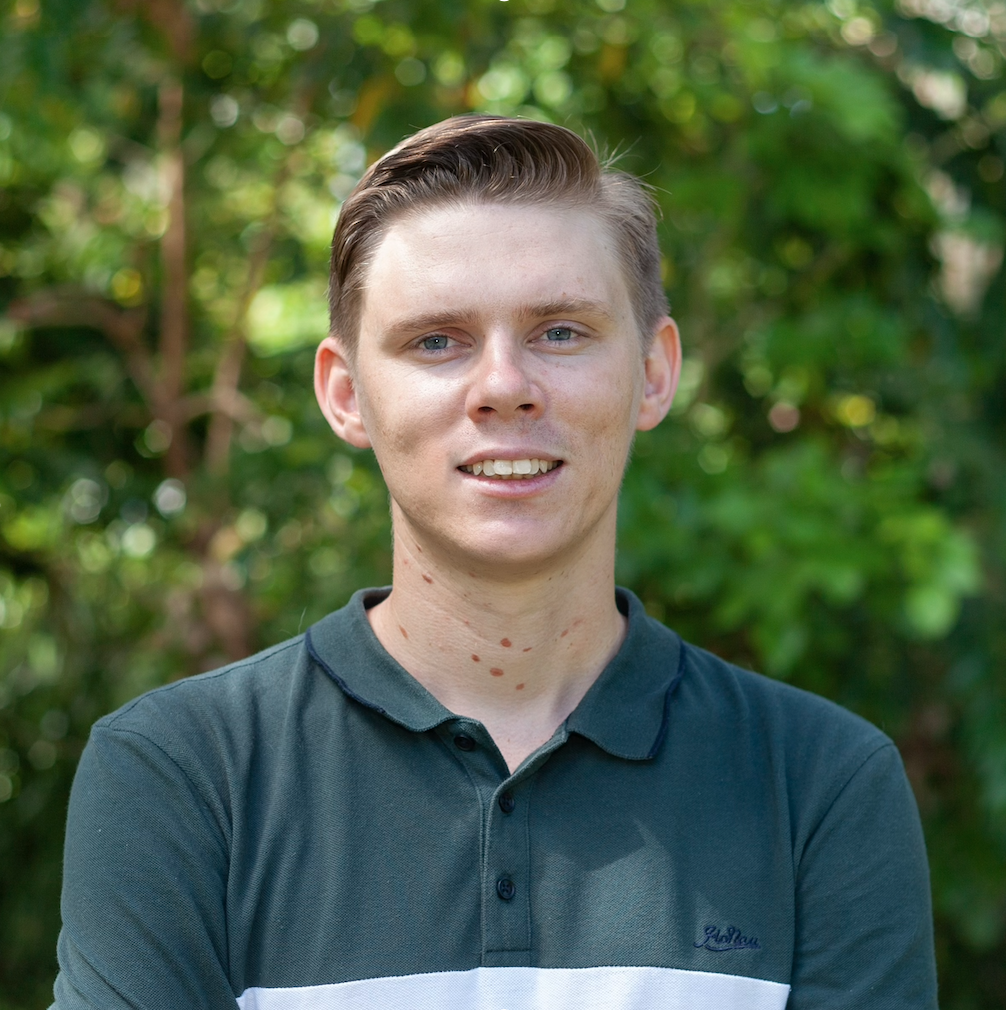
Scott Morrissey
- Research Officer
- scott.morrissey@jcu.edu.au
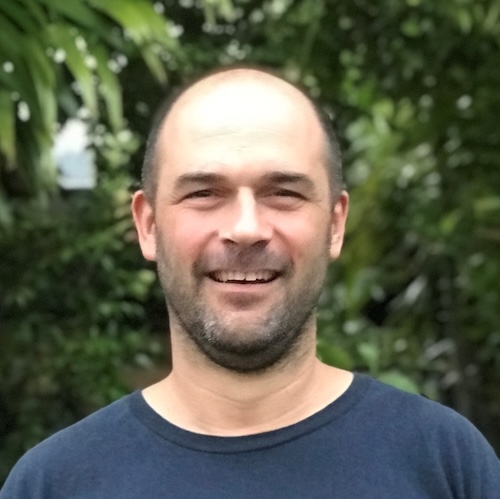
Tim Smith
- Senior Research Officer
- tim.smith2@jcu.edu.au
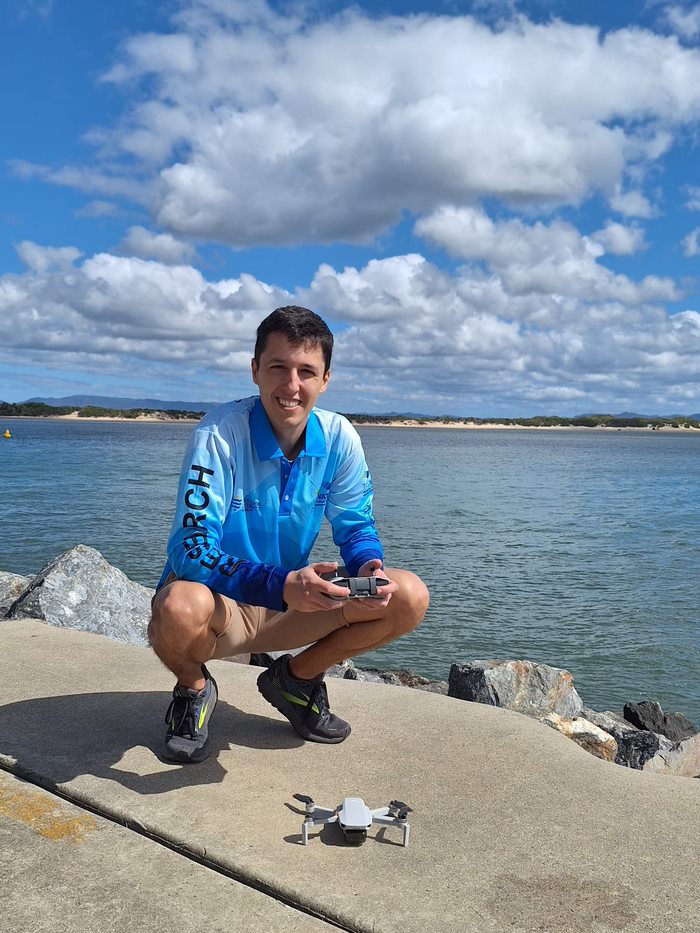
Alejandro Navarro Otero
- Casual Research Worker
- alejandro.navarrootero@jcu.edu.au
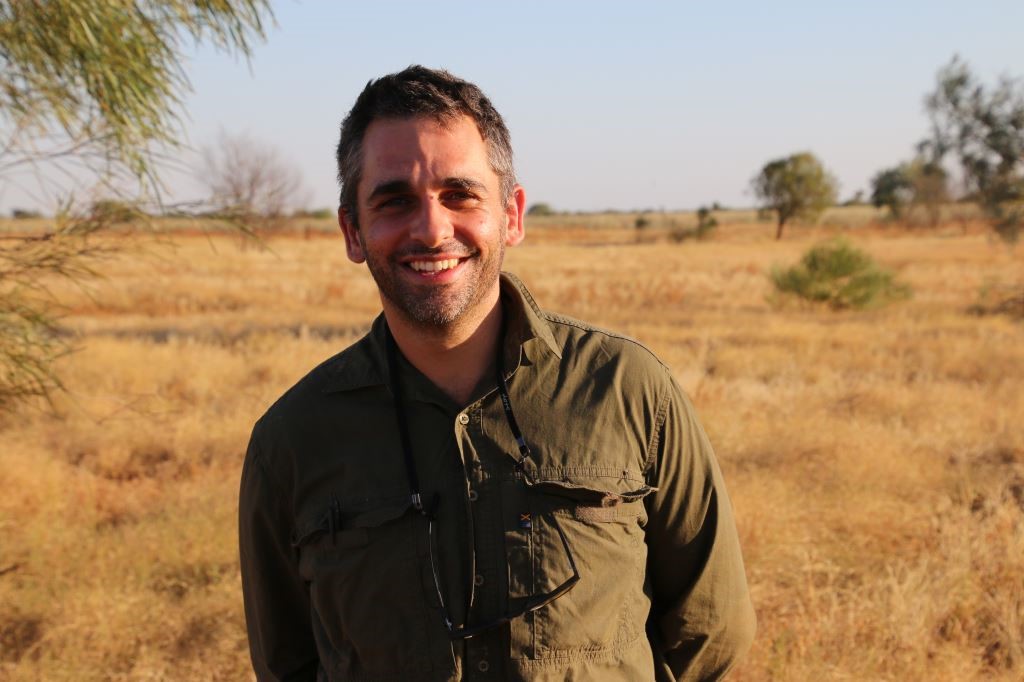
Jack Koci
- Principal Research Officer
- jack.koci1@jcu.edu.au

Sarah McDonald
- Senior Research Officer
- sarah.mcdonald@jcu.edu.au
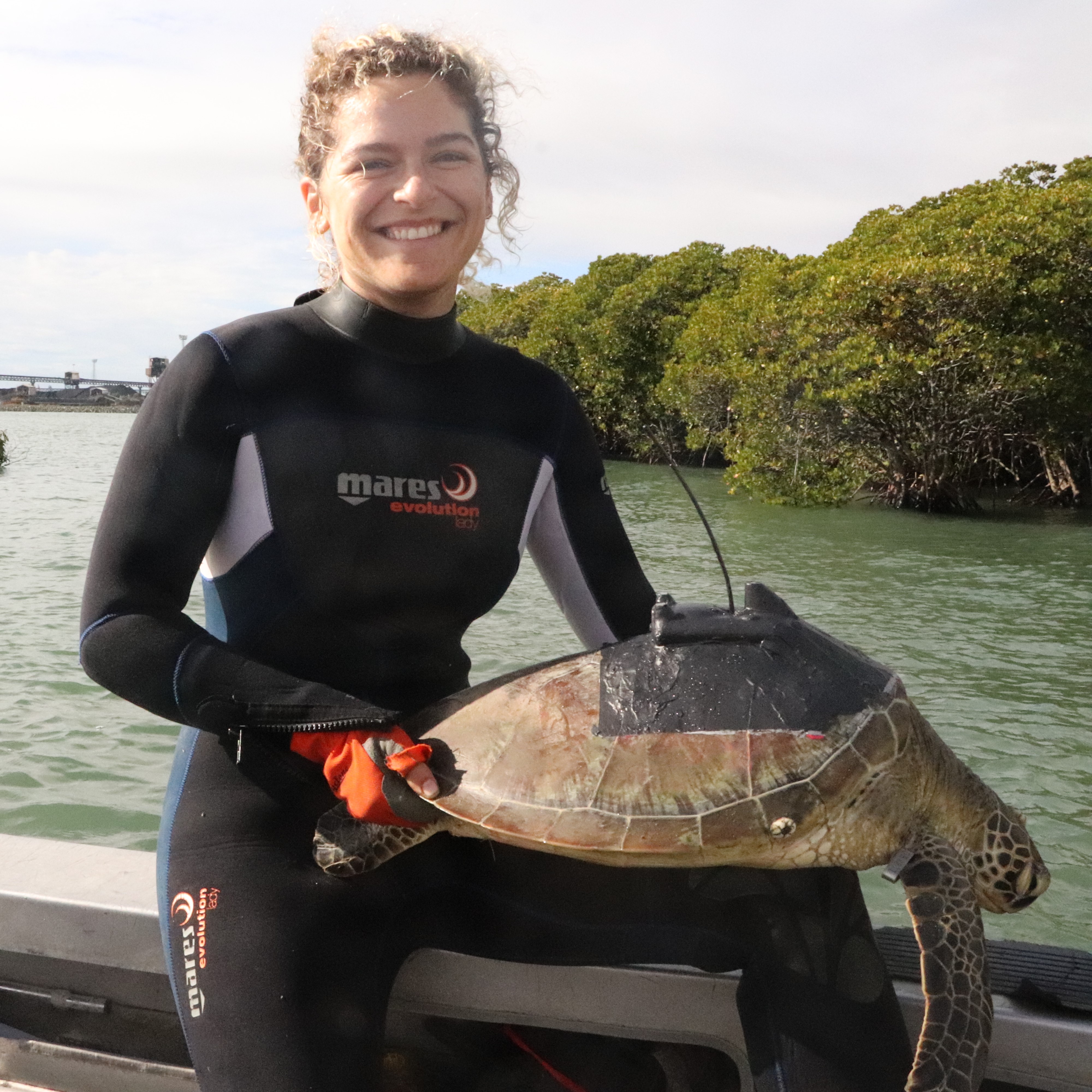
Emily Webster
- Research Officer
- emily.webster1@jcu.edu.au

Abbi Scott
- Senior Research Officer
- abbi.scott1@jcu.edu.au

Catherine Collier
- Principal Research Officer
- catherine.collier@jcu.edu.au

Rob Coles
- Principal Research Scientist
- rob.coles@jcu.edu.au

Aaron Davis
- Principal Research Officer
- aaron.davis@jcu.edu.au
Torres Strait Ugar Island and Dugong Sanctuary Survey (Old ID 27471)
Alexandra Carter
23 Dec 2021 - 01 May 2023
This project has two objectives: 1. To map intertidal reef-top and island benthic habitat, including seagrass, coral and algae, of Ugar Island and surrounding Reefs. We will identify the most important seagrass habitats in this region and compare results with recently mapped seagrass in the Kemer Kemer Meriam Nation and Torres Strait Central Cluster Islands. 2. Survey subtidal seagrass and other benthic communities, and fish communities, in the West Cape York Marine Park/ Southern Dugong Sanctuary to increase understanding of traditional knowledge and collaborate with Indigenous rangers and Traditional Owners to undertake marine park management, such as mapping and monitoring. We will identify any changes/trends in the extent, health and diversity of seagrass meadows.
Mapping Yanyuwa Sea Country - Boat. (Old ID 27872)
Catherine Collier
25 Sep 2022 - 15 Dec 2024
This project is a collaboration of specialists including the Yanyuwa Traditional Owners and li-Anthawirriyarra Sea Rangers, scientists from James Cook University, Charles Darwin University and the Australian Institute of Marine Science, and Northern Territory Parks. The team will survey the subtidal marine benthic habitats within Yanyuwa sea country. Using data from the survey and other available information, rangers and scientists will work together to determine priority management areas and identify opportunities for broader community engagement in the management of sea country.
Reef Restoration and Adaptation Program Design Phase (Old ID 25036)
Ian McLeod
01 Dec 2017 - 06 Dec 2019
The RRAP Design Phase seeks to deliver a business case for government, industry and private investment, the primary objective of which is to develop reef restoration and adaptation technologies that can be applied at scale, within affordability and practicality limits, to retain key functional attributes of the Great Barrier Reef. This project will contribute JCU expertise to evaluating coral restoration methods, undertaking regulatory and institutional environment mapping required for restoration to occur and an analysis of the viewpoints and engagement of stakeholders in reef restoration.
Lady Loretta Compliance Framework Review (Old ID 27380)
Shelley Templeman
15 Sep 2021 - 31 Mar 2026
Desktop review and assessment of compliance surface water and stream sediment data to provide recommendations for an updated and/ or alternative compliance framework for Lady Loretta mine. This will include review of all existing data and assessment of potential cause/s of exceedances in existing program. Recommendations for an updated limnological monitoring program to be included in the site REMP will be developed.
Synthesizing Three Decades of Seagrass Spatial Data from Torres Strait and Gulf of Carpentaria (Old ID 27428)
Alexandra Carter
01 Sep 2021 - 10 Jun 2022
The Gulf of Carpentaria and Torres Strait have globally significant seagrass habitat that provide food for threatened dugong and turtle, and habitat for commercially important fish and prawns. Key to understanding, managing, mitigating risk, and monitoring seagrass in this remote region is reliable data on seagrass distribution and species composition and how these changes through time. Data on seagrass has been collected in these areas since the 1980s, but data location and storage from these efforts remains disparate, in many cases not publicly available, and in some cases has already been lost. Our study will compile, validate and synthesize historical seagrass spatial data to create a publicly available database accessible on eAtlas. This product will provide end-users with a valuable spatial resource to assist management and monitoring of seagrass in the region.
ACIAR Daintree Study Tour (Old ID 31198)
Norm Duke
22 Sep 2023 - 15 Dec 2023
Prof. Norm Duke, on behalf of the ACIAR, is hosting a specialists tour with a small group of international researchers learning about Australian mangrove studies in the Daintree River, north of Cairns. This is essentially a discussion opportunity for the participants who will focus on holistic assessments of mangrove forests and their relationships with coastal fisheries.
Benthic light as ecologically-validated GBR-wide indicator for water quality: drivers, thresholds and cumulative risks (Old ID 22540)
Catherine Collier
01 Jan 2016 - 30 Mar 2019
The project will develop a water quality indicator based on benthic irradiance (the amount of light penetrating to the seafloor). Using experiments and field data we will develop irradiance thresholds for measures of ecosystem health, and develop prototype guideline values. We will develop a new remote sensing algorithm of benthic irradiance, validated against open-water irradiance data. We will quantify benthic irradiance through the GBR, near-daily over 14 years, and assess region-specific drivers of trends including river discharges. Ur indicator can directly feed into Reef Plan report cards, irradiance as a limiting factor, and about cumulative risks in the context of coral bleaching.
Mapping Critical Habitat in Yanyuwa Sea Country (Old ID 27429)
Alexandra Carter
01 Sep 2021 - 30 Mar 2023
Marra and li-Anthawirriyarra rangers seek to build on existing partnerships with CDU and JCU to map the intertidal habitats of the Yanyuwa Indigenous Protected Area (IPA) and coastal areas connected to it, an area of profound importance to these communities and the marine ecosystem of the Gulf of Carpentaria (GoC). Significant co-funding will be provided by the Mabunji Aboriginal Corporation (MAC) and DAWE Migratory Species Section to conduct a large-scale mapping project that will inform Marra and Yanyuwa community decisions that underpin sustainable management and facilitate continued connection with sea country. Co-funding from NESP2 is sought to provide salary for data processing and reporting for these surveys. This project also leverages existing funding allocated to training, capacity building, community consultation and communication products committed to by the rangers, CDU, JCU, the Australian and the NT Governments.
Applying environmental DNA (eDNA) methods for Yellow crazy ant detection, a sensitive and less labour-intensive approach to invasive ant detection. (Old ID 27191)
Cecilia Villacorta Rath
16 Apr 2021 - 30 Apr 2025
Invasive invertebrates in Australia are estimated to impact agricultural production losses by $4.7 billion annually and cost up to $8 billion annually considering all impacts and expenses. More specifically, invasive ants are a significant threat to agricultural production, biodiversity, tourism, personal property, and local business and industry. Current methods for invasive ant detection (i.e. baited traps or cards, pitfall traps, and detection dogs) rely on trapping, smelling, or sighting active individuals and are therefore labour-intensive, costly, and highly reliant on weather conditions. The proposed project will apply environmental DNA methods for yellow crazy ant (YCA) detection. YCA has been listed as a high priority species under the National Invasive Ant Biosecurity Plan 2018-2028, and will be used as a case study. The proposed methodology could be applied to the existing infestations and taken up by farmers, as well as being applied to other terrestrial pests.
Seagrass thermal stress risk model for the inshore Great Barrier Reef. (Old ID 27720)
Catherine Collier
27 Jun 2022 - 30 Jun 2026
Seagrass meadows are at risk from decline caused by thermal stress, and this will impact the ecosystems and communities who depend on the goods and benefits they provide. There is currently no spatial and temporal product that indicates seagrass exposure to thermal stress. This proposal outlines a staged project that will deliver a model of thermal stress risk. Working in collaboration with First Nations rangers, temperature loggers will be deployed across thermal exposure gradients in the inshore Reef. These data will be used to calibrate and validate a seagrass thermal stress risk model for the inshore Reef.
Seagrass Habitat of Cairns Harbour and Trinity Inlet: Annual Monitoring Report 2022
- 2023
- TropWATER, James Cook University
- Researchers:Carissa ReasonPaul York
Seagrass Habitat of Mourilyan Harbour: Annual Monitoring Report 2022
- 2023
- TropWATER, James Cook University
- Researchers:Carissa ReasonPaul York
Port of Weipa long-term seagrass monitoring program: 2000 - 2021
- 2021
- TropWATER, James Cook University
- Researchers:Skye McKennaTim SmithCarissa Reason
Cairns - Marine Plant Assessment for Smith's Creek and Wharf 8 potential Port Infrastructure Sites - June 2021
- 2021
- TropWATER, James Cook University
- Researchers:Carissa ReasonSkye McKennaPaul York
Seagrass habitat of Mourilyan Harbour: Annual Monitoring Report – 2020
- 2021
- TropWATER, James Cook University
- Researchers:Carissa ReasonPaul York
Seagrasses in Port Curtis and Rodds Bay 2020 Annual long‐term monitoring
- 2021
- TropWATER, James Cook University
- Researchers:Tim SmithCarissa ReasonSkye McKenna
Western Basin expansion reclamation area and barge unloading facility seagrass and marine plants survey
- 2020
- TropWATER, James Cook University
- Researchers:Tim SmithCarissa Reason
Start Date:
01 Jan 2009
End Date:
01 Jan 2026
Start Date:
01 Jan 2009
End Date:
01 Jan 2030
Start Date:
01 Jan 2014
End Date:
01 Jan 2030
Start Date:
01 Jan 2021
End Date:
01 Jan 2025
Start Date:
01 Jan 1981
End Date:
01 Jan 1984
Start Date:
01 Jan 1986
End Date:
01 Jan 1988
Start Date:
01 Jan 1973
End Date:
01 Jan 1973
Start Date:
01 Jan 2024
Start Date:
01 Jan 2022
End Date:
01 Jan 2023
Title:
Conference co-chair
Start Date:
01 Jan 2023
End Date:
01 Jan 2023