
Tropical Water & Ecosystems
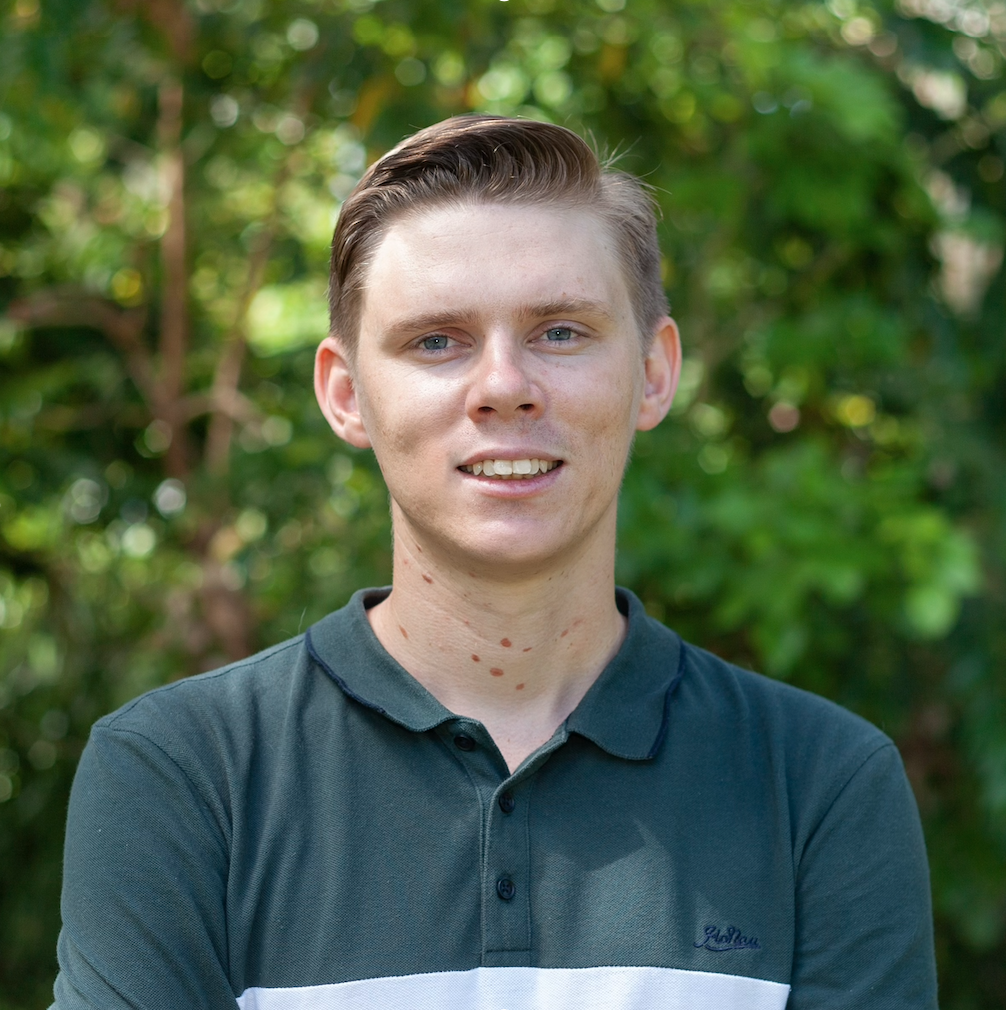
Scott Morrissey
- Research Officer
- scott.morrissey@jcu.edu.au
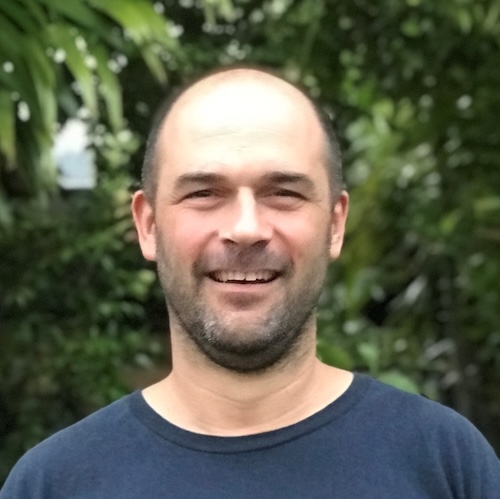
Tim Smith
- Senior Research Officer
- tim.smith2@jcu.edu.au
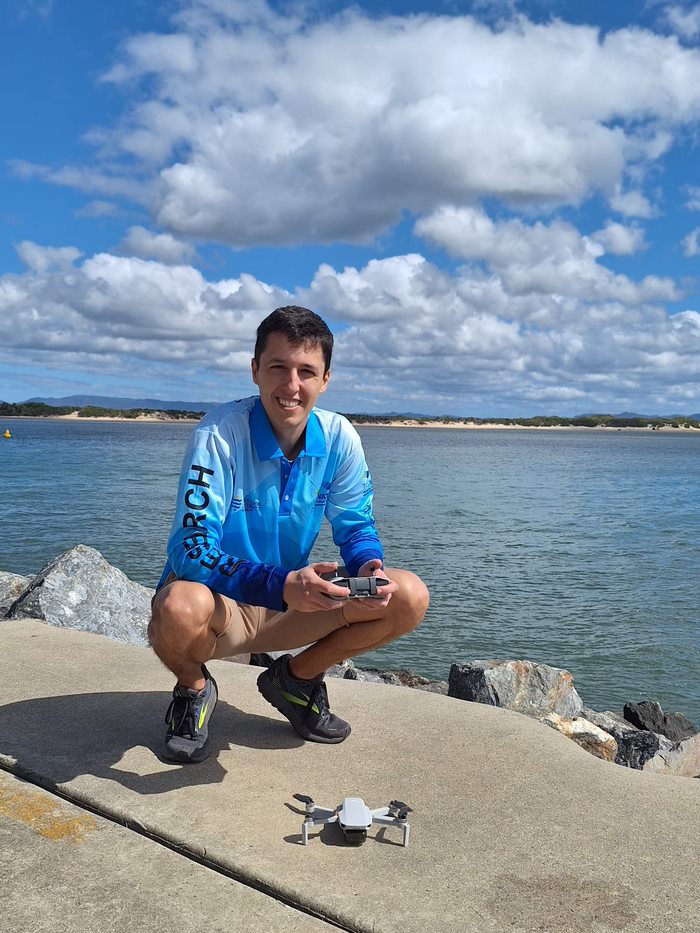
Alejandro Navarro Otero
- Casual Research Worker
- alejandro.navarrootero@jcu.edu.au
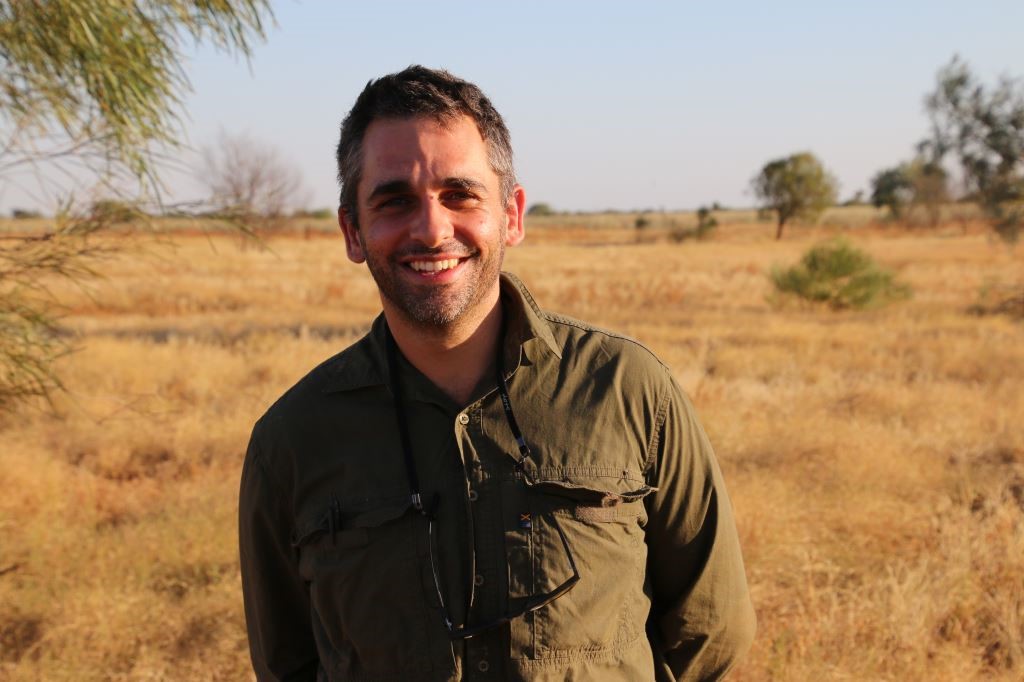
Jack Koci
- Principal Research Officer
- jack.koci1@jcu.edu.au
Sarah McDonald
- Senior Research Officer
- sarah.mcdonald@jcu.edu.au
Emily Webster
- Research Officer
- emily.webster1@jcu.edu.au

Abbi Scott
- Senior Research Officer
- abbi.scott1@jcu.edu.au

Catherine Collier
- Principal Research Officer
- catherine.collier@jcu.edu.au

Rob Coles
- Principal Research Scientist
- rob.coles@jcu.edu.au

Aaron Davis
- Principal Research Officer
- aaron.davis@jcu.edu.au
Seagrass Assessment Southern Expansion of Mackay-Whitsunday Monitoring Program (Old ID 23604)
Alexandra Carter
03 Jul 2017 - 31 Aug 2020
TropWATER will provide seagrass assessment to assist regional marine ambient monitoring program administered by Mackay Whitsunday Healthy Rivers to Reef Partnership. These data will assist Mackay Whitsunday Healthy Rivers to Reef Partnership with the preparation of a regional report card.
Rapid In-field Detection of the Deadly Jellyfish, Chironex fleckeri (Old ID 31188)
Scott Morrissey
10 Oct 2023 - 09 Oct 2024
Detection of Chironex fleckeri presents large challenges, and Environmental DNA (eDNA) can be used to overcome these. The use of an in-field detection workflow could offer an efficient and sensitive tool for real-time detection. This may allow for greater management of the taxon’s threat to human health and enterprise, specifically by identifying areas of high risk that are frequented by C. fleckeri. Through Rapid Assessment tests, rapid in-field detection of Chironex fleckeri becomes feasible, facilitated by eDNA techniques. Such an approach could significantly bolster ecological research and risk mitigation efforts undertaken by management authorities responsible for dealing with this taxon.
Sources of Bioavailable Nutrients: Phase 2 (Old ID 22526)
Aaron Davis
01 Jan 2016 - 01 Dec 2016
The primary objective of this project is to determine which indicators (ideally 2 - 4 in total for N and P) best predict algal growth (whole community and diatom only) in freshwater and marine conditions. Research indicates that diatoms are the key food source for Crown of Thorns Starfish larvae therefore having a "diatom only" treatment will enable us to look at indicators specifically related to this issue. Indicators will be tested on a range of key soil types (key soils with a range of erodibilities from the Bowen and Johnstone catchment will be selected), erosion processes (surface and sub-surface) and land uses (grazing and cane) to ensure their applicability and reliability.
DES - JCU GBRCLMP Collaborative Agreement (Old ID 31131)
Aaron Davis
15 Sep 2023 - 31 Dec 2026
Collaborate and support the Water Quality and Investigations’ GBR Catchments Loads Monitoring Program under a regionally based science partnership.
Torres Strait Seagrass Research (Old ID 23045)
Michael Rasheed
19 Oct 2016 - 30 Jun 2027
This seagrass research program continues collaborations with TSRA LSLMU Rangers in the Dugong Sanctuary, and will conduct seagrass baseline surveys at Dungeness Reef. The baseline assessment will form the foundation for ongoing monitoring, and provide essential information to the TSRA, Australian and Queensland Governments for dugong and turtle management plans, complimenting dugong and turtle research studies in the region and building skills and capacity of Traditional Owners and Rangers.
Reducing End-of-Catchment Fine Sediment Loads and Ecosystem Impacts (Old ID 26961)
Catherine Collier
01 Jan 2020 - 10 Dec 2020
A wide range of NESP TWQ Hub projects have focused on the source, transport, fate and impact of sediments on estuarine, coastal and reef ecosystems. These projects have responded to the Reef 2050 Plan water quality targets and Water Quality Improvement Plan aiming to reduce the loss of sediments from catchments to the marine environment. To better manage sediment losses and prioritise remedial actions, it is important to be able to understand and contextualise all of the issues that are involved in this sediment story, from managing catchment sources to defining which types of sediment cause the most harm in the marine environment. The synthesis report will include a list of gully prioritisation tools and sampling methods for detecting sediment and bioavailable nutrients. This project will provide a narrative and synthesis to bring all these threads together. Synthesis of this new knowledge will provide advice on practical on-ground actions for land and sea managers, policy implications and identify remaining gaps for future research and management investments.
Reducing End-of-Catchment Fine Sediment Loads and Ecosystem Impacts (Old ID 26961)
Zoe Bainbridge
01 Jan 2020 - 10 Dec 2020
A wide range of NESP TWQ Hub projects have focused on the source, transport, fate and impact of sediments on estuarine, coastal and reef ecosystems. These projects have responded to the Reef 2050 Plan water quality targets and Water Quality Improvement Plan aiming to reduce the loss of sediments from catchments to the marine environment. To better manage sediment losses and prioritise remedial actions, it is important to be able to understand and contextualise all of the issues that are involved in this sediment story, from managing catchment sources to defining which types of sediment cause the most harm in the marine environment. The synthesis report will include a list of gully prioritisation tools and sampling methods for detecting sediment and bioavailable nutrients. This project will provide a narrative and synthesis to bring all these threads together. Synthesis of this new knowledge will provide advice on practical on-ground actions for land and sea managers, policy implications and identify remaining gaps for future research and management investments.
Restoring Seagrasses and their Blue Carbon in the Wet Tropics region of the Great Barrier Reef World Heritage Area (Old ID 27910)
Tim Smith
16 May 2023 - 30 Jun 2027
Our project team will restore tropical seagrass meadows in far north Queensland and monitor their recovery as well as the response of important ecosystem services they provide. The foundation seagrass species at Mourilyan Harbour disappeared in 2010 following consecutive storm and flood events and has not returned naturally due to isolation from other populations. Recent pilot studies have successfully trialled methods demonstrating seagrass survival and growth more than 12 months after planting. Our Team comprises marine scientists, Indigenous rangers and recreational fishing volunteers. The restoration of these habitats should restore ecosystem functions and services such as the capture and storage of blue carbon, increased biodiversity including economically-important fish, prawn and crab species, improved water quality by trapping sediments and nutrients and enhanced cultural links for Indigenous communities by returning feeding grounds for dugong and turtles.
Restoring Seagrasses and their Blue Carbon in the Wet Tropics region of the Great Barrier Reef World Heritage Area (Old ID 27910)
Paul York
16 May 2023 - 30 Jun 2027
Our project team will restore tropical seagrass meadows in far north Queensland and monitor their recovery as well as the response of important ecosystem services they provide. The foundation seagrass species at Mourilyan Harbour disappeared in 2010 following consecutive storm and flood events and has not returned naturally due to isolation from other populations. Recent pilot studies have successfully trialled methods demonstrating seagrass survival and growth more than 12 months after planting. Our Team comprises marine scientists, Indigenous rangers and recreational fishing volunteers. The restoration of these habitats should restore ecosystem functions and services such as the capture and storage of blue carbon, increased biodiversity including economically-important fish, prawn and crab species, improved water quality by trapping sediments and nutrients and enhanced cultural links for Indigenous communities by returning feeding grounds for dugong and turtles.
Increase Understanding of Dugong Feeding Ecology and Habitat Usage on Intertidal Banks in Port Curtis, Including Rodds Bay (Old ID 22082)
Paul York
01 May 2015 - 31 May 2017
Gladstone Ports Corporation Limited has contracted JCU TropWATER to use remote sensing techniques to monitor dugong feeding trails on intertidal seagrass meadows in Port Curtis and Rodds Bay to gain a better understanding of the behaviour and feeding ecology of these endangered species. The objectives are to: 1. Monitor seasonal changes in dugong feeding trail density, and location in key seagrass meadows. 2. Investigate the effects of time, site and meadow characteristics on the changes in dugong feeding behaviour. 3. Link dugong habitat use and feeding behaviour to established seagrass monitoring and dugong survey and tagging programs.
SahulArch: A geochronological database for the archaeology of Sahul
- 2023
- Taylor & Francis
- Researchers:Emma RehnSean Ulm
Context drives movement patterns in a mobile marine predator
- 2023
- BioMed Central
- Researchers:Nicolas Lubitz
Start Date:
01 Jan 2009
End Date:
01 Jan 2026
Start Date:
01 Jan 2009
End Date:
01 Jan 2030
Start Date:
01 Jan 2014
End Date:
01 Jan 2030
Start Date:
01 Jan 2021
End Date:
01 Jan 2025
Start Date:
01 Jan 1981
End Date:
01 Jan 1984
Start Date:
01 Jan 1986
End Date:
01 Jan 1988
Start Date:
01 Jan 1973
End Date:
01 Jan 1973
Start Date:
01 Jan 2024
Start Date:
01 Jan 2022
End Date:
01 Jan 2023
Title:
Conference co-chair
Start Date:
01 Jan 2023
End Date:
01 Jan 2023