
Tropical Water & Ecosystems
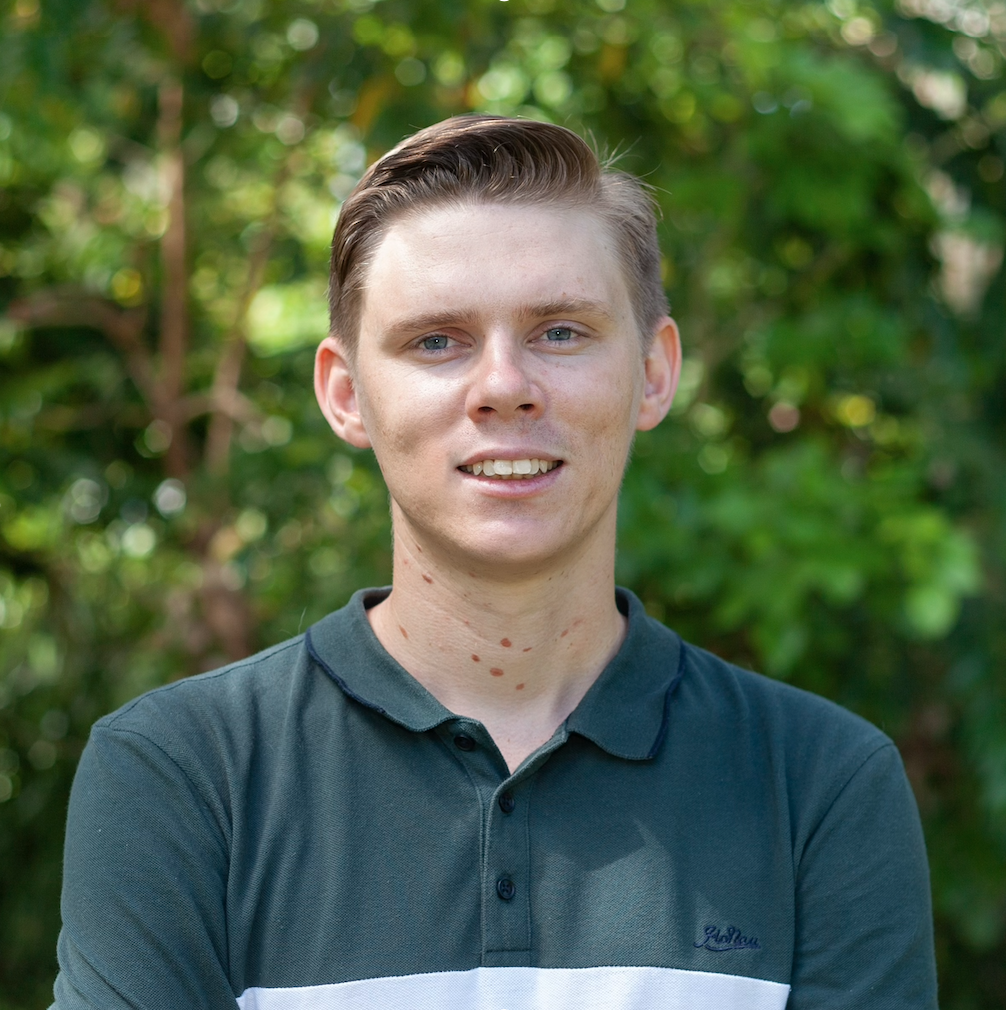
Scott Morrissey
- Research Officer
- scott.morrissey@jcu.edu.au
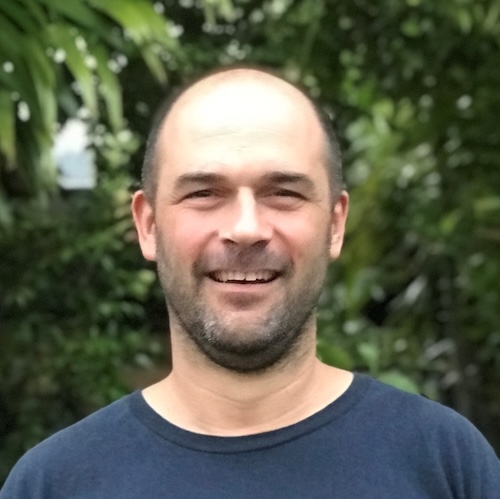
Tim Smith
- Senior Research Officer
- tim.smith2@jcu.edu.au
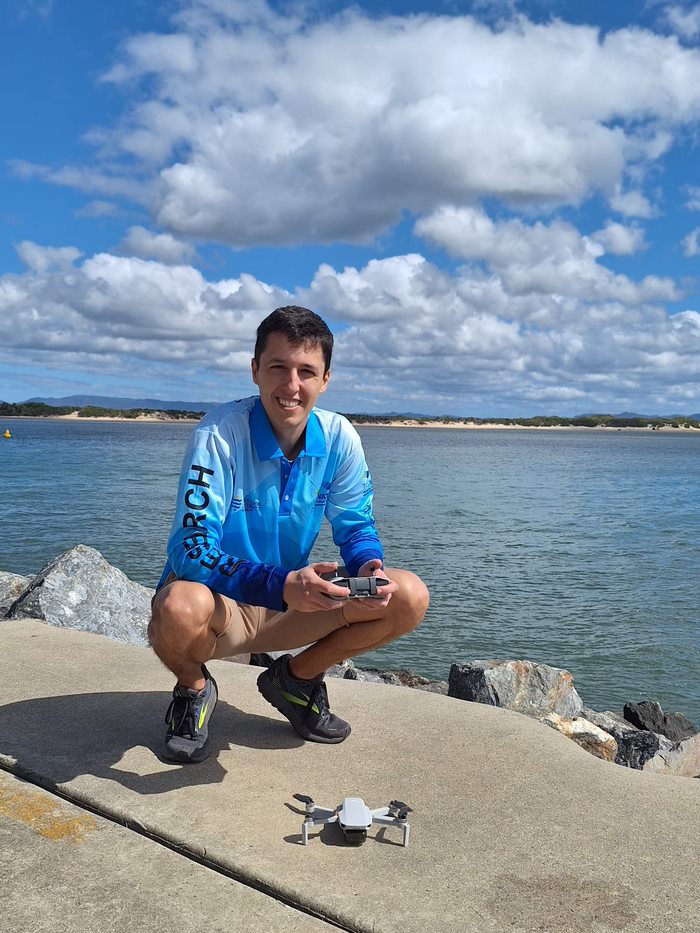
Alejandro Navarro Otero
- Casual Research Worker
- alejandro.navarrootero@jcu.edu.au
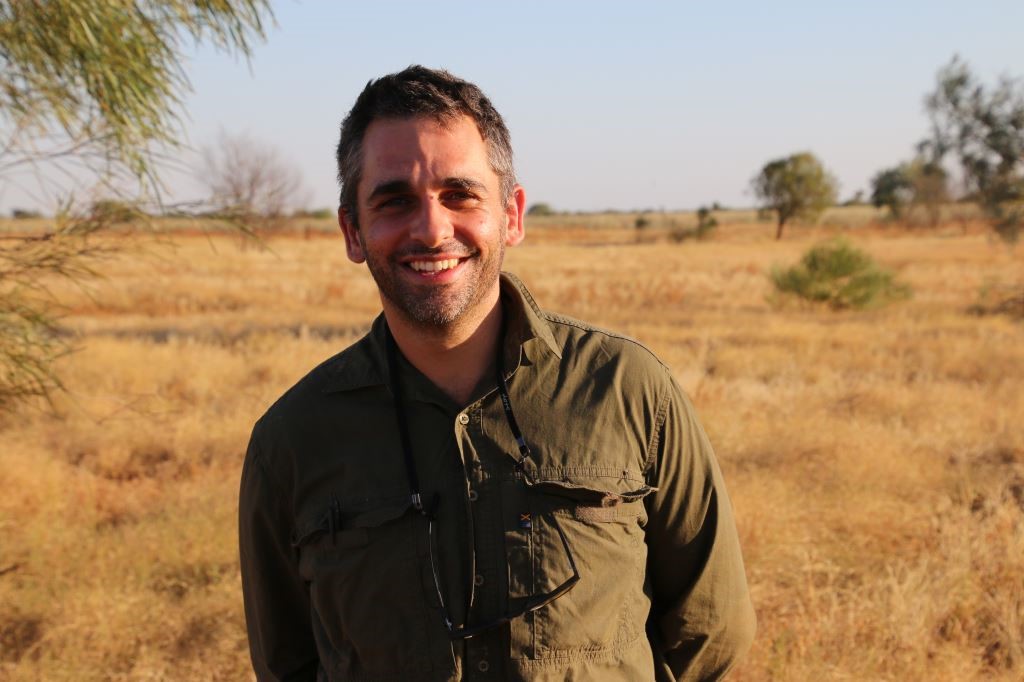
Jack Koci
- Principal Research Officer
- jack.koci1@jcu.edu.au

Sarah McDonald
- Senior Research Officer
- sarah.mcdonald@jcu.edu.au
Emily Webster
- Research Officer
- emily.webster1@jcu.edu.au

Abbi Scott
- Senior Research Officer
- abbi.scott1@jcu.edu.au

Catherine Collier
- Principal Research Officer
- catherine.collier@jcu.edu.au

Rob Coles
- Principal Research Scientist
- rob.coles@jcu.edu.au

Aaron Davis
- Principal Research Officer
- aaron.davis@jcu.edu.au
Towards Solving COTS on the GBR Through Integrated Pest Management (Old ID 21944)
Caroline Petus
18 Dec 2014 - 30 Dec 2016
The project will use an innovative pest-management approach that centres around (1) new advanced models of CoTS outbreaks on the GBR and how they are driven by processes on land and in the sea, (2) effective knowledge transfer from cutting-edge science to strategic management and improved industry practices and (3) continued capacity-building in Cots management and effective stakeholder engagement.
NESP 3.5: Supporting regional planning in northern Australia: Building knowledge, skills & partnerships for understanding seagrass distribution (Old ID 29021)
Catherine Collier
01 Feb 2023 - 20 Nov 2026
Northern Australia has vast development opportunities but limited knowledge of the environment to inform decision making. This region has globally significant seagrass habitat, supporting dugong, green turtle, and commercially important fish and prawns. However, knowledge about seagrass habitats for extensive areas of the coast is limited - data is patchy or not freely available, few large-scale mapping surveys have been conducted, and even fewer seagrass long-term monitoring programs exist. This project will address these problems by: 1. Mapping selected benthic habitats, with a focus on seagrass, using methods consistent with previous and ongoing surveys in northern Australia. 2. Establishing a benchmark of seagrass habitats for Traditional Owners, Indigenous communities, rangers, management agencies, ports, industry, and researchers to assess change. 3. Partnering with management agencies and ranger groups to co-design mapping and monitoring methods in remote areas that use new technology such as drones. 4. Compiling and synthesizing historical seagrass data into a publicly available spatial database to create a permanent record. 5. Interpreting and reporting on survey findings, including providing advice on options for establishing monitoring programs.
Influencing agriculture practice behaviour change and trust frameworks. (Old ID 26963)
Aaron Davis
01 Jan 2020 - 10 Dec 2020
The ecologically-determined water quality improvement targets for the Great Barrier Reef can only be met with significant improvement in farm management practices. Numerous programs over many years, utilising a variety of approaches, have worked with land managers and representative farmer groups, seeking to achieve high levels of uptake of recommended farming practices. However, these have only met with low-moderate success. There has been significant work encouraging and facilitating behaviour and practice change in recent years, including through, but certainly not limited to, the NESP TWQ Hub. Programs encouraging behaviour and practice change are set to remain a feature of contemporary reef funding programs. Thus it is timely to coordinate a synthesis of learnings in this domain. Increasing understanding of, and improving trust frameworks and behaviour change of land managers will lead to improved water quality to the Great Barrier Reef. Understanding the impetus, benefits and barriers of behaviour change for agricultural practice is a large step in improving water quality to the Great Barrier Reef.
Influencing agriculture practice behaviour change and trust frameworks. (Old ID 26963)
Norm Duke
01 Jan 2020 - 10 Dec 2020
The ecologically-determined water quality improvement targets for the Great Barrier Reef can only be met with significant improvement in farm management practices. Numerous programs over many years, utilising a variety of approaches, have worked with land managers and representative farmer groups, seeking to achieve high levels of uptake of recommended farming practices. However, these have only met with low-moderate success. There has been significant work encouraging and facilitating behaviour and practice change in recent years, including through, but certainly not limited to, the NESP TWQ Hub. Programs encouraging behaviour and practice change are set to remain a feature of contemporary reef funding programs. Thus it is timely to coordinate a synthesis of learnings in this domain. Increasing understanding of, and improving trust frameworks and behaviour change of land managers will lead to improved water quality to the Great Barrier Reef. Understanding the impetus, benefits and barriers of behaviour change for agricultural practice is a large step in improving water quality to the Great Barrier Reef.
Marine plant survey of the Half Tide Tug Harbour Hay Point (Old ID 27445)
Skye McKenna
01 Sep 2021 - 31 Dec 2021
North Queensland Bulk Ports (NQBP) have engaged the TropWATER to undertake a survey to determine the presence/absence of marine plants within the Half Tide Tug Harbour, located at the Port of Hay Point. Specifically, the survey requires assessment of marine plant distribution in the area proposed for expanded maintenance dredging, as well as a contemporary survey of marine plants in the area currently approved for dredging.
Satellite Based Water Analysis and Drought Planning in Northwest Qld
Jack Koci
01 Aug 2023 - 23 Apr 2025
This project will utilize satellite imagery to map and monitor small water bodies and farm dams to
improve grazing land management. The project aims to extract time series of water areas from
the satellite images, perform time series analysis to assess the shrinkage or expansion of the
water bodies, water levels, and determine their precise locations.
The focus is on understanding the availability and dynamics of these water resources, which are
vital for livestock, domestic use and wildlife habitats.
This project will be a partnership between SGNRM and JCU.
Benthic Mapping with Angkamuthi Traditional Owners in West Cape York Marine Park
Tim Smith
25 May 2024 - 06 May 2026
This project's requirements are for field work, data analysis and reporting on benthic habitats and fish, principally in the Habitat Protection and Special Purpose Zones of West Cape York Marine Park in the North Network of Australian Marine Parks in collaboration with Angkamuthi Traditional Owners.
Identifying the water quality and ecosystem health threats to the Torres Strait from Fly River runoff (Old ID 26377)
Caroline Petus
01 Jan 2019 - 10 Dec 2020
Runoff from the Fly River in Papua New Guinea influences water quality conditions in the Torres Strait region. Recent work (NESP Project 2.2.1 and 2.2.2) has clearly demonstrated that this influence is largely constrained to the northern Torres Strait, as far east as Bramble Cay and at least as far west as Boigu Island. The intensity of this influence, and the potential ecological impacts, are still not well understood. Trace metal concentrations are higher in the northern Torres Strait around Boigu and Saibai, however it is not clear whether this enrichment is natural or the result of mine derived inputs of trace metals. Further investigation is required to understand the prevalence and frequency of the extension of this influence, including characterisation of plume constituents, particularly sediment and trace metals in comparison to previous results including the Torres Strait Baseline Study.
Seagrass Monitoring and Protection in Wuthathi Sea Country (Old ID 27656)
Len McKenzie
01 Mar 2022 - 14 Feb 2023
Wuthathi land and sea country in far northern Cape York extends from Captain Billy landing south to Temple Bay and includes Shelburne Bay and Raine Island. JCU will work with Wuthathi rangers to map coastal seagrass habitats in Wuthathi. A range of techniques will be adopted, including helicopter surveys and airborne/spaceborne imagery (UAV drone and satellite) for intertidal and shallow subtidal habitats and drop cameras in deeper subtidal waters. Wuthathi rangers will be trained in seagrass mapping and monitoring techniques to facilitate continued monitoring of seagrass habitats in Wuthathi sea country.
Hay Point Seagrass Assessment & Monitoring (Old ID 21849)
Skye McKenna
01 Oct 2014 - 31 Oct 2017
This project was developed to re-establish the seagrass long term monitoring program for Hay Point and add additional monitoring in the Keswick Island area. The project will conduct a baseline survey of the two areas in 2014 and establish an annual monitoring program in 2015 & 2016 from this baseline and historical monitoring. The seagrass monitoring will complement the newly established ambient water quality monitoring for the port.
First detection of Edwardsiella ictaluri (Proteobacteria: Enterobacteriaceae) in wild Australian catfish
- 2018
- Wiley-Blackwell
- Researchers:Susan KuehAaron DavisLeo Foyle
Efficiency of ddRAD target enriched sequencing across spiny rock lobster species (Palinuridae: Jasus)
- 2017
- Nature Publishing Group
- Researchers:Cecilia Villacorta RathJan Strugnell
Defining wet season water quality target concentrations for ecosystem conservation using empirical light attenuation models: a case study in the Great Barrier Reef (Australia)
- 2018
- Academic Press
- Researchers:Caroline PetusStephen LewisZoe Bainbridge
Predicting the cumulative effect of multiple disturbances on seagrass connectivity
- 2018
- Blackwell Publishing
- Researchers:Alana GrechLen McKenzieMichael RasheedSamantha Tol
Compensating for geographic variation in detection probability with water depth improves abundance estimates of coastal marine megafauna
- 2018
- Public Library of Science
- Researchers:Rhondda JonesChristophe CleguerHelene Marsh
Start Date:
01 Jan 2009
End Date:
01 Jan 2026
Start Date:
01 Jan 2009
End Date:
01 Jan 2030
Start Date:
01 Jan 2014
End Date:
01 Jan 2030
Start Date:
01 Jan 2021
End Date:
01 Jan 2025
Start Date:
01 Jan 1981
End Date:
01 Jan 1984
Start Date:
01 Jan 1986
End Date:
01 Jan 1988
Start Date:
01 Jan 1973
End Date:
01 Jan 1973
Start Date:
01 Jan 2024
Start Date:
01 Jan 2022
End Date:
01 Jan 2023
Title:
Conference co-chair
Start Date:
01 Jan 2023
End Date:
01 Jan 2023