
Tropical Water & Ecosystems
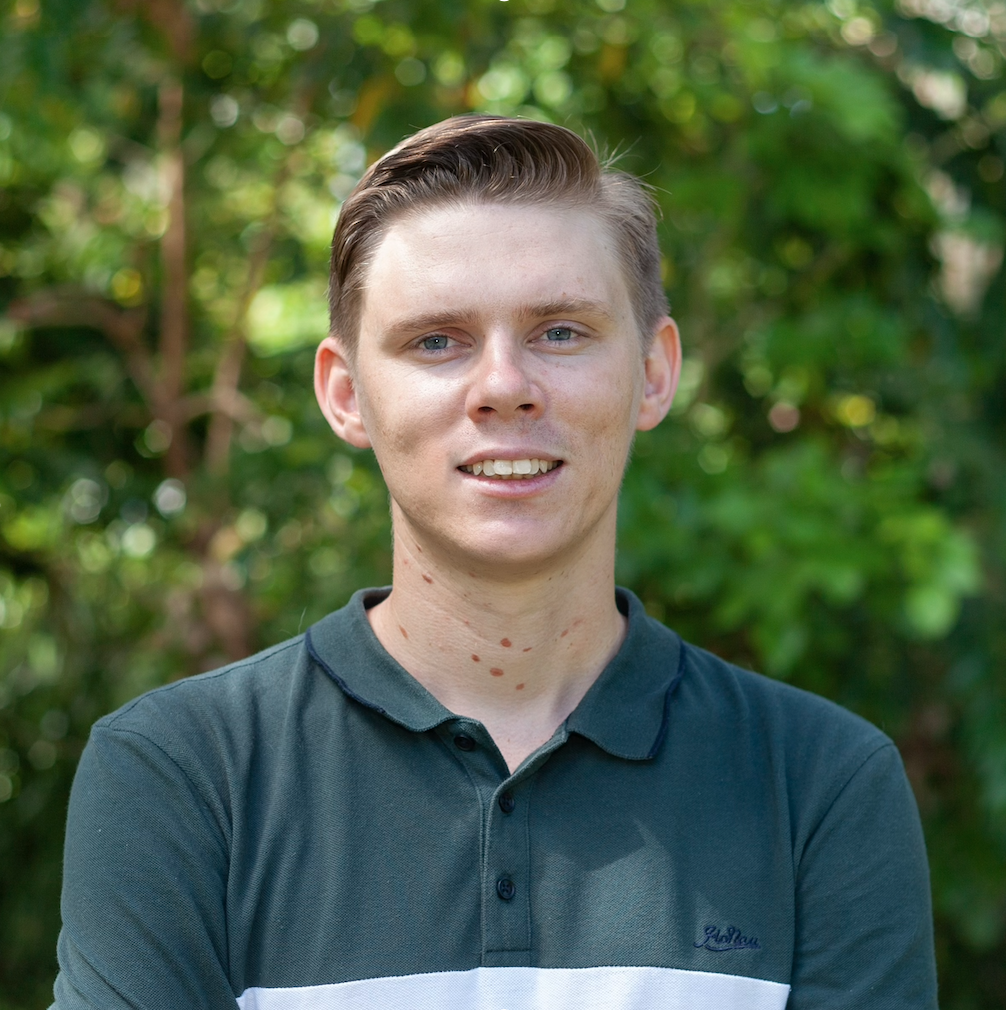
Scott Morrissey
- Research Officer
- scott.morrissey@jcu.edu.au
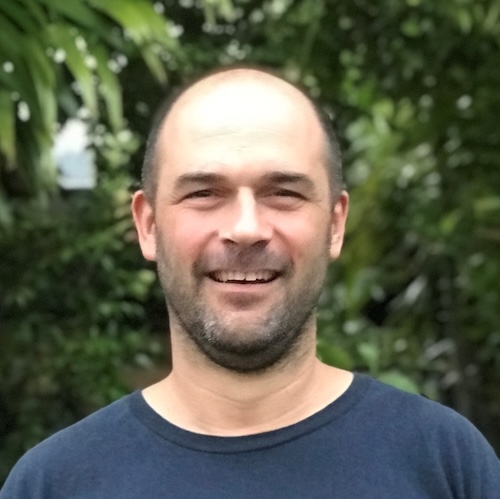
Tim Smith
- Senior Research Officer
- tim.smith2@jcu.edu.au
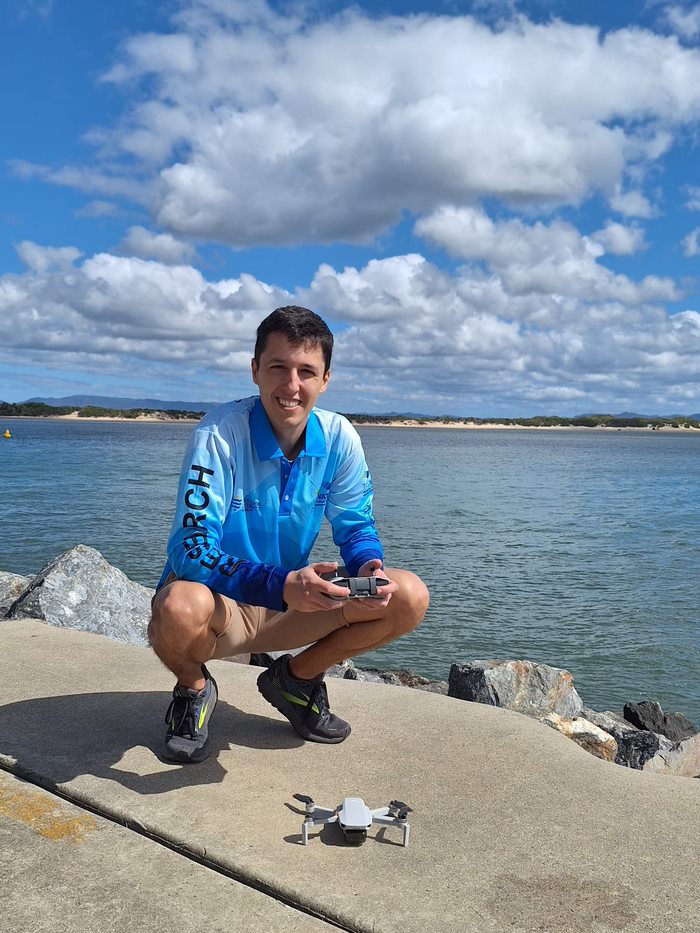
Alejandro Navarro Otero
- Casual Research Worker
- alejandro.navarrootero@jcu.edu.au
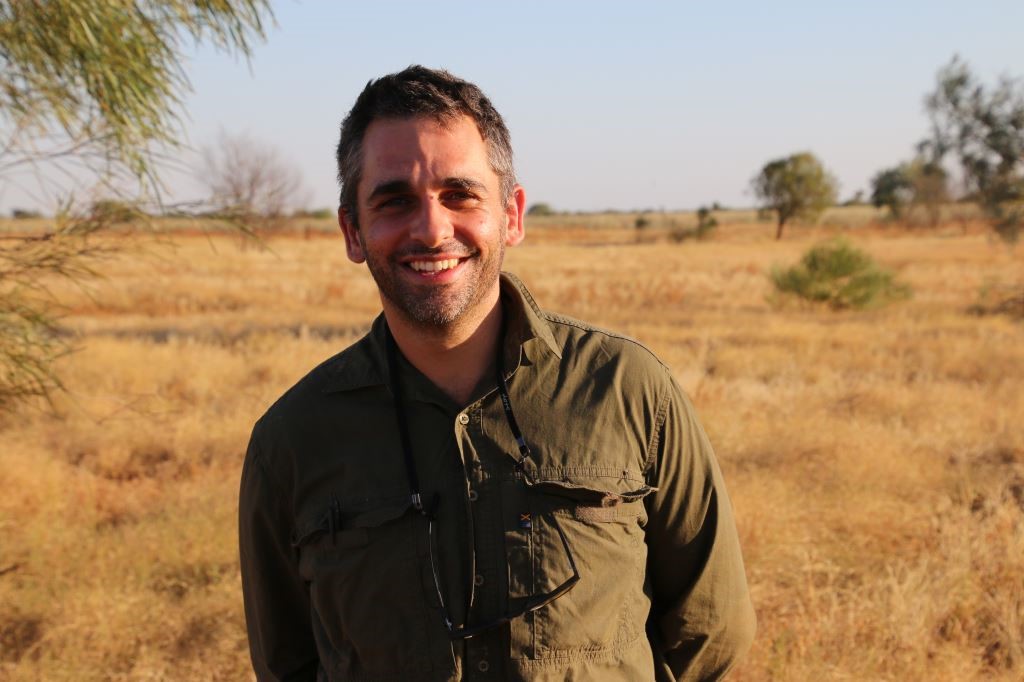
Jack Koci
- Principal Research Officer
- jack.koci1@jcu.edu.au
Sarah McDonald
- Senior Research Officer
- sarah.mcdonald@jcu.edu.au
Emily Webster
- Research Officer
- emily.webster1@jcu.edu.au

Abbi Scott
- Senior Research Officer
- abbi.scott1@jcu.edu.au

Catherine Collier
- Principal Research Officer
- catherine.collier@jcu.edu.au

Rob Coles
- Principal Research Scientist
- rob.coles@jcu.edu.au

Aaron Davis
- Principal Research Officer
- aaron.davis@jcu.edu.au
Delivery of science to support the implementation of a National Marine Park Management Effectiveness system
Alexandra Carter
22 Apr 2024 - 31 Dec 2026
Parks Australia is implementing a management effectiveness framework for Australian Marine Parks (AMPs). This system will support the management of 48% of Australia's EEZ. The Marine and Coastal Hub has supported the development of Parks Australia's (PA) Management Effectiveness (ME) system. The ME system is designed to allow Parks Australia to test the effectiveness of the Australian Marine Park (AMP) system and ensure that AMPs are effectively and appropriately managed. PA have identified priorities for research to assist in the implementation of the ME system, to identify scientific outputs needed for network management and adapt to new issues in the marine environment through the Australian Marine Parks Science Plan. This project will deliver several of the key science needs identified in the plan and will draw on the combined expertise of the partners and scientists within the Marine and Coastal Hub to generate the outcomes which build onto extensive work previously delivered.
Protecting valuable shoreline mangroves of northern Australia
Norm Duke
01 Feb 2024 - 11 Dec 2026
The mass death (~80 km2) and dieback of shoreline mangroves around the Gulf of Carpentaria (GOC) and across northern Australia in 1982 and 2015 was a wake-up call to the vulnerability and immense importance of marine coastal ecosystems like mangroves. It is essential that we better understand the circumstances surrounding such catastrophic events, the environmental triggers identified, and what we might do to restore the damage while also preventing future occurrences. In response to the 2015 mass dieback event (the world’s largest such recorded event), the NESP commissioned an Emerging Priority project that utilised aerial surveys to assess the extent of the dieback along the entire Gulf of Carpentaria coastline. It is proposed to resurvey GOC shorelines for their current condition whilst taking the opportunity further to devise a well-considered and fully costed rapid response plan that will include innovative preventative management outcomes for the longer-term sustainability of these threatened but highly valued coastal marine ecosystems of northern Australia.
Small equipment grant for water quality monitoring multiparameter instrument
Paula Cartwright
15 Jul 2024 - 31 Dec 2024
Purchase of a multiparameter water quality monitoring instrument to replace old and no longer fit-for-purpose instruments. The new instrument is required to fulfil the research outcomes of several current projects and will be necesssary for future projects. The projects' monitor and assess water quality across the Great Barrier Reef Lagoon and Gulf of Carpenataria and include CRC for Water Security for Northern Australia, NQBP Ambient Water Quality Monitoring Program, and Whitsundays Water Quality Blueprint for Tourism Operators. The projects are led by JCU and involve collaborations across JCU, other institutions, government, Traditional Owners, NGO's, citizen science.
Water Security Northern Australia - Persistence and extent of waterholes in the Gilbert River and tributaries, and groundwater contribution to permanency
Paula Cartwright
30 Jun 2023 - 30 Jun 2026
2819 - CRC for developing northern Australia
NESP 4.24 - Towards assessing the values of reefs in the southern Gulf of Carpentaria
Maya Srinivasan
01 Feb 2024 - 30 Sep 2025
In this project, existing data and knowledge on reefs in the Gulf of Carpentaria Marine Park and surrounding waters will be compiled and anaysed with the aim of identifying knowledge gaps and providing recommendations for future research priorities. The Gulf of Carpentaria Marine Park, adjacent to the Wellesley Islands, was only recently declared, in 2013. The marine park has National Park and Special Purpose (Trawl) zones that support commercial prawn fisheries, and it is culturally important for the Lardil, Yangkaal, Kaiadlit, and Gangalidda people who have responsibilities for sea country there. The marine park is due for renewal by 2028. The coral reefs in this area were only recently discovered, in the early 2000s, and they remain poorly studies. Only a few reefs have been assessed ecologically, and even then, only briefly. The main source of ecological data is from a citizen science program, Reef Life Survey, where volunteer divers are trained to conduct visual surveys. Using this data, and through meetings/workshops with relevant scientific, management, industry and Indigenous authorities, we will examine what is known about the reefs in this area and their values.
Marine mega-fauna DNA testing in Cleveland Bay
Samantha Tol
07 Aug 2024 - 06 Aug 2025
The seagrass meadows in Townsville harbor are well established foraging grounds for a large herd of dugong and a high number of green sea turtles (marine mega-herbivores). These foraging grounds have maintained a healthy and resilient meadow after quickly bouncing back from large loss after tropical cyclone Yasi and have provided vital foraging grounds for the endangered and vulnerable marine mega-herbivores.
Healthy seagrass meadows are also home to many different benthic macro fauna (such as sea cucumbers, ascidians, sponges, etc). Previous port funded seagrass surveys have found the seagrass meadows in Townsville harbor contain a wide range of benthic macro fauna. When marine mega-herbivores forage in seagrass meadows, they are known to incidentally consume benthic macro fauna. However, it is unknown at what extent this incidental consumption occurs, and how important this fauna is to their diet.
This project will determine which benthic macro fauna are present in the faeces of marine mega-herbivores using two different DNA methods: eDNA water filtration and laboratory-based DNA extraction. The DNA results will be compared with results of the presence of marine benthic macro fauna from an already scheduled port funded ariel seagrass survey (May and November 2024). Determining which benthic macro fauna are present in dugong and green turtle diets in relation to what is present in the foraging meadow, will enable a greater understanding the role these benthic macro fauna play in the health and resilience of seagrass meadows.
This project will enable a greater understanding of the complex interactions marine mega-herbivores have with their main food source (seagrass), and the role macro benthic fauna play with the value seagrass meadows provide. This information can help to inform whether a seagrass meadow is functioning to its full potential, based on the importance of macro benthic fauna to the diet and health of marine mega-herbivores.
Regenerative Agriculture: understand the intent, practices, the benefits and disbenefits
Adam Canning
26 Aug 2024 - 30 Jun 2027
Regenerative agriculture, while definitions vary, broadly relates to agriculture that not only aims to be but also aims to regenerate the socio-ecological systems that the farm influences. Exactly what components or functions of the socio-ecological system that are being regenerated vary considerably, often reflecting farmer values and goals, and that of the broader community. For example, some farmers may focus on regenerating soil ecosystems within their paddocks, while others might be more interested in regenerating a local waterway or having a thriving a community. Regardless of the goal, effectively managing a farming system towards these goals requires regular assessment and monitoring towards the goals, followed by as evaluation of practice efficacy and responding accordingly - ie adaptive management. In partnership with lead organisation, Southern Cross University, and funded by the Grains Research & Development Corporation (GRDC), this project aims to: (1) understand the goals pursued by regenerative grain growers across Australia; (2) identify suitable monitoring indicators for a wide range of goals spanning agronomic, soil health, ecological, social, and economic domains; and (3) trial those indicators over three years with at least 60 regenerative growers across the nation.
NESP 4.1: Coastal seagrass of the Gulf of Carpentaria: building knowledge and capacity as a foundation for long-term monitoring
Catherine Collier
01 Feb 2024 - 11 Dec 2026
The Gulf of Carpentaria has globally significant seagrass habitat, supporting dugong, green turtle, and commercially important fish and prawns. Key to managing impacts to species in these habitats, including indirect impacts through land use within southern Gulf catchments, is reliable data on seagrass distribution and how it changes over time. Achieving this requires large-scale mapping and a ranger-led seagrass monitoring program. This project will map intertidal seagrass habitats from the western boundary of the Nijinda Durlga (Gangalidda) and Thuwathu/Bujimulla Indigenous Protected Areas to the Bynoe River near Karumba. This mapping focuses on data-deficient regions along the mainland coastline of the southern Gulf. New technologies for monitoring using drones will be collaboratively tested in key locations for ongoing monitoring of coastal habitats by rangers. This will contribute towards the development of a regional baseline of seagrass for the Gulf of Carpentaria.
Alluvial Gully Remediation in the Upper Burdekin Catchment (Old ID 27857)
Zoe Bainbridge
14 Nov 2022 - 15 Jun 2026
In catchments draining to the Great Barrier Reef World Heritage Area, northeast Queensland, Australia, excess sediment derived from gully erosion is contributing to poor coastal water quality. Remediating and preventing further degradation of these landscapes is a major focus of investment toward improving coastal water quality. This project will monitor and evaluate the effect of several alluvial gully remediation measures on improving water quality in the Upper Burdekin catchment. The project will provide valuable new data, knowledge and understanding of the effectiveness of these remediation approaches for landholders interested in protecting and enhancing forage productivity, and for the organisations investing in activities to reduce sediment and nutrient loads delivered to the Great Barrier Reef.
Alluvial Gully Remediation in the Upper Burdekin Catchment (Old ID 27857)
Stephen Lewis
14 Nov 2022 - 15 Jun 2026
In catchments draining to the Great Barrier Reef World Heritage Area, northeast Queensland, Australia, excess sediment derived from gully erosion is contributing to poor coastal water quality. Remediating and preventing further degradation of these landscapes is a major focus of investment toward improving coastal water quality. This project will monitor and evaluate the effect of several alluvial gully remediation measures on improving water quality in the Upper Burdekin catchment. The project will provide valuable new data, knowledge and understanding of the effectiveness of these remediation approaches for landholders interested in protecting and enhancing forage productivity, and for the organisations investing in activities to reduce sediment and nutrient loads delivered to the Great Barrier Reef.
Best practice guidelines for environmental DNA biomonitoring in Australia and New Zealand
- 2023
- John Wiley & Sons Ltd
- Researchers:Cecilia Villacorta Rath
Extensive gene flow in secondary sympatry after allopatric speciation
- 2022
- Oxford University Press
- Researchers:Norm Duke
An ecological assessment of Australia's first community oyster gardens
- 2022
- Wiley-Blackwell
- Researchers:Ian McLeod
Start Date:
01 Jan 2009
End Date:
01 Jan 2026
Start Date:
01 Jan 2009
End Date:
01 Jan 2030
Start Date:
01 Jan 2014
End Date:
01 Jan 2030
Start Date:
01 Jan 2021
End Date:
01 Jan 2025
Start Date:
01 Jan 1981
End Date:
01 Jan 1984
Start Date:
01 Jan 1986
End Date:
01 Jan 1988
Start Date:
01 Jan 1973
End Date:
01 Jan 1973
Start Date:
01 Jan 2024
Start Date:
01 Jan 2022
End Date:
01 Jan 2023
Title:
Conference co-chair
Start Date:
01 Jan 2023
End Date:
01 Jan 2023