
Zoology & Ecology

Saul Chemonges
- Adjunct Associate Professor
- saul.chemonges@jcu.edu.au
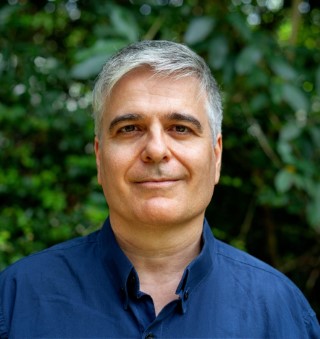
Daniel Montesinos Torres
- Senior Research Fellow
- daniel.montesinos@jcu.edu.au

Claire Gely
- Lecturer, Zoology and Ecology
- claire.gely@jcu.edu.au

Ben Hirsch
- Adjunct Senior Lecturer
- ben.hirsch@jcu.edu.au

Stephen Williams
- Adjunct Professor
- stephen.williams@jcu.edu.au

Myles Menz
- Senior Lecturer, Zoology and Ecology
- myles.menz@jcu.edu.au

Martijn van de Pol
- Associate Professor, Mathematical Modelling
- martijn.vandepol@jcu.edu.au

Slade Allen-Ankins
- Research Fellow
- slade.allenankins@jcu.edu.au

Noel Preece
- Adjunct Associate Professor
- noel.preece@jcu.edu.au
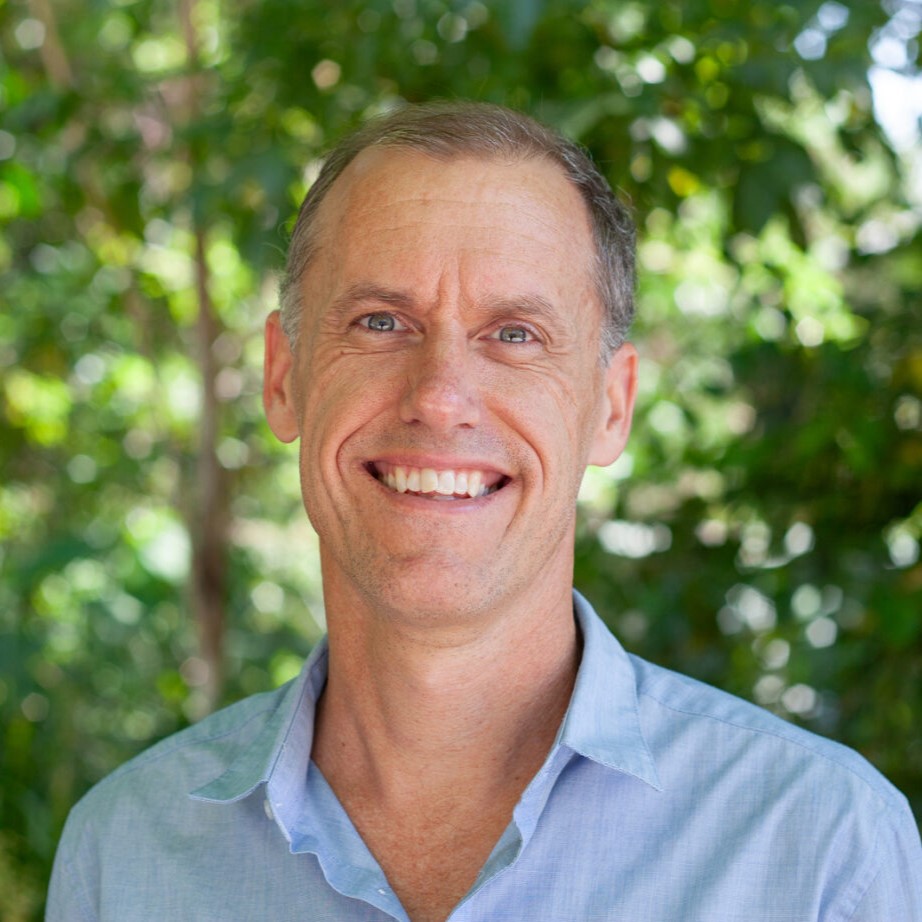
Conrad Hoskin
- Professor
- conrad.hoskin@jcu.edu.au
Southern Whiteface Research Project
This project aims to monitor Southern Whiteface (SWF) populations to understand its genetic diversity, population size, and differentiation, and to clarify subspecies status using molecular genetics. It also investigates landscape-scale factors—such as vegetation and climate, including extremes—that influence SWF distribution. Additionally, it evaluates the health of populations by measuring parasite loads, nutritional condition, and body reserves.
TruForest: Founding an Australian Rainforest LiDAR Monitoring Network
The TruForest project aims to establish a world-leading network for laser (LiDAR) scanning of Australia's rainforests. LiDAR is emerging as the most accurate tool for measuring forest structure, and hence also biomass and carbon stocks. The project intends to: (1) unite Australia's individual and institution-level LiDAR expertise, tools and data; (2) acquire cutting-edge LiDAR technology; (3) develop and test essential data procedures so that
the equipment is ready for use; and (4) develop a partnership for facilitating future usage and access for anyone. The result will be useful for understanding and monitoring Australia's forests, stimulating cutting-edge science, and helping to monitor achieve environmental and climate change targets.
Predicting genetic exchange between species under climate change (Old ID 27104)
This project aims to resolve the factors that lead to the mixing of species’ gene pools, with a focus on whether climate change will increase such mixing, possibly leading to extinction by genetic swamping. The significance is that the project would improve our understanding of speciation and species’ vulnerability to rapid climate change through genetic mixing; a largely overlooked process. Key outcomes would be to generate new knowledge of a fundamental evolutionary process and extend the toolbox of biodiversity managers facing rapid environmental change. The project would benefit Australia by highlighting our unique biodiversity and scientific capability, and by training early career researchers in advanced evolutionary biology.
Reintroduction and monitoring of the Armoured Mistfrog, Litoria lorica (Old ID 31133)
I have a long-term research project on the monitoring and recovery of the Critically Endangered Armoured Mistfrog. I am collaborating on this with the Threatened Species Group (DES, Qld Government) to perform a reintroduction and subsequently monitor all populations for three years. This grant will fund that research.
Advanced passive acoustic monitoring to support evaluation of conservation management effectiveness
This one-year project will build on previous ecoacoustic research to investigate and test methods for applying passive acoustic monitoring (PAM) to monitor, evaluate, and report on environmental condition across Commonwealth national parks. The project will focus on both recognizer development and implementation, for successful monitoring.
Listening for Deer: Acoustic Early Detection for Smarter Biosecurity
Feral deer are an expanding biosecurity threat across Australia, causing ecological damage, agricultural loss, and management challenges, particularly at low population densities, when detection is difficult. This project will rigorously test whether passive acoustic monitoring (PAM) can provide a reliable, cost-effective method for early detection of feral deer across vegetation types, seasons, and species.
Most deer vocalise conspicuously during breeding, group contact, and alarm situations. We will leverage these vocal behaviours to evaluate acoustic detection success and directly compare it with conventional surveillance approaches (camera trapping). Using several year-long datasets collected across contrasting habitats, we will quantify detection probability, seasonal performance, and relative cost-efficiency of acoustic versus camera-based and eDNA based monitoring.
The intended outcome is clear, evidence-based guidance on when and where acoustic monitoring is most effective for detecting low-density deer populations. By validating scalable and scientifically robust surveillance tools, this project will enhance early detection capacity, improve response times, and strengthen landscape-scale biosecurity monitoring. The results will directly support coordinated, proactive management under national feral deer strategies, helping to reduce environmental impacts, limit spread, and protect biodiversity and agricultural assets across Australia.
Baseline invasive ant fauna and impact survey in the Torres Strait (Old ID 27827)
The project aims to collect a representative baseline sample of ant fauna on all inhabited Torres Strait islands and five communities in the northern peninsula area of Cape York. The focus is on invasive and non-native ant fauna.
Barron River Bridge Planning Study (Old ID 28979)
Arup Australia Pty Ltd is working with Qld Department of Transport & Main Roads to assess environmental impacts of upgrading/replacing the Barron River Bridge. Their main concern is the Critically Endangered Kuranda Treefrog, for which I am the expert. The project is to fund me to do range-wide surveys of the species to estimate current population size and the proportion of the population that may be impacted by the bridge. Additionally, my expert advice on how to mitigate impacts. I consider this ‘contract research’ because it funds research I planning to do anyway (i.e., a current range-wide survey), and that data will be used by one of my PhD students.
JCU-CSIRO community-led biosecurity initiative
The objective of this Project is to build on the work of the first phase project (CSIRO Ref: C043882), which engaged with Traditional Owners in the Townsville region to identify community-led projects that will aim to reduce biosecurity risks and/or impacts.
This project will recruit an Indigenous student to complete a 2 year Masters degree that will address one of the projects emerging from the phase one project (i.e. managing weeds on country) and who will be managed by Daniel Montesinos Torres and Kyana Pike. The full details of the project will be finalised upon consultation with the recruited student and the Bindal community who are participating.
A Community Research Assistant will be recruited from the Bindal Community to provide liaison and engagement between the Masters student, Dr Montesinos, Dr Pike, and the Community.
Northern Australia Plant Biosecurity Facility
This proposal aims to establish the only Australian plant quarantine facility north of the 27th parallel (Brisbane), and therefore the only one in the Australian tropics. The facility will enable effective research on tropical invasive plants, which currently can only be developed via proxy facilities far from the relevant habitats. This poses severe limitations to biosecurity research in the Australian Tropics. JCU is a leading institution in tropical environmental research, and as a broad and diverse base of biosecurity researchers that will be expand their capacity to develop world class research on plant biosecurity under safe and adequate conditions. Research ranges from the impact of reintroduction of new genotypes on weed fitness, genetic variability and sensitivity, impact of climate change on weed expansion, the role of plant-animal interactions on plant control, and others.
Complex growth rate evolution in a latitudinally widespread species
- 2004
- Wiley-Blackwell
- Researchers:Lin Schwarzkopf
Shade acclimation of rainforest leaves to colonization by lichens
- 2002
- Wiley-Blackwell
- Researchers:Betsy Jackes
Master of them all: performance specialization does not result in trade-offs in tropical lizards
- 2007
- Evolutionary Ecology
- Researchers:Lin Schwarzkopf
Does total reproductive effort evolve independently of offspring size?
- 2001
- Wiley-Blackwell
- Researchers:Lin Schwarzkopf
Nomadic movement in tropical toads
- 2002
- Wiley-Blackwell
- Researchers:Lin Schwarzkopf
Start Date:
01 Jan 2024
End Date:
01 Jan 2025
Start Date:
01 Jan 2011
End Date:
01 Jan 2025
Start Date:
01 Jan 2025
Start Date:
01 Jan 2023
End Date:
01 Jan 2025
Start Date:
01 Jan 2025
Start Date:
01 Jan 2025
Start Date:
01 Jan 2022
Start Date:
01 Jan 2020
End Date:
01 Jan 2025
Start Date:
01 Jan 2024
Start Date:
01 Jan 2024