
Information Technology

Umair Qureshi
- Senior Lecturer, Information Technology
- umair.qureshi@jcu.edu.au

Chao Chen
- Adjunct Senior Lecturer
- chao.chen@jcu.edu.au

Dmitry Konovalov
- Senior Lecturer
- dmitry.konovalov@jcu.edu.au

Trina Myers
- Adjunct Professor
- trina.myers@my.jcu.edu.au

Iti Chaturvedi
- Lecturer, Information Technology
- iti.chaturvedi@jcu.edu.au

Euijoon Ahn
- Senior Lecturer, Information Technology
- euijoon.ahn@jcu.edu.au
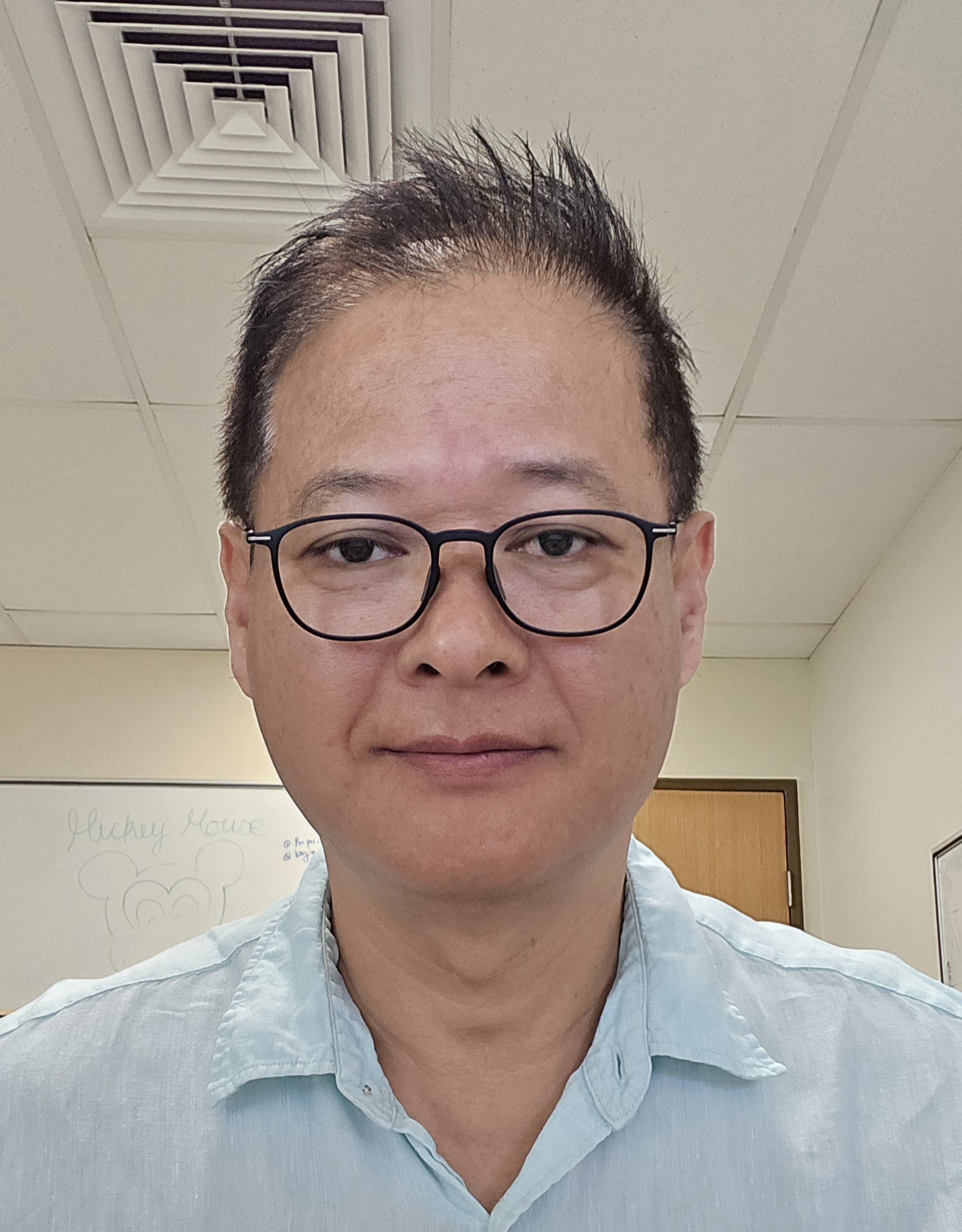
Ickjai Lee
- Professor - Promotional Chair
- ickjai.lee@jcu.edu.au
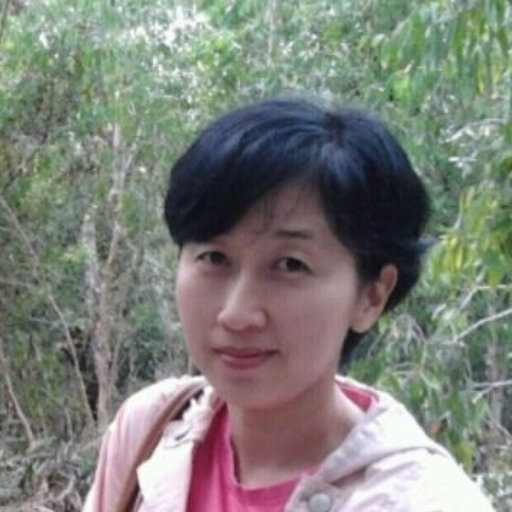
Kyungmi Joanne Lee
- Senior Lecturer
- joanne.lee@jcu.edu.au

Kranthi Addanki
- Lecturer, Information Technology
- kranthi.addanki@jcu.edu.au

Lindsay Ward
- Senior Lecturer
- lindsay.ward@jcu.edu.au
FLARE – Federated Learning for AI-Based RRR Engagement
FLARE – Federated Learning for AI-Based RRR Engagement, will develop a smartphone-based AI system for mental health support in RRR communities. FLARE will enable adaptive, privacy-preserving mental health support (screening, diagnosis, and treatment) on mobile devices, reducing barriers to access, stigma, and service availability in the regions JCU serves.
Development of Artificial Intelligence for Predicting Diabetic Foot Ulcers in Regional, Rural and Remote Areas: A Pilot Study
People living in regional, rural, and remote areas are many times more likely to have diabetic foot ulcer (DFU) due largely to late detection of the condition. We propose to develop an artificial intelligence (AI) model using clinical data and images to detect early DFU. Two hundred and fifty diabetes subjects aged >18 years with or without DFUs living in Townsville and Northwest HHSs will be studied in collaboration with JCU IT experts. The AI applications will be trained to select the strongest predictors to determine early occurrence of DFUs which will lead to possible reduction of limb amputations.
A Mirror for the Mind: Digital Twin Technology for Emotional Wellbeing Among First-Year Students from culturally and linguistically diverse backgrounds
This project leverages Digital Twin (DT), a digital replica of a physical object or process, to develop an AI-enabled framework for supporting the wellbeing of culturally and linguistically diverse (CALD) university students.
CALD students represent a strategic priority cohort at JCU due to the persistent inter-cultural and belonging challenges that impact academic success. This project addresses these challenges through early identification of risk, predictive insights, and delivery of timely, culturally responsive interventions.
This project will co-design and evaluate the DT framework with CALD students and institutional stakeholders, generating proof-of-concept evidence, scalable design principles, and a validated prototype. Outcomes will directly strengthen the competitiveness of future external grant applications.
Roster Modelling for FIFO in the mining, oil and gas sector using genetic algorithms and neural networks
Australia currently has approximately 130,000 Fly-In/Fly-Out (FIFO) mining workers and 70,000 construction workers nationally as at 2011 (Australian Government report, 2011). The vast majority of FIFOs are on two week rosters and 45% time at work, which equates to 10.4 million plane trips (i.e., 5.2 million return trips) per year, approximately 84,000 room nights, 250,000 meals per day and other associated supply logistics such as cleaning and administration. Currently, the systems that manage the rostering of FIFO worker's travel, accommodation, meals, cleaning and administration, have limited ability to assist with determining the most efficient roster model. A 3% waste across transport and accommodation equates to millions of dollars (e.g., approximately 300,000 flights, 2,500 rooms and 7,500 meals). Any reduction in waste would represent substantial saving. The ability to efficiently schedule resources and maintain sufficient staff coverage, rest periods etc. has the capacity to improve the productivity of FIFO enterprises. The aim of this research is to explore the use of artificial intelligence to build an optimised travel, accommodation and roster model based on varying sets of seed data and supervised and unsupervised neural network training. Neural networks can be used to optimise rosters, transport and accommodation using a subset of all required parameters. Two approaches will be investigated to determine the most effective and efficient AI model. These
Please provide a brief outline of the proposed project and deliverables
Researchers in Business Application Form v4
Page 11 of 15
include neural networks with 1) supervised training using cloud based historical data or 2) unsupervised training using Genetic algorithms. The outcome of this project will be an artificially intelligent solution to optimisation modelling of workforce logistics in the mining, oil and gas sector. The product will be an intuitive, automated roster modelling tool that will benefit Osmotion's current and future clients by offering waste reduction and economic value through optimising the FIFO roster model.
Generative AI (GenAI) and Student Equity in Higher Education: Unpacking Uneven Impacts Across Equity Cohorts
This project investigates how generative AI (GenAI) technologies may unevenly impact students from equity cohorts in higher education. Drawing on critical theory and social constructivism, the study explores how GenAI can both enhance and hinder access, engagement, and inclusion for students from non-English
speaking backgrounds, students with disabilities, First Nations students, students from low socioeconomic status backgrounds, women in non-traditional disciplines, and students from regional or remote areas. Through an anonymous cross-institutional survey of student-facing staff across four Australian
universities, the research will identify barriers, enablers, and ethical considerations in GenAI adoption. Findings will inform the development of inclusive guidelines and personas contributing to institutional policy and professional practice.
Wildlife in Virtual Reality - a New Way to Educate and Engage (Old ID 22306)
This project will harness rapidly evolving technologies to create an exciting new product for raising community awareness of conservation issues. Specifically, the project will use the latest computer wizardry to allow people (locals, visitors, students) to have the unique experience of getting up close and personal with a Lumholtz's tree-kangaroo through virtual reality.
Develop the ResPax (digital) Passbook (Old ID 27496)
To develop digital tools for collecting tourism data in the region to enable better decision-making through various data mining approaches.
Kimberley - Wet Tropics Wildlife on Virtual Reality (Old ID 23592)
This project will further develop 'Kimberley' the 3D virtual reality tree-kangaroo to the stage where the 'experience' can go live to the public at the Malanda Falls Visitor Centre. This project further extends 3D tree-Kangaroo with Virtual Reality and artificial intelligence.
ResPax Digital Passbook (Phase II) (Old ID 29015)
To continue the Phase I of project to further develop digital tools for collecting tourism data in the region to enable better decisionmaking.
Applying Artificial Intelligence to Business Management Advice (Old ID 24802)
Develop methods of analysing large volumes of accounting data to provide valuable insights for business owners and actionable advice that will help them improve their business practices. Mentoring fee for guidance provided to Graduate Student employed by Calxa Pty Ltd.
Argument free clustering via boundary extraction for massive point-data Sets
- 2002
- Researchers:Ickjai Lee
Battleship by foot: learning by designing a mixed reality game
- 2006
- Murdoch University
- Researchers:Jason Holdsworth
Partition-distance via the assignment problem
- 2005
- Oxford University Press
- Researchers:Dmitry Konovalov
Sweet spot
- 2011
- Researchers:Jason Holdsworth
Title:
Australia Computer Society
Start Date:
01 Jan 2010
End Date:
01 Jan 2025
Start Date:
01 Jan 2020
End Date:
01 Jan 2022
Start Date:
01 Jan 2016
End Date:
01 Jan 2022
Start Date:
01 Jan 2016
End Date:
01 Jan 2020
Start Date:
01 Jan 2022
Title:
English
Start Date:
01 Jan 2024
End Date:
01 Jan 2026
Start Date:
01 Jan 2022
End Date:
01 Jan 2024
Title:
Program Coordinator, Master of Technology (Software Engineering), Federation University Australia
Start Date:
01 Jan 2020
End Date:
01 Jan 2022
Start Date:
01 Jan 2018
End Date:
01 Jan 2022