
Marine Biology & Aquaculture

Mikaeylah Davidson
- Postdoctoral Research Fellow
- mikaeylah.davidson@jcu.edu.au
Tom Lloyd
- Postdoctoral Research Fellow, Global Ecosystems
- tom.lloyd@jcu.edu.au

Alys Young
- Postdoctoral Research Fellow, Global Ecosystems
- alys.young@jcu.edu.au
William Arlidge
- Postdoctoral Research Fellow in Community-Based Fisheries Co-Management
- william.arlidge@jcu.edu.au

Anna Wilson
- Project Coordinator
- anna.wilson@jcu.edu.au
Kelly Condon
- Senior Lecturer, Aquaculture (Aquatic Animal Health)
- kelly.condon@jcu.edu.au

Graeme Cumming
- Adjunct Professor
- graeme.cumming@jcu.edu.au

Takahiro Shimada
- Adjunct Senior Research Fellow
- takahiro.shimada@jcu.edu.au
Peter Doll
- Research Fellow, Coral Reef Health Assessments
- peter.doll@jcu.edu.au
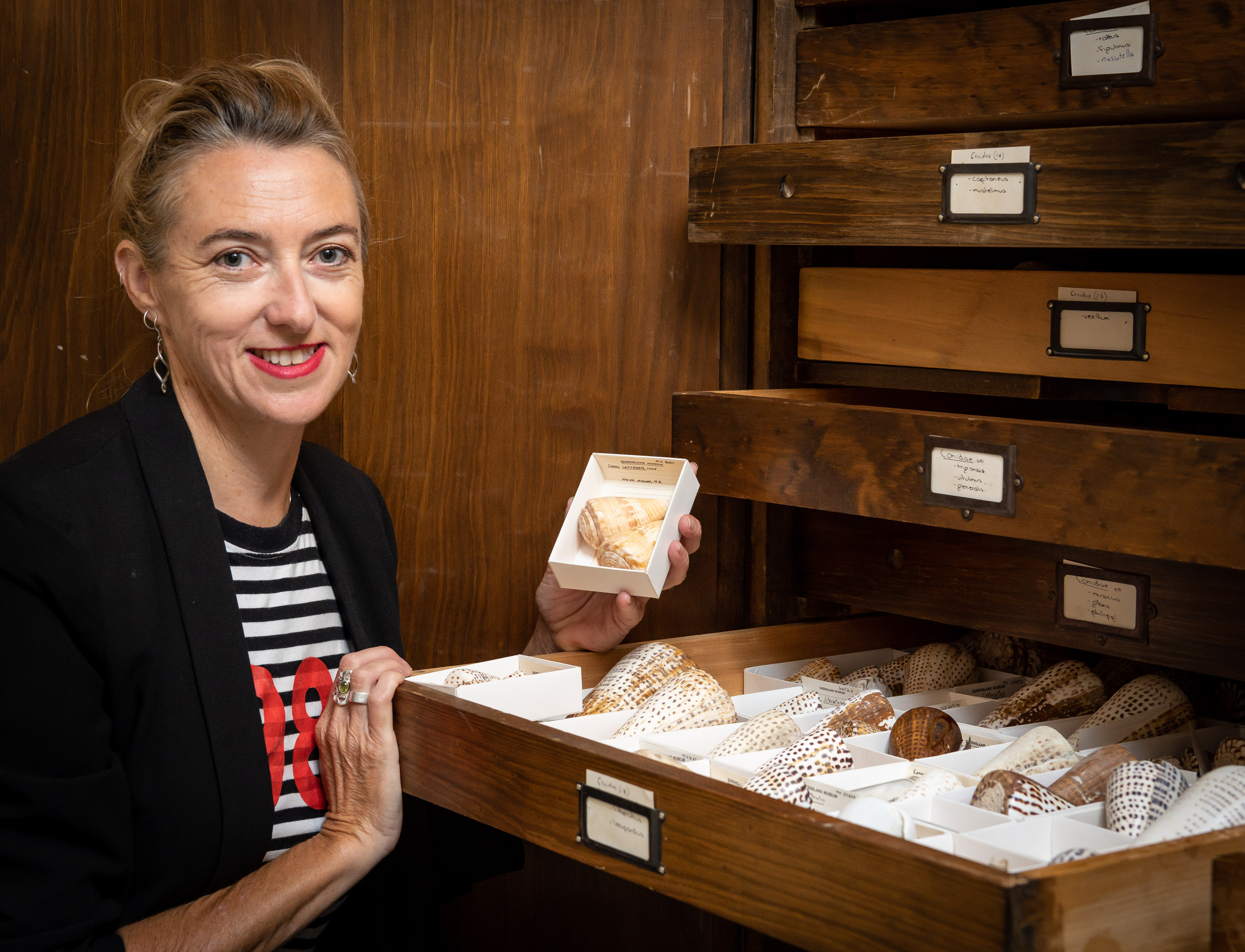
Michela Mitchell
- Casual Research Assistant
- michela.mitchell@jcu.edu.au
Novel methods for crown-of-thorns starfish management to contain emerging outbreaks in the Lizard Island region
Population irruptions of crown-of-thorns starfish (CoTS) are a major cause of coral mortality on the Great Barrier Reef (GBR), contributing to ongoing reef degradation. There is, therefore, a concerted effort to manage CoTS on the GBR, but established surveillance and culling activities are largely ineffective for dealing with relatively low densities of CoTS. This project will pioneer novel culling methods to contain emerging population outbreaks of CoTS in the Lizard Island region. This research will not only directly contribute to improved management of the GBR, but will be conducted alongside existing CoTS management programs to maximize application and uptake of proposed methods.
Development of a culture based fishery for giant freshwater prawn in Sri Lankan reservoirs (Old ID 23638)
Giant freshwater prawn (GFWP) - Macrobrachium rosenbergii is a high value aquaculture species suited to culture-based fishery stocking into reservoirs in Sri Lanka. The project will develop a science based stocking strategy of hatchery reared juvenile prawns, to improve the yields of GFWP in reservoirs and design and use of fishing gear that will prevent damage to the animals. Socio-economic research will lead to a better understanding of the value chain to enable further improvements to the fishery. The research will ensure the fishery is profitable, efficient and sustainable in the long term. The research is part of an ACIAR Small Research Activity (SRA) that will form the basis of a larger, full four year project to follow on in 2019.
Macroalgal removal for reef restoration (Old ID 26442)
This project investigates the potential for restoration of reef ecosystems around Magnetic Island. It aims to remove macroalgae at varying frequencies and monitor changes in coral recruitment to develop best practices for the large-scale implementation of the technique to restore coral reefs impacted by macroalgal phase shifts. This grant is to support the project funded by Earthwatch Australia by increasing funds for field work.
The Science of Seafood: STEM Pathways through Aquaculture
To support the growth of Northern Australia’s Aquaculture industry, which will require between 1400 and 2300 new STEM-skilled staff by 2030 (CRCNA No.A.1.2021014 Report), this project will engage high school students in a series of interactive workshops designed to showcase aquaculture and highlight its range of attractive STEM career pathways. The workshops will be offered in key regional hubs of Queensland for aquaculture and economic development, including Cairns, Rockhampton, Whitsundays, and Townsville. Workshops will be structured as interactive, hands-on sessions at schools, designed to balance theoretical learning with practical application. The project goals are to raise awareness of aquaculture among the next generation and inspire students to pursue studies and careers in the field.
PADI Global Shark Census 2025-2028
This is a continuation of the existing project with PADI Aware Foundation. The Fish and Fisheries Lab @ JCU is the global scientific quality control and data analysis hub for the PADI Global Shark and Ray Census (GSRC), an international long-term initiative of the PADI AWARE Foundation to monitor sharks and rays around the world through the PADI Diver network. The F&F Lab @JCU conducts quality assurance and scientific verification and checks to the rigor of programme data and will conduct scientific analyses and pattern and trend reporting from the data. This multi-year project provides WIL placement opportunities and may include several PhD students once the data streams collate sufficient data.
Biosecurity and genetic improvement for disease resistance in large scale shrimp aquaculture (Old ID 27756)
This project aims to facilitate first-hand experience for students in international agricultural research in the Tropics. Activities will involve travel of the student, Phoebe Arbon, accompanied by Prof. Dean Jerry, to facilities including advanced selective shrimp breeding centres, aquatic viral research laboratories and, industrial-scale aquaculture farms in Thailand and Singapore. Travel to these regions presents unique opportunities to enhance Phoebe’s research experience and technical understanding of aquatic animal health, given the presence of highly pathogenic shrimp diseases and aquaculture conditions which are unparalleled in Australia. Engagement made with industry and research groups during the trip will also foster professional networks.
Wuthathi River to reef baselines and monitoring framework
Wuthathi Aboriginal Corporation would like to engage TropWATER JCU to assist with the implementation of the Wuthathi IPA Plan of management. This work will include 4 components to investigate connections from the Harmer River to the inshore Islands including Coastal mangroves. helicopter survey of Wuthathi coastline from Olive River to Captain Billys Landing and offshore islands showing impacts to mangroves. Seagrass. Vessel-based inshore sub-tidal camera drop surveys east and west of Harmer Creek and one day at Bird Island reef flat potentially using walking/quadrat survey methods. Dugong. Desktop analysis of existing data. Vessel-based trip to collect dugong skin samples and survey population and Land-based drone surveys of inshore areas near Ma’au. Aquatic ecosystems and oyster bed surveys. Harmer River assessment and assessment of Ma’au oyster bed and habitat and nearby coastal wetland/saltmarsh and riverine assessment and off-bank assessments of Harmer Creek.
ACIAR PCAARRD Shrimp genomics for health
Multi-disciplinary programmatic research approach that focuses on developing the necessary tools and translatable knowledge to address improving shrimp disease resistance and providing health interventions
Global responses of marine species and ecosystems to environmental change
This project aims to uncover novel solutions to the global problem of determining rapid environmental change effects on multiple species and ecosystems. Since the combined effects of environmental change drivers in wild ecosystems, and with adaption, are difficult to test experimentally, this project uses a novel global approach to rapidly assess responses of hundreds of species to net combined drivers of change using 300 years of species collections. Determining multiple species and ecosystem responses to total environmental change through time and across latitudes will generate a predictive capacity for vulnerable and resilient groups to inform management, fisheries and conservation.
Coral bleaching, reef fish community phase shifts and the resilience of coral reefs
- 2006
- Blackwell Publishing
- Researchers:David BellwoodAndrew Hoey
Regional-scale assembly rules and biodiversity of coral reefs
- 2001
- American Association for the Advancement of Science
- Researchers:David BellwoodTerry Hughes
Confronting the coral reef crisis
- 2004
- Nature Publishing Group
- Researchers:David BellwoodTerry Hughes
Influence of age and moderate-intensity exercise training on heart rate variability in young and mature adults
- 2003
- Human Kinetics
- Researchers:Anthony LeichtAndrew Hoey
Influence of intensive cycling training on heart rate variability during rest and exercise
- 2003
- NRC Reserch Press
- Researchers:Anthony LeichtAndrew Hoey
Start Date:
10 Nov 2024
Start Date:
31 Mar 2025
Start Date:
01 Jan 2024
Start Date:
01 Jan 2024
End Date:
01 Jan 2027
Start Date:
01 Jan 2004
End Date:
01 Jan 2006
Start Date:
01 Jan 2007
End Date:
01 Jan 2007
Title:
PhD, James Cook University
Start Date:
01 Jan 2002
End Date:
01 Jan 2005
Start Date:
01 Jan 1996
End Date:
01 Jan 1999