
JCU Singapore
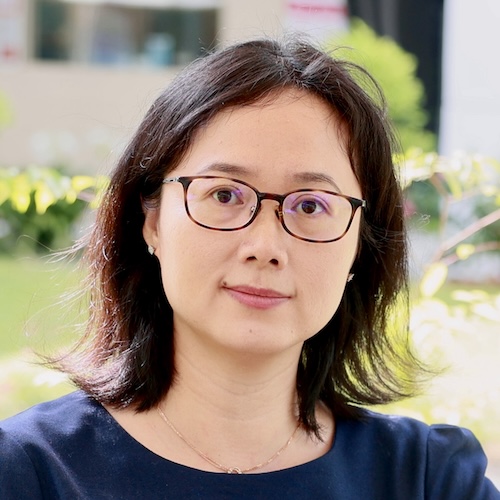
Huiping Zhang
- Associate Professor Business
- huiping.zhang@jcu.edu.au

Maria Hennessy
- Associate Professor Clinical Psychology
- maria.hennessy@jcu.edu.au

Ghazalnaz Sharifonnasabi
- Lecturer, JCU Singapore
- ghazalnaz.sharifonnasabi@jcu.edu.au

Daniel O'Sullivan
- Senior Learning Advisor
- daniel.osullivan1@jcu.edu.au
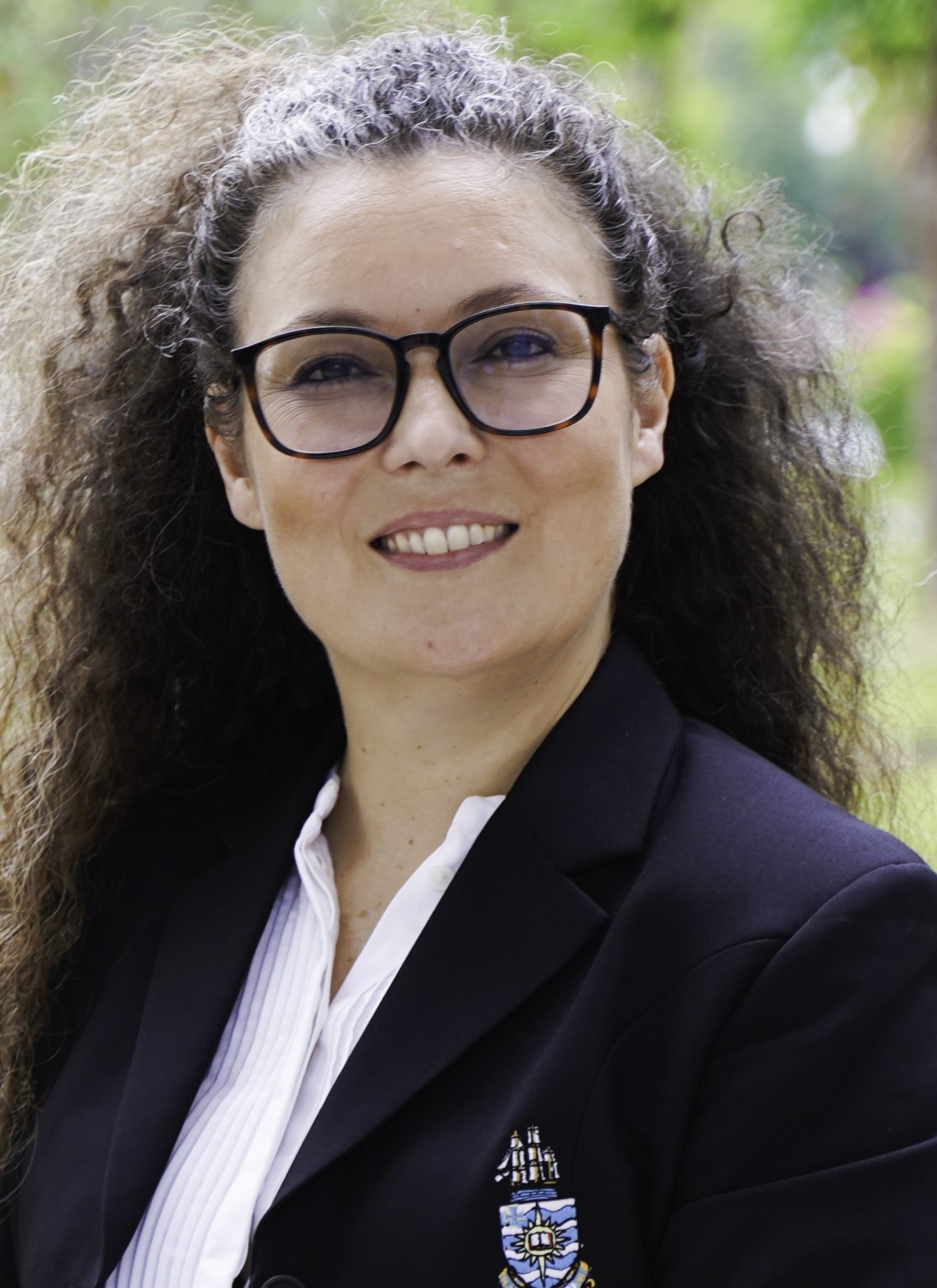
Maura Carrai
- Senior Research Fellow - Aquaculture Molecular Health
- maura.carrai@jcu.edu.au

Peter Hofman
- Director of Post Graduate Studies Business/Professor Business
- peter.hofman@jcu.edu.au

Kunchana (Gi) Chouynuu
- Senior Learning Advisor
- kunchana.chouynuu@jcu.edu.au
Chris Lo
- Associate Professor Psychology
- chris.lo@jcu.edu.au

Lance DuBos
- Lecturer (Professional)
- lance.dubos@jcu.edu.au
Sook Rei Tan
- Senior Lecturer
- sookrei.tan@jcu.edu.au
Project Smiling Gecko CAMBODIA - What Gaps can we impact?
JCU's mission is to create a brighter future for life in the Tropics, and this project aims to increase JCU's impact on livelihoods in remote communities in SE Asia.
By working with NGO Smiling Gecko Cambodia (SGC) which supports the needy population in Cambodia, the team can contribute to their self sustaining, ecologically and economically vibrant activities that aligns with UN SDG goals 4(quality education), 12 (responsible consumption & production), 14 (life below water) and 17 (partnerships for the goals).
SGC runs a school for 500 students, a farm house resort that employs several hundred employees, grows food crops, and runs tilapia ponds at their 105-hectare site that benefits 30,000 Cambodians in surrounding villages. SGC is committed to continuing growth and seeking partnerships with universities to develop programs for the continuing education of its young community.
The team seeks to identify how we can partner with SGC to identify gaps where we can make a difference to the local population, and where we can make an impact on their operation by building capacity. We propose a 3 days/ 2 nights site study and stakeholder engagement in October 2025. The immediate output will be a blue print for our future work with SGC and other remote communities, how we participate in their continual growth and showcase as a working model for other remote communities in SE Asia. We will seek suitable future funding opportunities from international financial institutions such as the World Bank or the Asian Development Bank.
Supporting expanded and new research opportunities between JCUS IT and JCU’s Australia campuses
Proposal to visit JCU campuses to create new cross-discipline research opportunities as well as further exploit existing research that has been conducted solely in JCUS so far.
Addressing Bedtime Procrastination with Behavioural Technology: Introducing SleepSync
With rising concerns about sleep-related health issues, researchers have di-rected their focus to understanding how bedtime procrastination contributes to sleep-related problems and the ways to tackle it how to tackle it. This is due to evidence linking bedtime procrastination to poor sleep quality and quantity, increased daytime fatigue, and poor sleep cycle. Technological ad-vancements have emerged as promising tools, with numerous sleep-tracking and sleep- behaviour apps developed to address sleep-related issues. How-ever, the existing apps exhibit critical gaps in targeting bedtime procrastina-tion behaviours. The present paper reviews the current landscape of sleep apps by analyzing how the apps monitor and mitigate sleep-related behaviour and highlights existing gaps in this domain. Next, we introduce SleepSync, an innovative app specifically designed to address bedtime procrastination be-haviour. SleepSync's design integrates Carver and Scheier’s self-regulation theory and Zajonc’s social facilitation effect to enhance users’ self-regulation and behavioural activation through behavioural interventions, sleep tracking, and gamification. The validation and future iterations of the SleepSync prototype will shape it into a fully functional, user-friendly mo-bile app suitable for everyday use and broader commercialization.
Addressing Bedtime Procrastination with Behavioural Technology: Introducing SleepSync
With rising concerns about sleep-related health issues, researchers have di-rected their focus to understanding how bedtime procrastination contributes to sleep-related problems and the ways to tackle it how to tackle it. This is due to evidence linking bedtime procrastination to poor sleep quality and quantity, increased daytime fatigue, and poor sleep cycle. Technological ad-vancements have emerged as promising tools, with numerous sleep-tracking and sleep- behaviour apps developed to address sleep-related issues. How-ever, the existing apps exhibit critical gaps in targeting bedtime procrastina-tion behaviours. The present paper reviews the current landscape of sleep apps by analyzing how the apps monitor and mitigate sleep-related behaviour and highlights existing gaps in this domain. Next, we introduce SleepSync, an innovative app specifically designed to address bedtime procrastination be-haviour. SleepSync's design integrates Carver and Scheier’s self-regulation theory and Zajonc’s social facilitation effect to enhance users’ self-regulation and behavioural activation through behavioural interventions, sleep tracking, and gamification. The validation and future iterations of the SleepSync prototype will shape it into a fully functional, user-friendly mo-bile app suitable for everyday use and broader commercialization.
Conference Attendance - Diseases in Asian Aquaculture 22-27 Sept 2025
Present at 12th Diseases in Asian Aquaculture Symposium and bid for 13th DAA to be held in Singapore in 2028
24th International Conference on Modelling and Applied Simulation - MAS 2025
The MAS Conference concentrates on Modeling & Applied Simulation and computer technologies. Proceeding will be published by Elsevier in the Procedia Computer Sciene sderies.
24th International Conference on Modelling and Applied Simulation - MAS 2025
The MAS Conference concentrates on Modeling & Applied Simulation and computer technologies. Proceeding will be published by Elsevier in the Procedia Computer Sciene sderies.
PROVISION OF TRAINING SERVICES FOR AQUACULTURE FARMS FOR TWO YEARS
The Singapore Food Agency (or “SFA”) is inviting suppliers for proposals on the provision of training services to aquaculture (i.e. food fish) farms in Singapore to enhance farmers’ capability and skills on farm management and good aquaculture practices. To contribute to Singapore’s Aquaculture Plan, farms will need guidance to mitigate the increased risk of diseases as they intensify production on limited space. The services shall be provided over a period of 2 years.
PROVISION OF TRAINING SERVICES FOR AQUACULTURE FARMS FOR TWO YEARS
The Singapore Food Agency (or “SFA”) is inviting suppliers for proposals on the provision of training services to aquaculture (i.e. food fish) farms in Singapore to enhance farmers’ capability and skills on farm management and good aquaculture practices. To contribute to Singapore’s Aquaculture Plan, farms will need guidance to mitigate the increased risk of diseases as they intensify production on limited space. The services shall be provided over a period of 2 years.
Optimizing Poultry Meal and Gelatin Concentrations in Feed for Scylla serrata: Effects on Growth, Digestibility, Survival, and Pellet Performance
This research investigates the effects of varying gelatin and poultry meal concentrations in feed formulations for Scylla serrata (mud crab) through two distinct trials aimed at enhancing pellet performance, growth, digestibility, and survival in aquaculture settings. In Trial 1, the focus is on evaluating gelatin concentrations of 8%, 12%, and 16% to determine their impact on pellet properties and palatability. The diets are carefully formulated to be isonitrogenous (approximately 43% crude protein) and isolipidic (approximately 15% crude lipid), incorporating 9% poultry meal while adjusting soybean meal to balance the gelatin variations. Feed preparation involves grinding dry ingredients—such as fishmeal, soybean meal, krill meal, poultry meal, and wheat flour—to a particle size of less than 500 μm, followed by thorough mixing. Gelatin is dissolved in warm water (50–60°C), combined with the dry mix along with fish and squid oils, extruded through a 10-mm die, and dried to achieve approximately 10% moisture content. The experimental design comprises nine pellet batches (three diets, each with three replicates), which are assessed for dry hardness using breaking force or a subjective scale, softness after rehydration in saline water through water absorption and compression force measurements, storage efficiency over eight weeks by monitoring lipid oxidation (peroxide value) and physical integrity, and palatability based on feed consumption rates observed in nine crabs. Trial 2 shifts the focus to poultry meal concentrations of 0%, 5%, 9%, 15%, and 20%, utilizing diets with 12% gelatin and chromic oxide as a digestibility marker. These diets are formulated by progressively replacing soybean meal with poultry meal to maintain nutrient consistency. The setup involves 150 adult crabs (100–200 g), each housed individually in PVC containers equipped with shelters to prevent cannibalism and fed twice daily at 5% body weight for eight weeks under controlled environmental conditions (25 ppt salinity, 28°C, pH 7.5–8.5, dissolved oxygen >5 mg/L). Data collection encompasses growth metrics including weight gain, specific growth rate, and carapace dimensions, apparent digestibility determined through fecal chromic oxide analysis, survival rates, and, if feasible, additional parameters such as digestive enzyme activities and blood biochemistry. Statistical analysis for both trials employ one-way ANOVA or Kruskal-Wallis tests, with post-hoc analysis conducted at a significance level of p < 0.05 to evaluate differences across treatments. This study aims to develop optimized, sustainable feed formulations to support mud crab aquaculture effectively.
Start Date:
01 Jan 2022
Reseracher:
Denise Dillon
(Acting Dean Research/Associate Dean Research Education / Associate Professor Psychology)
Start Date:
01 Jan 2022
End Date:
01 Jan 2026
Start Date:
01 Jan 2023
End Date:
01 Jan 2024
Start Date:
01 Jan 2024
End Date:
01 Jan 2025
Title:
Reviewer
Start Date:
01 Jan 2013
End Date:
01 Jan 2024
Title:
APS Teaching Fund Committee
Start Date:
01 Jan 2017
End Date:
01 Jan 2020
Start Date:
01 Jan 2024
End Date:
01 Jan 2024
Start Date:
01 Jan 2023
End Date:
01 Jan 2023
Start Date:
01 Jan 2024
End Date:
01 Jan 2024