
Marine Biology & Aquaculture
Tom Lloyd
- Postdoctoral Research Fellow, Global Ecosystems
- tom.lloyd@jcu.edu.au

Alys Young
- Postdoctoral Research Fellow, Global Ecosystems
- alys.young@jcu.edu.au
William Arlidge
- Postdoctoral Research Fellow in Community-Based Fisheries Co-Management
- william.arlidge@jcu.edu.au

Anna Wilson
- Senior Research Worker
- anna.wilson@jcu.edu.au
Kelly Condon
- Senior Lecturer, Aquaculture (Aquatic Animal Health)
- kelly.condon@jcu.edu.au

Graeme Cumming
- Adjunct Professor
- graeme.cumming@jcu.edu.au

Takahiro Shimada
- Adjunct Senior Research Fellow
- takahiro.shimada@jcu.edu.au
Peter Doll
- Research Fellow, Coral Reef Health Assessments
- peter.doll@jcu.edu.au
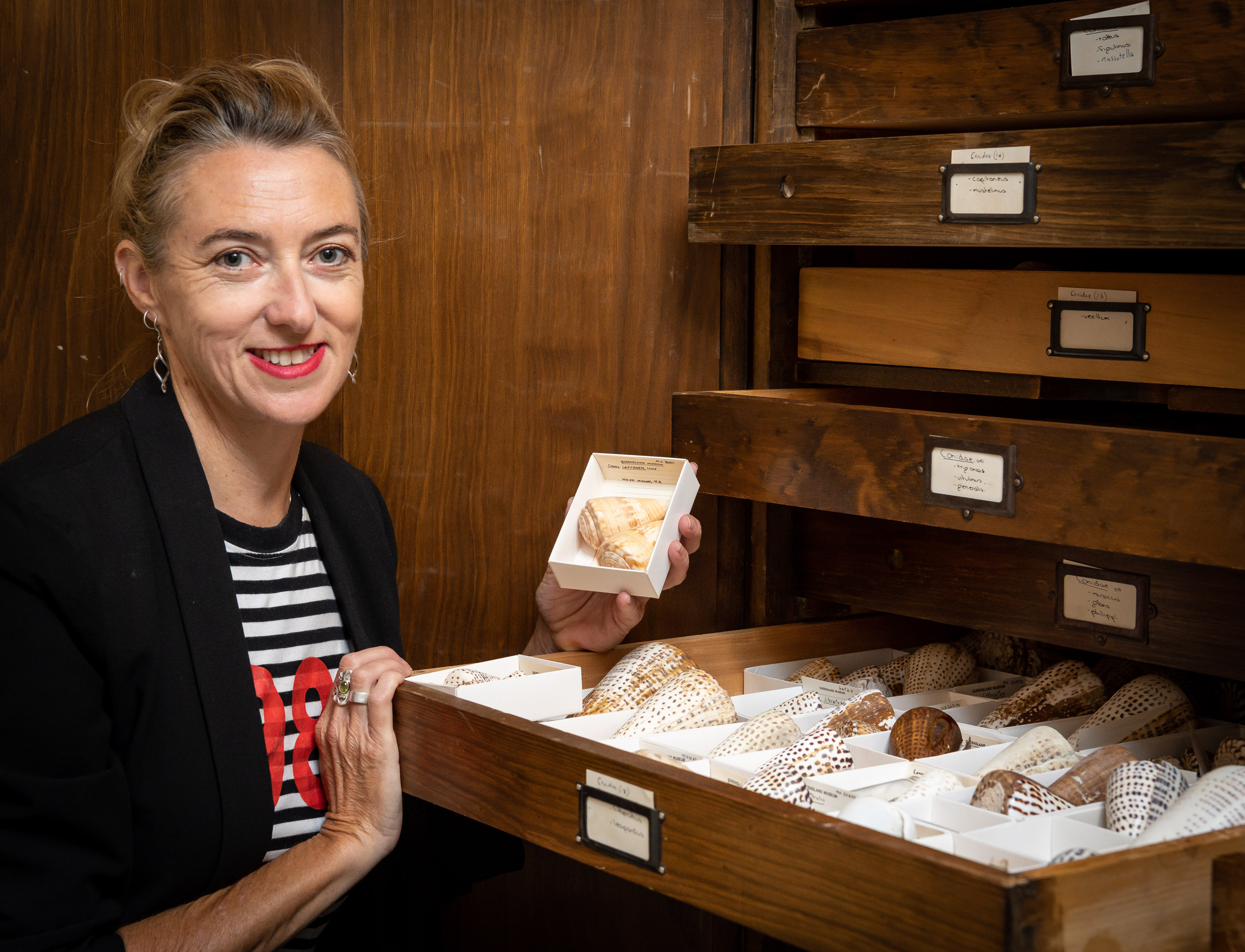
Michela Mitchell
- Casual Research Assistant
- michela.mitchell@jcu.edu.au
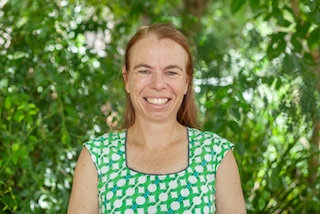
Jan Strugnell
- Professor, Promotional Chair
- jan.strugnell@jcu.edu.au
National Assessment of Climate-Driven Species Redistribution using Citizen Science Data (Old ID 27400)
Jan Strugnell
11 Oct 2021 - 31 May 2022
This project will develop a report card assessing Australian marine species to determine species that have undergone recent changes in distribution, either shifting into each State, or into new areas within States. This report card will draw upon citizen science databases and use a robust decision tree analysis developed by our team to outline which species are shifting, and with what degree of certainty. Project objectives are to 1. draw upon citizen scientists to identify climate-driven changes within the Australian marine estate; and 2. communicate to and engage with the public on issues of climate change and biodiversity using their own citizen science information. The report card can be used to drive public interest in the NESP Hub and in the status of biodiversity in Australia.
Resolving the blue-ringed octopus fauna of Australia: taxonomy, phylogeny and human health (Old ID 23007)
Jan Strugnell
01 Jan 2011 - 31 Dec 2017
Despite renowned toxicity and human fatalates, knowledge of the blue-ringed octopuses (genus Hapalochlaena) remains poor. Their taxonomy requires through revision: four species are currently considered valid, yet preliminary investigations by the applicants identify a total of at least 15 species worldwide, of which over half occur in Australia. This project aims to use taxonomic and molecular tools to: (1) revise the genus; (2) identify and describe Australian species; (3) describe distributions, habitats and biology; (4) investigate phylogeny and biogeography; and (5) provide crucial identification and health hazard information to scientific and wider audiences.
Developing Partnerships Towards Quantifying the Impacts of Climate Change on the Ocean Ecosystem Economy of the Pacific (Old ID 29030)
Reniel Cabral
01 Mar 2023 - 01 Mar 2025
This project will support the initial work of developing relationships with Pacific Island stakeholders and identifying opportunities for co-designing research based on climate changerelated priorities and needs of the Pacific Island Nations. In addition, this project aims to identify existing climate-related programs and initiatives in the Pacific that our team can build upon when designing our long-term research programs. The funding will be used for travel-related costs.
Blue carbon and cane land restoration methods development (Old ID 26857)
Nathan Waltham
31 Dec 2019 - 16 Jul 2024
The Project seeks to advance the development of a blue carbon methodology under the Australian government’s emissions reduction fund, by undertaking a project to restore tidal connectivity and wetlands in a selected catchment. The Project team will collect baseline data (GHG emissions, carbon storage, water quality and biodiversity) to inform the blue carbon methodology and undertake post-restoration assessments to quantify carbon and co-benefits arising from the restoration. The Project also seeks to undertake terrestrial restoration on a small section of low productivity farmland, to quantify whether there is a business case for land use change to carbon farming in an intensive farming environment. The Project will then support the farmer/s within the Project boundary to transition to best management practice agriculture, and to quantify whether this transition satisfactorily offsets land taken out of production for the i) wetland restoration and ii) terrestrial revegetation undertaken.
Reef Restoration and Adaptation –Regulatory and Policy Environment (Old ID 27114)
Mia Hoogenboom
30 Mar 2021 - 30 Jun 2024
The existing regulatory and policy frameworks have originally been designed as part of the conventional approach to reef management. As such, they are not entirely fit for purpose to address unconventional technological interventions for reef restoration and adaptation. These interventions, given their innovative and emerging nature, challenge existing regulatory frameworks to address novel risks and impacts and make decisions based on information with relatively high levels of uncertainty. Critical to the feasibility and viability of RRAP R&D programs is, therefore, an enabling regulatory environment that can effectively and timely assess the range of risks and impacts associated with unconventional reef restoration and adaptation interventions. In this context, the objectives of this project are to: (i) Investigate the capacity of the existing regulatory and policy frameworks to address R&D and deployment of RRAP interventions (ii) Scope which interventions are permitted and under what conditions (e.g., scale, location and timing) with the aim to inform the R&D programs (iii) Help enhance the capacity of the regulatory system to assess the range of risks and impacts associated with R&D and deployment of interventions
Understanding allergens in alternative food from urban aquaculture fish to underpin food safety
Ludwig Lopata
01 Jul 2022 - 31 Dec 2026
This project aims at evaluating the food safety risks associated with innovative solutions to meet and secure Singapore’s nutritional needs through domestic fish production from sustainable urban aquaculture. Introducing novel food sources into the mainstream diet has potential significant unintended health consequences, particularly that of severe allergic reactions. The production of fish in urban aquaculture systems using combinatorial supplementation of fish feed and selective breeding along with processing innovations has not been evaluated for enhanced allergenicity, which is determined by the presence and immunoreactivity of allergenic proteins (allergens). Consequently, current food safety regulations for allergens are not equipped to tackle upcoming food safety issues faced by the growing innovative production of urban foods and alternative proteins. Their potential allergenicity is the focus of this project.
Using Outcomes of Marine Protected Area Implementation to Infer Potential Socioeconomic Consequences of Offshore Energy Development to Commercial Fisheries
Reniel Cabral
04 Oct 2023 - 03 Oct 2025
The purpose of this study is to describe the detectable socioeconomic consequences experienced by the commercial fishing industry due to the implementation of formal de facto marine protected areas in California and elsewhere and to use this information to inform impact analyses of prospective offshore energy projects, including offshore wind and marine hydrokinetic projects.
Seaweed National Hatchery Network - Tropical Research Hub for Asparagopsis taxiformis
Mark Cyrus
30 Sep 2023 - 30 Apr 2025
This project provides the resources for JCU to establish and operate the Tropical Research Hub for the National Hatchery Network in collaboration with ASSA researchers for 18 months (until 31 March 2025) which is the stipulated grant duration. This FRDC project will provide the funding for JCU to engage key technical capability needed to support the Hub and establish the facilities for exclusive and continuous use for the project over the grant period, as well as provide the facilities and services of the ASSA employees (~2) working at this Hub. The core objectives of the Research Hub will be to: 1. Establish facilities and equipment required for the development of the Tropical Seaweed Research Hub 2. Deliver a focused research program to close the life cycle, of Asparagopsis taxiformis, with the goal of being able to produce spores and seedlings. 3. Develop biological contamination management techniques for seed production. 4. Collect and maintain a clean broodstock culture collection. 5. Develop hatchery technology and equipment needs through experimentation. 6. Contribute to the development of a Hatchery Manual and knowledge sharing and dissemination.
Molecular signatures of historic glacial events in marine benthic taxa (Old ID 26383)
Sally Lau
01 Jun 2019 - 31 May 2021
Molecular signatures detected in Southern Ocean benthic fauna are often discussed in the context of external selection, particularly linking to species survival throughout glacial cycles. I aim to investigate how other factors such as geological setting, oceanography and environmental parameters in the Southern Ocean influence species genetic patterns. The outcome of this extended research will not only identify how the interplay between physical features of the water column may determine genetic variation, it will also demonstrate the evolutionary drivers at regional scale in the Southern Ocean.
Improved education and training models to futureproof the aquaculture industry need for skilled staff to 2050 (Old ID 27215)
Leo Nankervis
01 May 2021 - 14 Jul 2022
By evaluating industry workforce needs currently and into the future and analysing the gaps between industry need and educational output, we aim to highlight gaps in careers pathways to meet future industry requirements. These careers pathways will form the basis of promotional tools created to highlight education and skills development options that lead secondary students into the aquaculture industry. Cost-effective delivery models for training will be key to the outcomes of the project and a pilot project to up-skill existing industry employees in biosecurity will be used to develop and de-bottleneck new training delivery models.
Temporal changes in artificial light exposure of marine turtle nesting areas
- 2014
- Wiley-Blackwell
- Researchers:Rhondda JonesMark Hamann
Extinction risk and conservation of the world's sharks and rays
- 2014
- eLife Sciences
- Researchers:Colin Simpfendorfer
Seasonal variability in stable isotopes of estuarine consumers under different freshwater flow regimes
- 2013
- Inter-Research
- Researchers:Colin Simpfendorfer
Start Date:
10 Nov 2024
Start Date:
31 Mar 2025
Start Date:
01 Jan 2024
Start Date:
01 Jan 2024
End Date:
01 Jan 2027
Start Date:
01 Jan 2004
End Date:
01 Jan 2006
Start Date:
01 Jan 2007
End Date:
01 Jan 2007
Title:
PhD, James Cook University
Start Date:
01 Jan 2002
End Date:
01 Jan 2005
Start Date:
01 Jan 1996
End Date:
01 Jan 1999