
The Cairns Institute
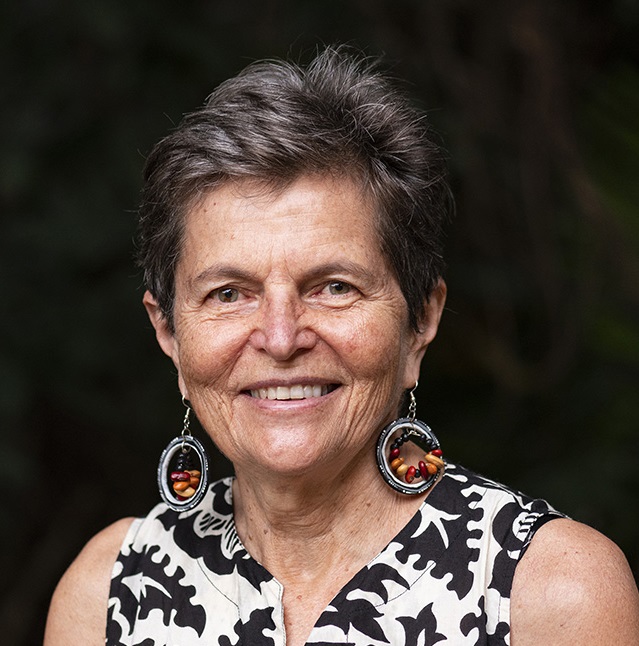
Rosemary Hill
- Adjunct Professor
- rosemary.hill@jcu.edu.au

Stewart Lockie
- Director, The Cairns Institute
- stewart.lockie@jcu.edu.au

Aliyah Ravat
- Research Manager
- aliyah.ravat@my.jcu.edu.au

Claire Holland
- Adjunct Senior Research Fellow
- claire.holland@jcu.edu.au

Hurriyet Babacan
- Professorial Research Fellow
- hurriyet.babacan@jcu.edu.au
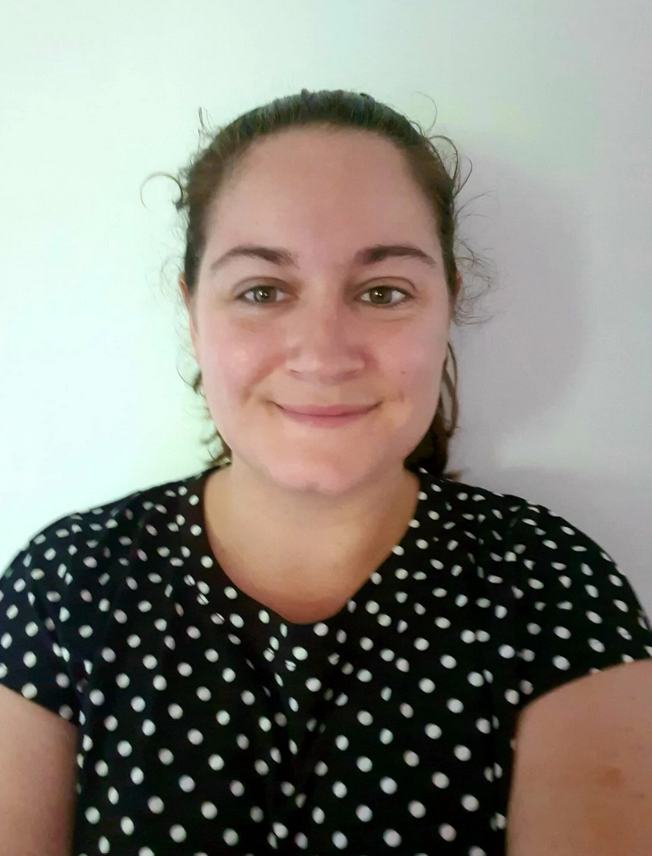
Sophie Walker
- Research Officer
- sophie.walker1@jcu.edu.au
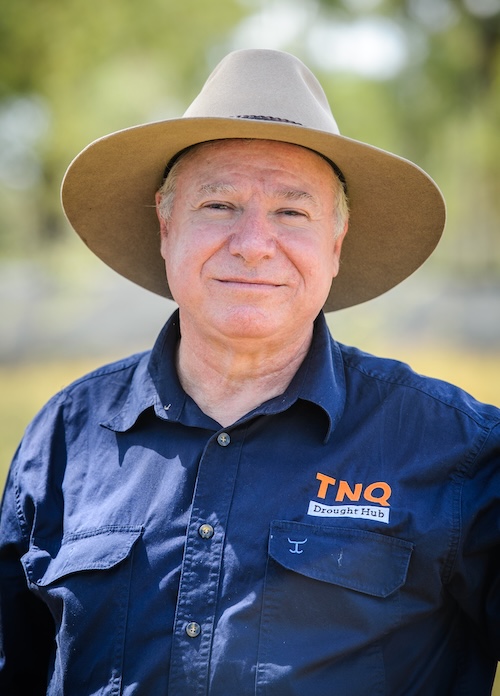
David Phelps
- Director, Tropical North Queensland Drought Resilience Adoption and Innovation Hub
- david.phelps@jcu.edu.au

Margaret Gooch
- Adjunct Principal Research Fellow
- margaret.gooch@jcu.edu.au
Bob Stevenson
- Adjunct Professor
- bob.stevenson@jcu.edu.au

Ruth Barker
- Professor, FNQ Connect
- ruth.barker@jcu.edu.au
RRAP ENG-01 Stakeholder and Traditional Owner Engagement Subprogram, Social Licence and Impact Monitoring sub-project (Old ID 27218)
Stewart Lockie
01 Oct 2020 - 30 Jun 2026
The Reef Restoration and Adaptation Program (RRAP) is the world’s largest effort to help a significant ecosystem survive climate change. This cross-institutional program draws together experts from a variety of disciplines and focusses on the design and implementation of effective technologies and strategies to intervene in and restore the resilience of the Reef under climate change. RRAP’s Stakeholder and Traditional Owner Engagement Sub-Program aims to ensure that technologies and management options developed under the program are socially and culturally responsible, and that their use is acceptable to stakeholders, Traditional Owners, managers, communities and the public. The Sub-Program is divided in three sub-projects: (i) Social licence and impact monitoring (ii) Best-practice engagement; and (iii) Adaptive governance and learning. JCU leads the Social Licence and Impact Monitoring (SLM) sub-project, which will see researchers engaging directly with stakeholder groups, Traditional Owners, communities and the Australian public more broadly to collect qualitative and quantitative data to support research outcomes across the RRAP Program.
Tropical North Queensland Drought Resilience Adoption and Innovation Hub (TNQ Hub)
Stewart Lockie
16 Jun 2021 - 30 Jun 2027
This project will establish, implement and manage the TNQHub (“Hub”) activities including collaborative research, development, extension, adoption and commercialisation (RDEA&C). The Hub will help Australian farmers and communities become more prepared for, and resilient to, the impacts of drought. The objective is to invest in RDEA&C activities, which involves: - Cross-sectoral innovative and transformative RDEA&C - Focus on the needs of end users, involving them in the co-design and adoption phases of research and development - Delivery of effective communication of new and existing knowledge and technologies - Co-investment in national drought resilience RDEA&C priorities with collaboration and co-design between governments, primary producers, community groups, research and training provider
Farmers of the future: Challenges of a feminised agriculture in India (Old ID 21412)
Stewart Lockie
05 Jun 2014 - 04 Jun 2017
Neoliberal economic policies are fundamentally transforming the social landscapes of rural India, causing a deep agrarian crisis. The agrarian changes accentuate the unequal consequences for poor women and women in relation to: production (labour, tenure); livelihood and food security; access to and ownership of assets such as land and water and access to agriculture innovations and institutions. This multiscalar project investigates the causes and consequences of feminisation of agriculture in India's transitioning economy in order to understand how gender roles and relations are being re-shaped in communities and households in diverse socioeconomic and cultural contexts and agro-ecological areas.
Integrated online platform for delivery of digital health services by a multi-disciplinary team of allied health professionals (Old ID 23626)
Ruth Barker
10 Apr 2018 - 06 Apr 2019
This project aims to create an integrated online platform for multi-disciplinary allied health professionals to provide evidence-based digital health support and services to communities, organisations and clients, especially those in rural and remote communities, vulnerable groups and/or those who would otherwise not be able to access quality health services within Queensland, Australia and other countries. This project provides solutions to challenges associated with a sustainable design for service delivery compared to current models that involve significant funding in order to access these populations. This project has the potential to reach these geographically dispersed communities while reducing costs through decreased travel.
HOT NORTH PILOT PROJECTS - RND 4 - Translation of a culturally responsive stroke rehabilitation service for Aboriginal and Torres Strait Islander peoples into a real-world setting in northern Australia: a hybrid effectiveness implementation study (Old ID 25052)
Ruth Barker
01 Jul 2018 - 30 Jun 2020
An evidence-based communication intervention will be implemented in the real world setting at Wuchopperen Health Services (WHS) in Cairns. Eight stroke survivors will participate in 24 sessions across a 12-week period, delivered by a speech pathologist in partnership with an Aboriginal and Torres Strait Islander Allied Health Assistant (AHA). Individually tailored activities will be undertaken within a 'yarning' framework, with family involvement, and culturally relevant resources. Change in everyday communication and barriers and enablers to implementation will be assessed. This study will prepare for full-scale implementation of the service model and reduce health disadvantage for Aboriginal and Torres Strait Islander Australians.
Feasibility and acceptability of a Regional Community Integration Team (Old ID 31103)
Ruth Barker
13 Feb 2024 - 30 Nov 2027
The project purpose is to: a) pilot an integrated approach to provision of specialised community rehabilitation services, for people with complex disabling conditions, in FNQ and NWQ; b) determine strategies to build capability and capacity of the local workforce to deliver these services: and c) consider the long-term sustainability of the approach. The 2-year project will involve 6-months preparation, then 18-months of a co-creation process. • Phase 1: Co-design a model for a Regional Community Integration Team. • Phase 2: Co-implement the model with 15 people with complex disabling conditions. • Phase 3: Co-evaluate the model and make recommendations for long-term sustainability.
Hospitals' In-patient cardiac rehabilitation and referral systems of northern Queensland (Old ID 26295)
Ruth Barker
01 Jan 2019 - 31 Dec 2019
A northern Queensland multi-site hospital case study series of adult in-patients treated for heart disease to decribe in-patient cardiac rehabilitation, discharge, referral and transition of care systems and identify barriers, enables and pathways. Data will be collected through in-patient and staff interviews and a review of discharge plans.
Implementation and evaluation of an innovative student-led rehabilitation and lifestyle service in Northern Australia for Aboriginal and Torres Strait Islander people with chronic and disabling conditions: A pilot study. (Old ID 25133)
Ruth Barker
08 Oct 2018 - 07 Oct 2019
This project will pilot a student-led rehabilitation and lifestyle service for Aboriginal and Torres Strait Islander people living in Napranum and Weipa in partnership with Torres and Cape Hospital and Health Service (TCHHS) and Apunipima Cape York Health Council (ACYC). A sequential mixed methodology will be used to evaluate the service from stakeholders' perspectives: participants, allied health students, Aboriginal and allied health workforce and collaborating organisations. To privilege the voices of Aboriginal people, Indigenous methodologies will be used. This project will provide a service for Napranum and Wei pa communities and a service model for other remote communities across Northern Australia.
Implementation and evaluation of a student-led rehabilitation and lifestyle service for people with chronic and disabling conditions in Cape York (Old ID 26301)
Ruth Barker
01 Feb 2019 - 31 Dec 2019
This project will evaluate the implementation of a student-led rehabilitation and lifestyle service for Aboriginal and Torres Strait Islander people living in Napranum and Weipa in partnership with Torres and Cape Hospital and Health Service (TCHHS) and Apunipima Cape York Health Council (ACYC). This research is expected develop a sustainable service model that is valued by people experiencing chronic and disabling conditions and their families living in Napranum and Weipa communities.
Stakeholder perceptions and co-benefits (Old ID 27503)
Gillian Paxton
01 Jul 2021 - 01 Jul 2024
This project will provide the first empirical examination of GBR stakeholder perspectives related to COTS and their management. It will leverage sociocultural research planned as part of RRAP, extending those stakeholder engagements and interviews to measure perceptions of acceptability, risks and benefits related to COTS control. It will also assess the regulatory and policy implications of selected novel control methods.
Yalanji-Warranga Kaban: Yalanji people of the rainforest fire management book
- 2004
- Little Ramsay Press
- Researchers:Rosemary Hill
Frameworks to support Indigenous managers: the key to fire futures
- 2003
- CSIRO Publishing
- Researchers:Rosemary Hill
Linking cultural and natural diversity of global significance to vibrant economies
- 2008
- Blackwell Publishing
- Researchers:Rosemary Hill
The establishment of a world heritage area
- 2008
- Blackwell Publishing
- Researchers:Rosemary Hill
Creating an ecologically sustainable northern Australia
- 2005
- Charles Darwin University Press
- Researchers:Rosemary Hill
A Cultural and Conservation Economy for Northern Australia
- 2008
- Land & Water Australia
- Researchers:Rosemary Hill
Outcome triggered FES to train reaching after acute severe stroke
- 2008
- Researchers:Ruth Barker
Start Date:
01 Jan 2018
Start Date:
01 Jan 2020
End Date:
01 Jan 2030
Start Date:
01 Jan 1995
End Date:
01 Jan 1999
Title:
Bachelor of Environmental Management (Sustainable Development) (Hons), University of Queensland
Start Date:
01 Jan 2011
End Date:
01 Jan 2014
Start Date:
01 Jan 2018
End Date:
01 Jan 2019
Start Date:
01 Jan 2020
End Date:
01 Jan 2025