
College of Business, Law & Governance

Sizhong Sun
- Professor
- sizhong.sun@jcu.edu.au


Taha Chaiechi
- Adjunct Professor
- taha.chaiechi@jcu.edu.au

Breda McCarthy
- Senior Lecturer
- breda.mccarthy@jcu.edu.au
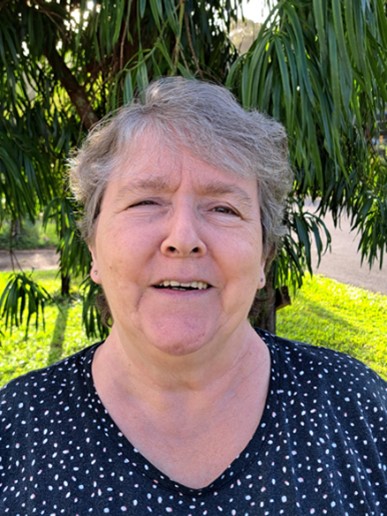
Leonie Cassidy
- Lecturer
- leonie.cassidy1@jcu.edu.au

Singwhat Tee
- Senior Lecturer
- singwhat.tee@jcu.edu.au

Tingzhen Chen
- Senior Lecturer
- tingzhen.chen@jcu.edu.au

Neil Dunbar
- Adjunct Senior Lecturer
- neil.dunbar@jcu.edu.au

Alf Kuilboer
- Senior Lecturer
- alf.kuilboer1@jcu.edu.au

Ian Atkinson
- Adjunct Professor
- ian.atkinson@jcu.edu.au
The Connectivity Code: Unlocking Digital Access Through Community Innovation
The project is a community-led education initiative designed to address digital exclusion in rural, regional, and remote (RRR) Australia. The program trains natural helper networks (extension networks, librarians, digital champions) - trusted community members who informally support others – to navigate complex and misunderstood connectivity options, a persistent barrier to innovation, productivity and inclusion in RRR areas. Developed with both online and face to face teaching resources, the program uses innovative pedagogy, authentic learning, and co-design with existing communities of practice, collective impact members and First Nations communities to ensure cultural relevance and accessibility. It directly supports auDA’s funding objectives by improving digital inclusion, building trust in internet use, and enabling underserved groups to establish an online presence. Outputs will be shared under a Creative Commons licence to ensure public benefit. The program creates long-term social and economic value, supports sustainability, and builds digital capability across diverse communities. It is supported by experienced educators, digital learning experts, and national connectivity advocates, ensuring high-impact delivery and measurable outcomes.
Wild Slaughter Feasibility Study
contract
Digital adoption strategy: a public sector ecosystem
- 2019
- IARIA Journals
- Researchers:Carmen Reaiche
"Tourism brings good things": tourism and community development in rural Papua New Guinea
- 2021
- Cognizant Communication Corporation
- Researchers:Gianna MoscardoLaurie Murphy
Principles of Effective Leadership
- 2018
- Health Administration Press
- Researchers:Zhanming Liang
Start Date:
01 Jan 1999
End Date:
01 Jan 2002
Title:
PhD, Curtin University
Title:
Detailed Assessor - National Intelligence and Security Discovery Research Grants (NISDRG) - ARC
Start Date:
01 Jan 2021
Start Date:
01 Jan 2020
Start Date:
01 Jan 2020
Start Date:
01 Jan 2020
Start Date:
01 Jan 2019
Start Date:
01 Jan 2019
Start Date:
01 Jan 2019