
Tropical Water & Ecosystems
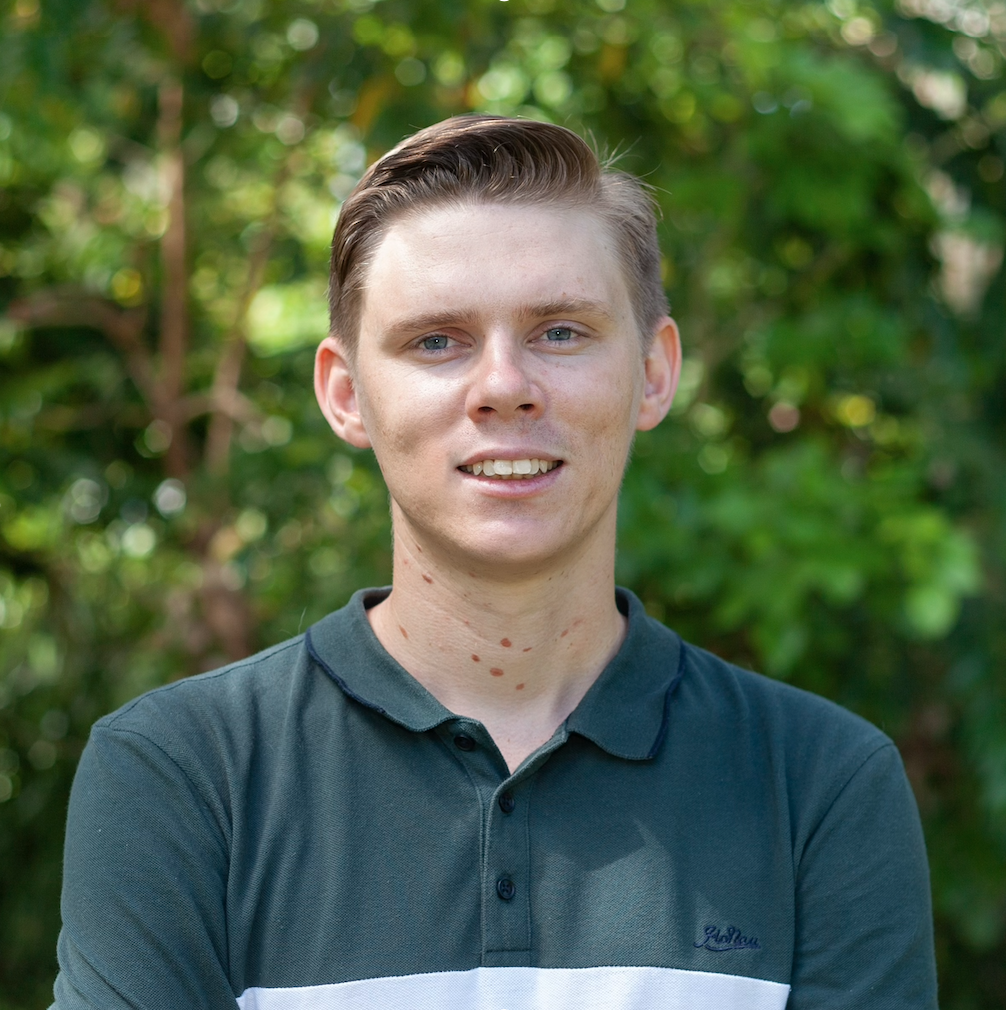
Scott Morrissey
- Research Officer
- scott.morrissey@jcu.edu.au
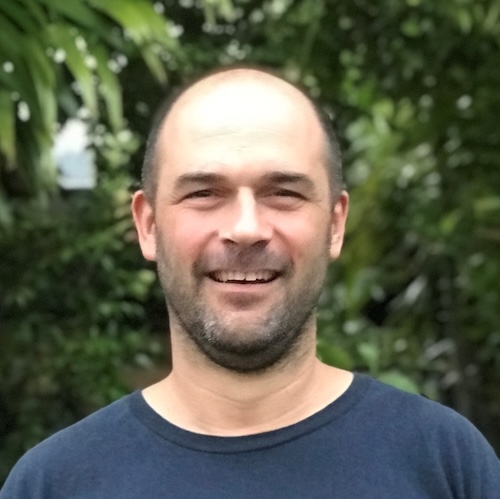
Tim Smith
- Senior Research Officer
- tim.smith2@jcu.edu.au
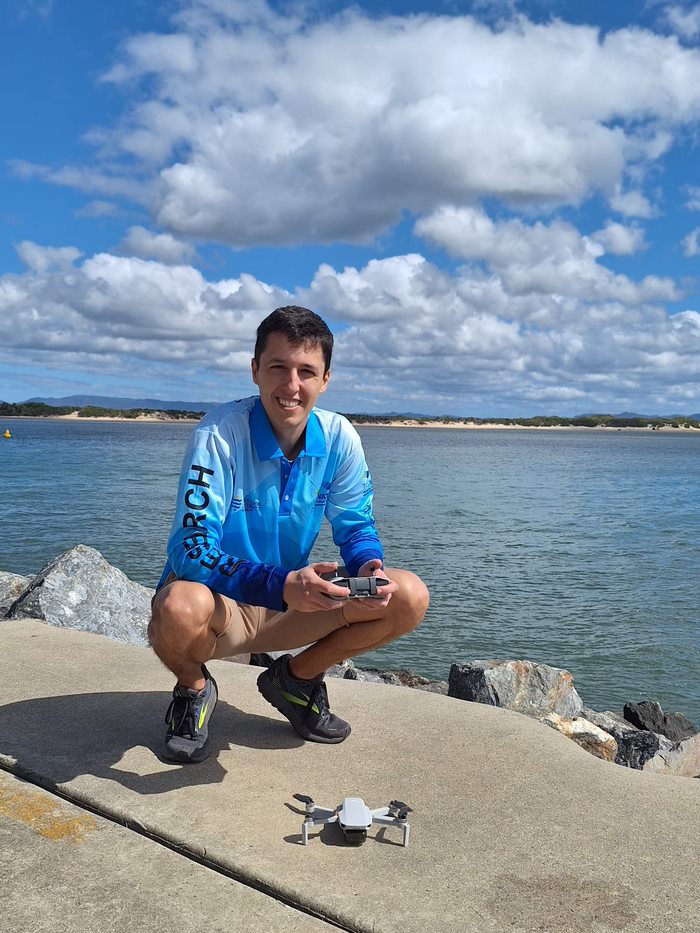
Alejandro Navarro Otero
- Casual Research Worker
- alejandro.navarrootero@jcu.edu.au
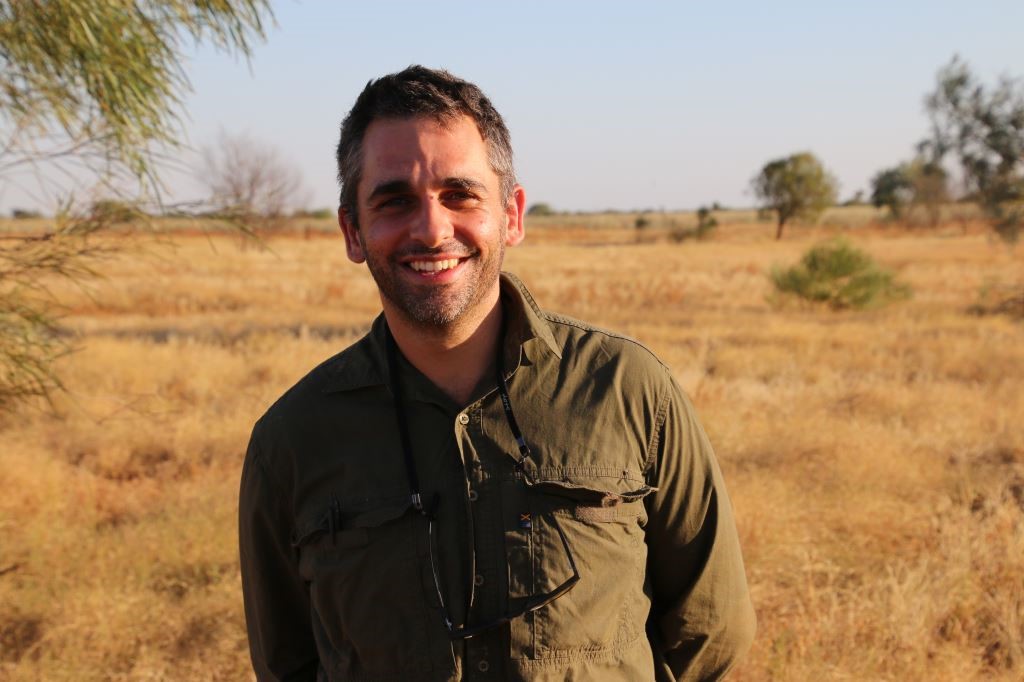
Jack Koci
- Principal Research Officer
- jack.koci1@jcu.edu.au
Sarah McDonald
- Senior Research Officer
- sarah.mcdonald@jcu.edu.au
Emily Webster
- Research Officer
- emily.webster1@jcu.edu.au

Abbi Scott
- Senior Research Officer
- abbi.scott1@jcu.edu.au

Catherine Collier
- Principal Research Officer
- catherine.collier@jcu.edu.au

Rob Coles
- Principal Research Scientist
- rob.coles@jcu.edu.au

Aaron Davis
- Principal Research Officer
- aaron.davis@jcu.edu.au
NESP 3.4 Better management of catchment runoff to marine receiving environments in northern Australia. (Old ID 28969)
Paula Cartwright
01 Feb 2023 - 30 Jun 2024
Runoff from catchments in northern Australia has the potential to carry large amounts of sediment and nutrients. These available nutrients are important in driving coastal and estuary productivity, including many commercially and recreationally targeted species. Water resource development in northern Australia could reduce the supply of freshwater flow to the coast, thereby limiting supply of nutrients. This research project will examine the potential risks water resource development presents to Gilbert (QLD), Daly (NT) and Ord (WA) marine and coastal areas. We will complete a literature review, undertake flood plume modelling and examine vegetation damage along these coastal areas.
Ecotoxicology of pesticides on the Great Barrier Reef for guideline development and risk assessments (Old ID 23137)
Aaron Davis
01 Jan 2017 - 10 Mar 2020
Over 50 land-sourced pesticides have been detected in waters of the Great Barrier Reef (GBR) and its catchments. Previous studies on the risks posed by pesticides have focused on five priority PSll herbicides. However, other pesticides are increasingly being used, for which there are few fate, persistence and toxicity data. In order to improve water quality guidelines and assessments of the potential risks posed by these ' alternate' pesticides to GBR and its catchments we will quantify their toxicity to freshwater and marine species.
Ecotoxicology of pesticides on the Great Barrier Reef for guideline development and risk assessments (Old ID 23137)
Stephen Lewis
01 Jan 2017 - 10 Mar 2020
Over 50 land-sourced pesticides have been detected in waters of the Great Barrier Reef (GBR) and its catchments. Previous studies on the risks posed by pesticides have focused on five priority PSll herbicides. However, other pesticides are increasingly being used, for which there are few fate, persistence and toxicity data. In order to improve water quality guidelines and assessments of the potential risks posed by these ' alternate' pesticides to GBR and its catchments we will quantify their toxicity to freshwater and marine species.
Spatial and temporal trends in the health and resilience of Great Barrier Reef inshore seagrass meadows in relation to water quality (Old ID 20687)
Catherine Collier
01 Dec 2012 - 30 Aug 2027
The aim of this research is to monitor the abundance and species composition of seagrass, and identify areas of seagrass that have been significantly impacted by flood plumes in areas important to major dugong populations in the Great Barrier Reef World Heritage Area.
Ecological valuation tools to protect seagrasses from coastal development (Old ID 22415)
Paul York
24 Nov 2015 - 31 Dec 2018
Industry cash contribution fro ARC Linkage Grant application LP160100492. Seagrasses provide ecosystem services (fisheries, nutrient cycling, primary productivity) worth trillions of dollars, but this capacity is threatened by coastal development. In Australia, port developments are considered a major threat to seagrass ecosystems, but resource managers lack accurate information about their potential impacts and mitigation lmeasures. Focussing on differences between shallow and deep seagrasses within the Great Barrier Reef, this project seeks to develop a world-first spatial valuation tool that will allow resource managers and policy makers to minimise impact of port development on seagrass ecosystems, thereby ensuring that Australia's seagrasses continue to provide ecosystem services essential to our well-being.
Hay Point Shiploader Upgrade: Benthic Habitat Assessments (Old ID 26698)
Paul York
20 Sep 2019 - 28 Feb 2020
Develop and implement a benthic habitat assessment program for Advisian to report on the benthic habitats in a specific area of the port to assist with berth upgrades.
Mangrove Watch in Easterna Normanby Basin with Kalpowar Land Trust (Old ID 21778)
Norm Duke
15 Apr 2014 - 20 Dec 2018
Mangrove Watch boat and aerial surveys will be conducted in Princess Charlotte Bay with local indigenous rangers to assess existing values, threats, future issues with climate change and restoration and protection options for tidal wetland habitat in Princess Charlotte Bay. This project aims to enhance biodiversity values, increase ecosystem service provision, including carbon sequestration and improve habitat connectivity within princess Charlotte Bay and the Normanby River.
Torres Straits Wetlands, Mangroves and Invasive Species (Old ID 23518)
Norm Duke
01 Apr 2017 - 30 Jun 2018
Coastal wetlands and mangrove habitat are important for aquatic communities in the Torres Straits. These water environments also provide important food and cultural values for locals. Torres Straits Regional Authority wishes to continue building Land and Sea Ranger capacity to monitor and evaluate condition of wetlands across the Straits. TropWATER will assist with water quality monitoring, invasive animal management, mangrove condition and health assessment, along with preparation of materials for rangers to continue these monitoring programs.
Ecological monitoring of the Townsville Field Training Area 2022-24 (Old ID 27715)
Shelley Templeman
01 Jun 2022 - 31 Jan 2026
This project continues the long standing monitoring that TropWATER has undertaken for Defence that incorporates monitoring of water quality and aquatic ecology on the Townsville Field Training Area. Remnant Waterholes are the most important aquatic ecosystem in the TFTA providing a critical dry season refugia for aquatic biota. Aquatic ecological monitoring allows an assessment to be made of the trends in water quality through time. If these trends in areas of high Defence activities are similar to trends in areas with minimal Defence impact, this demonstrates the lack of impact of Defence operations on the local aquatic environment.
Assessment of key dugong and turtle seagrass resources in the northern Torres Strait (Old ID 22239)
Alexandra Carter
01 Jul 2015 - 31 Mar 2016
This project fills a critical information gap for dugong and turtle habitat management in the Torres Strait. It describes seagrasses in a recently identified data deficient region in northern Torres Strait that contains large dugong and turtle populations and is the subject of a proposed extension of the existing Dugong Sanctuary. The baseline assessments will form the foundation for ongoing monitoring, and provide essential information to the TSRA, Australian and Queensland governments for dugong and turtle management plans, complimenting dugong and turtle research studies in the region and building skills and capacity of Traditional Owners and Rangers.
Coral decline threatens fish biodiversity in marine reserves
- 2004
- National Academy of Sciences
- Researchers:Maya Srinivasan
Mid-late Holocene sea-level variability in eastern Australia
- 2008
- Wiley-Blackwell
- Researchers:Stephen Lewis
Title:
Vice President
Start Date:
01 Jan 2023
End Date:
01 Jan 2026
Title:
Editor of Austral Ecology
Start Date:
01 Jan 2024