
Sports & Exercise Science

Kenji Doma
- Associate Professor
- kenji.doma@jcu.edu.au

Carl Woods
- Adjunct Associate Professor
- carl.woods@jcu.edu.au
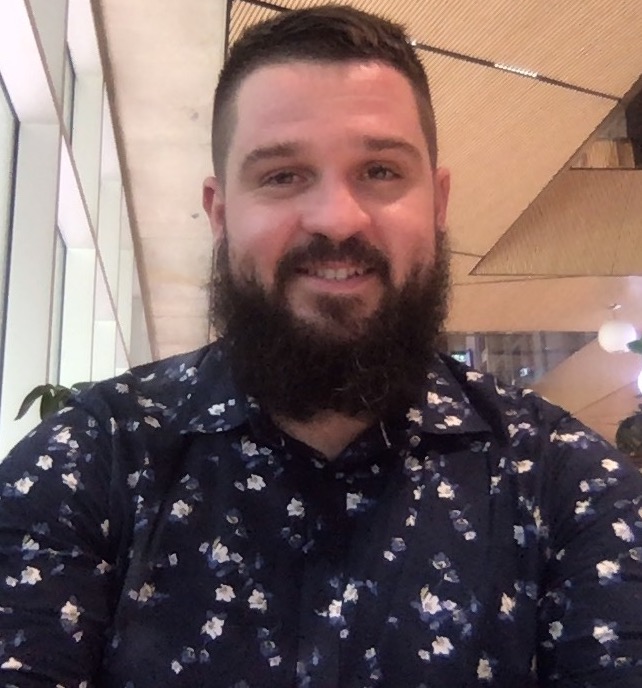
Michael Inskip
- Senior Lecturer/AEP Clinical Educator
- michael.inskip@jcu.edu.au

Teneale McGuckin
- Senior Lecturer
- teneale.mcguckin@jcu.edu.au
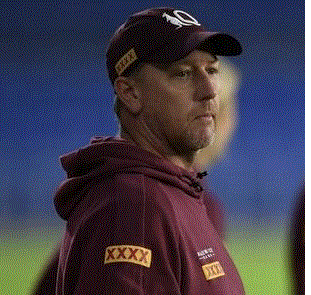
Wade Sinclair
- Senior Lecturer
- wade.sinclair@jcu.edu.au
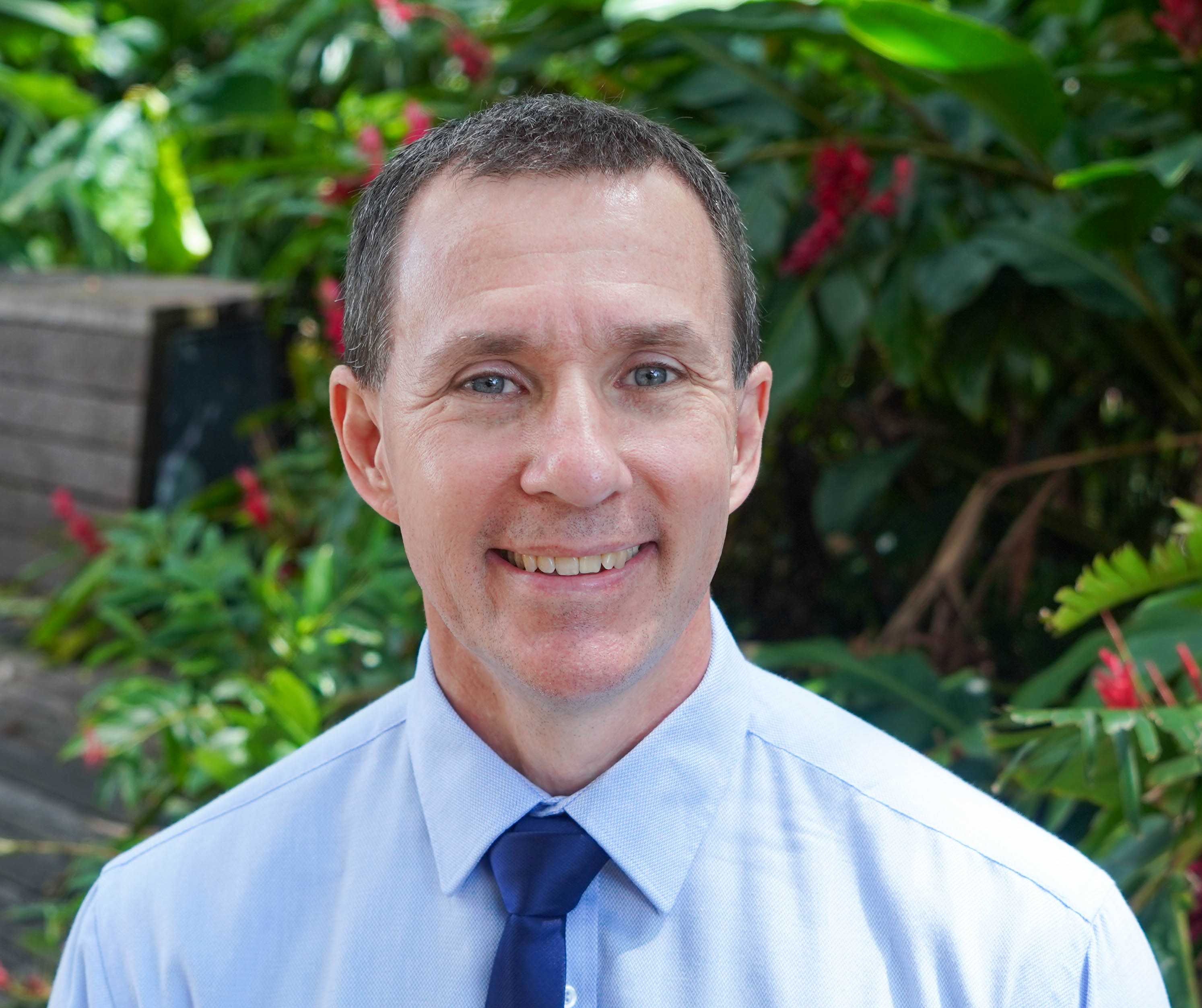
Anthony Leicht
- Head, Sport and Exercise Science
- anthony.leicht@jcu.edu.au

Brian Heilbronn
- Senior Lecturer / Clinical Educator / Clinical Placement Coordinator
- brian.heilbronn@jcu.edu.au

Fiona Barnett
- Adjunct Associate Professor
- fiona.barnett@my.jcu.edu.au

Denise Turner
- Lecturer, Sport and Exercise Science
- denise.turner@jcu.edu.au
Optimising concurrent cognitive and physical Training in military personnel (OptiTrain) (Old ID 27134)
Kenji Doma
29 Sep 2021 - 28 Jun 2024
The combination of different training types is common for athletes looking to improving fitness and performance however, this combination or ‘concurrent training’ may impair overall training quality and adaptations. Using the theoretical basis of concurrent training, this project will clarify the effects of concurrent cognitive and physical training on cognitive and physical performance. Project outcomes will substantially aid in the development of appropriate training and maximization of performance for military personnel. This project is being conducted as part of the Human Performance Research network (HPRnet) program of studies.
FRIEND: Frailty reduction via implementation of exercise, nutritional support and deprescribing project (Old ID 27850)
Michael Inskip
04 Nov 2022 - 23 Dec 2023
The Frailty Reduction via Implementation of Exercise, Nutritional support and Deprescribing (FRIEND) Project will implement our evidence-based, sustainable, multi-disciplinary program to improve frailty in cognitively-impaired residents of aged care. The aim of FRIEND is to establish integrated processes and pathways within a residential facility that enable early identification and effective reduction of frailty.
Australian Defence Force Heat Tolerance Testing (Old ID 20420)
Wade Sinclair
01 Jun 2012 - 01 Jun 2017
This agreement will enable Dr Melissa Crowe and associated staff of the Institute of Sport and Exercise Science at JCU to provide heat tolerance testing for member of the Australian Defence Force who may have suffered heat stroke in accordance with policy from the Australian Defence Force Joint Health Command.
Peripheral Arterial Disease (Old ID 19681)
Anthony Leicht
01 Jul 2012 - 31 Dec 2025
Developing novel therapies ad management pathways for Peripheral Arterial Disease. Aim 1. to assess the safety and efficacy of novel medications for PAD within carefully designed clinical trials and registries; Aim 2. to utilise clinical risk factors and novel biomarkers to develop models to better predict outcomes for PAD: Aim 3. To develop appropriate guidelines for the evidence-based management of PAD in Australia and assess novel ways to implement them within Queensland.
Quantifying the acute physical, cognitive and physiological responses of various training modalities in Australian Soldiers (Old ID 26736)
Kenji Doma
05 Feb 2020 - 31 Dec 2025
The project sets out to answer the following research question: What is the degree of stress, fatigue and recovery experienced by Australian Soldiers after bouts of occupationally specific physical activities? To answer this question, the project will develop an evidence-based assessment protocol to assess levels of fatigue and stress in Soldiers after bouts of occupationally related strenuous activities across various periods of employment. This will inform the chain of command on appropriate recovery times for different modalities of training, ensuring that soldiers remain combat-ready throughout their training cycles and minimise symptoms overtraining.
Quantifying the acute physical, cognitive and physiological responses of various training modalities in Australian Soldiers (Old ID 26736)
Wade Sinclair
05 Feb 2020 - 31 Dec 2025
The project sets out to answer the following research question: What is the degree of stress, fatigue and recovery experienced by Australian Soldiers after bouts of occupationally specific physical activities? To answer this question, the project will develop an evidence-based assessment protocol to assess levels of fatigue and stress in Soldiers after bouts of occupationally related strenuous activities across various periods of employment. This will inform the chain of command on appropriate recovery times for different modalities of training, ensuring that soldiers remain combat-ready throughout their training cycles and minimise symptoms overtraining.
Quantifying the acute physical, cognitive and physiological responses of various training modalities in Australian Soldiers (Old ID 26736)
Anthony Leicht
05 Feb 2020 - 31 Dec 2025
The project sets out to answer the following research question: What is the degree of stress, fatigue and recovery experienced by Australian Soldiers after bouts of occupationally specific physical activities? To answer this question, the project will develop an evidence-based assessment protocol to assess levels of fatigue and stress in Soldiers after bouts of occupationally related strenuous activities across various periods of employment. This will inform the chain of command on appropriate recovery times for different modalities of training, ensuring that soldiers remain combat-ready throughout their training cycles and minimise symptoms overtraining.
The Impact of Daily Physical Activity and Sleep on Resting Heart Rate and Resting Heart Rate Variability in Individuals with High and Low Stress Load
Anthony Leicht
30 Jun 2024 - 29 Jun 2025
It is known that regular physical activity decreases resting heart rate (RHR) and increases resting heart rate variability (HRV), while chronic stress increases RHR and decreases resting HRV. Although it is recommended that stressed individuals exercise to reduce their stress burden, it is unclear if they benefit from exercise to the same extent as those who do not experience stress overload.
A current gap in the literature is the lack of studies investigating cardiac autonomic nervous system (ANS) functioning in individuals with different chronic stress loads. The current project aims to investigate the differences in long-term ANS responses to daily physical activity in people experiencing high versus low chronic stress.
We hypothesize that individuals who experience chronic stress exhibit a blunted autonomic response (less decrease in RHR and less increase in resting HRV) to daily exercise due to an inability to regulate parasympathetic activation effectively. Therefore, in this regard they won’t benefit from regular exercise as much as those who don’t experience chronic stress, owing to their decreased autonomic nervous system (ANS) reactivity.
In order to test this hypothesis, we would like to benefit from the Tesserae dataset.
Fruit supplementation reduces indices of exercise-induced muscle damage: a systematic review and meta-analysis
- 2021
- Taylor and Francis
- Researchers:Kenji DomaJonathan Connor
Selected root plant supplementation reduces indices of exercise-induced muscle damage: a systematic review and meta-analysis
- 2022
- Hogrefe Publishing
- Researchers:Kenji DomaJonathan Connor
Title:
Sports Medicine Australia
Start Date:
01 Jan 2000
Start Date:
01 Jan 2000
End Date:
01 Jan 2018
Start Date:
01 Jan 2018
Start Date:
01 Jan 2014
Start Date:
01 Jan 2013
Start Date:
01 Jan 2022
Start Date:
01 Jan 2008
End Date:
01 Jan 2023
Start Date:
01 Jan 2006
Start Date:
01 Jan 2006
End Date:
01 Jan 2023
Start Date:
01 Jan 2004