
Tropical Water & Ecosystems
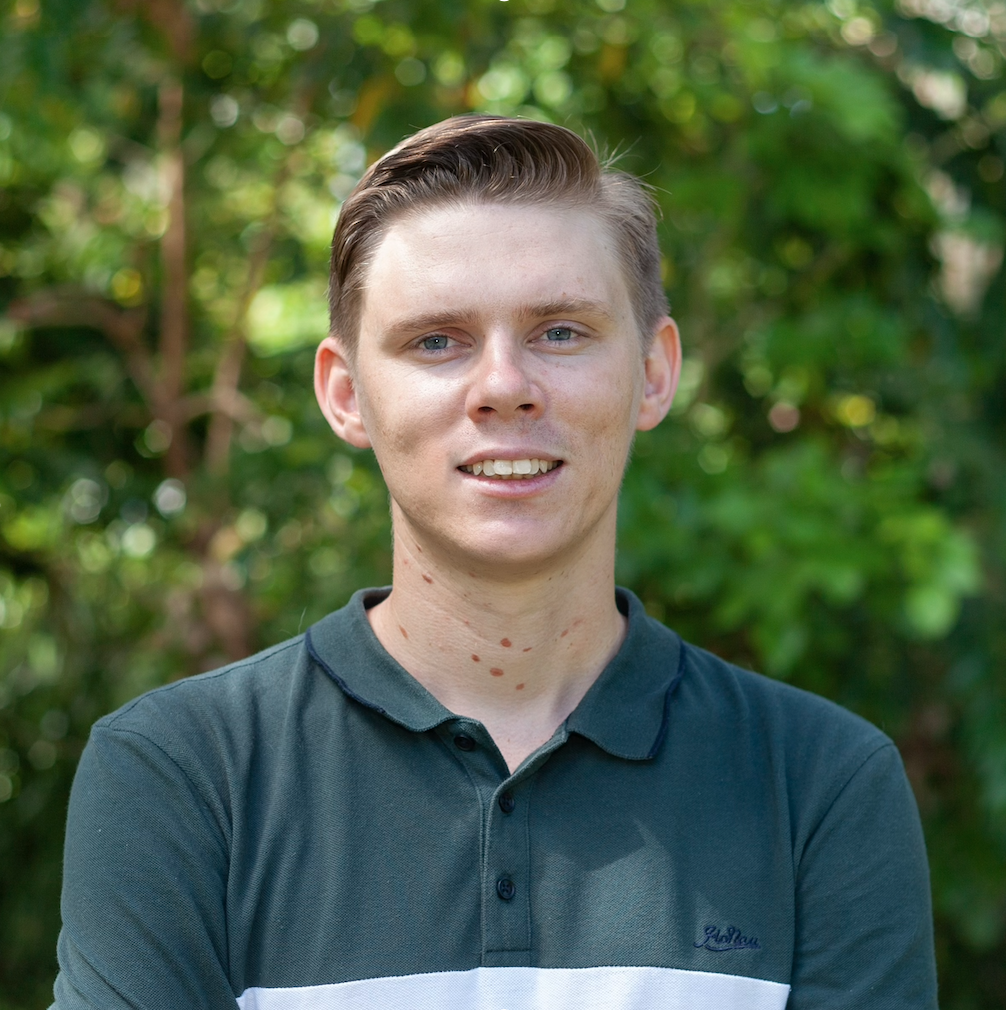
Scott Morrissey
- Research Officer
- scott.morrissey@jcu.edu.au
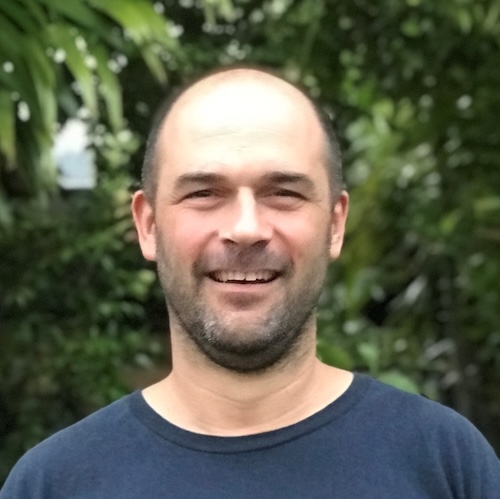
Tim Smith
- Senior Research Officer
- tim.smith2@jcu.edu.au
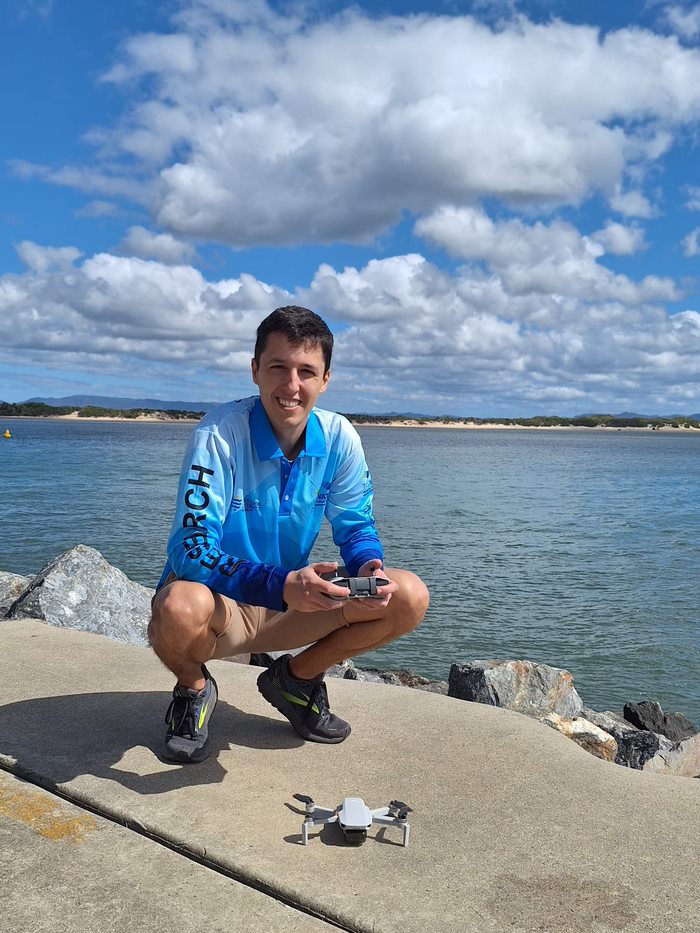
Alejandro Navarro Otero
- Casual Research Worker
- alejandro.navarrootero@jcu.edu.au
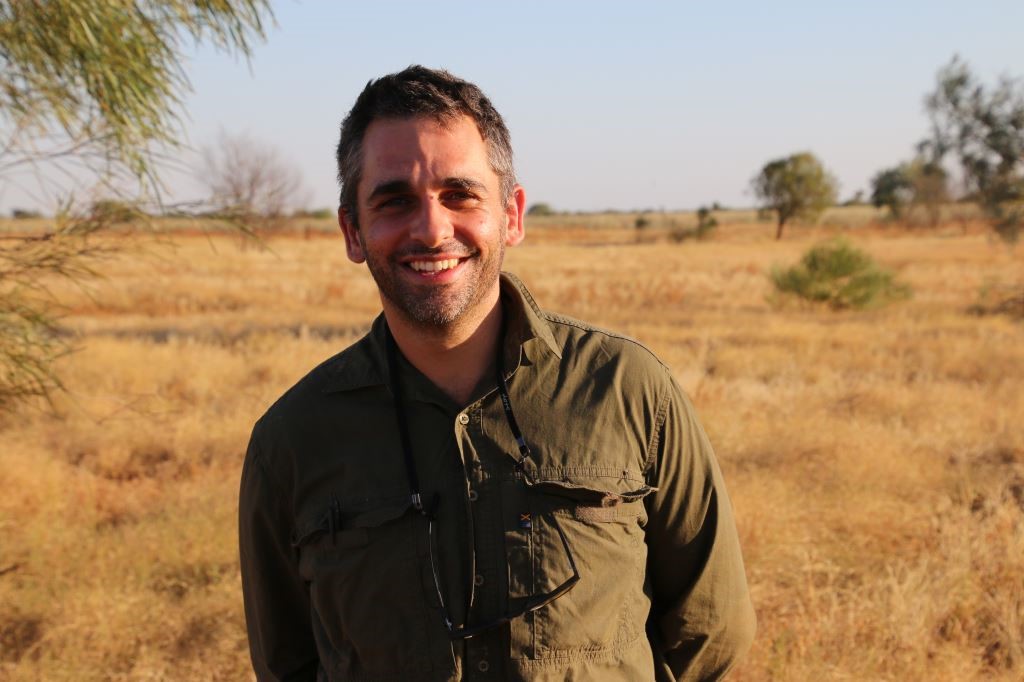
Jack Koci
- Principal Research Officer
- jack.koci1@jcu.edu.au
Sarah McDonald
- Senior Research Officer
- sarah.mcdonald@jcu.edu.au
Emily Webster
- Research Officer
- emily.webster1@jcu.edu.au

Abbi Scott
- Senior Research Officer
- abbi.scott1@jcu.edu.au

Catherine Collier
- Principal Research Officer
- catherine.collier@jcu.edu.au

Rob Coles
- Principal Research Scientist
- rob.coles@jcu.edu.au

Aaron Davis
- Principal Research Officer
- aaron.davis@jcu.edu.au
Synthesizing Three Decades of Seagrass Spatial Data from Torres Strait and Gulf of Carpentaria (Old ID 27428)
Skye McKenna
01 Sep 2021 - 10 Jun 2022
The Gulf of Carpentaria and Torres Strait have globally significant seagrass habitat that provide food for threatened dugong and turtle, and habitat for commercially important fish and prawns. Key to understanding, managing, mitigating risk, and monitoring seagrass in this remote region is reliable data on seagrass distribution and species composition and how these changes through time. Data on seagrass has been collected in these areas since the 1980s, but data location and storage from these efforts remains disparate, in many cases not publicly available, and in some cases has already been lost. Our study will compile, validate and synthesize historical seagrass spatial data to create a publicly available database accessible on eAtlas. This product will provide end-users with a valuable spatial resource to assist management and monitoring of seagrass in the region.
Identifying the water quality and ecosystem health threats to the high diversity Torres Strait and Far Northern GBR from runoff from the Fly River (Old ID 22539)
Caroline Petus
01 Jan 2016 - 30 May 2018
Runoff from the Fly River in Papua New Guinea influences water quality conditions in the Torres Strait (TS) region however the extent and frequency of this influence, and the potential ecological impacts, are not well understood. Further investigation is required to understand the prevalence and frequency of the extension of the Fly River plume into TS, and the characteristics of plume constituents, particularly metals. This project will build on previous efforts to determine the spatial extent, temporal patterns and constituent pollutants of Fly River discharge, and to a lesser extent, assess the vulnerability of ecosystems in the TS exposed to the discharge.
Identifying the water quality and ecosystem health threats to the high diversity Torres Strait and Far Northern GBR from runoff from the Fly River (Old ID 22539)
Stephen Lewis
01 Jan 2016 - 30 May 2018
Runoff from the Fly River in Papua New Guinea influences water quality conditions in the Torres Strait (TS) region however the extent and frequency of this influence, and the potential ecological impacts, are not well understood. Further investigation is required to understand the prevalence and frequency of the extension of the Fly River plume into TS, and the characteristics of plume constituents, particularly metals. This project will build on previous efforts to determine the spatial extent, temporal patterns and constituent pollutants of Fly River discharge, and to a lesser extent, assess the vulnerability of ecosystems in the TS exposed to the discharge.
Mapping Critical Habitat in Yanyuwa Sea Country (Old ID 27429)
Catherine Collier
01 Sep 2021 - 30 Mar 2023
Marra and li-Anthawirriyarra rangers seek to build on existing partnerships with CDU and JCU to map the intertidal habitats of the Yanyuwa Indigenous Protected Area (IPA) and coastal areas connected to it, an area of profound importance to these communities and the marine ecosystem of the Gulf of Carpentaria (GoC). Significant co-funding will be provided by the Mabunji Aboriginal Corporation (MAC) and DAWE Migratory Species Section to conduct a large-scale mapping project that will inform Marra and Yanyuwa community decisions that underpin sustainable management and facilitate continued connection with sea country. Co-funding from NESP2 is sought to provide salary for data processing and reporting for these surveys. This project also leverages existing funding allocated to training, capacity building, community consultation and communication products committed to by the rangers, CDU, JCU, the Australian and the NT Governments.
NQBP and JCU Research and Monitoring Partnership – Ambient Marine Water Quality Studies. (Old ID 27000)
Adam Canning
11 Sep 2020 - 10 Sep 2025
Ports are essential for economic trade and prosperity, and vital for the day-to-day function of modern society. TropWATER has provided services to complete an ambient marine water quality-monitoring program for North Queensland Bulk Ports (NQBP) at the Port of Mackay and Port of Hay Point since 2014. This program has expanded to include the other two major port facilities (Port of Abbot Point and Port of Weipa) administered by NQBP. The ambient marine water quality program includes deployment, maintenance and analysis of water quality data generated from high frequency loggers positioned on the sea floor, ambient water quality for metals, nutrients and herbicides. Data will be used by the port authority for strategic planning of operations.
Seagrass thermal stress risk model for the inshore Great Barrier Reef. (Old ID 27720)
Len McKenzie
27 Jun 2022 - 30 Jun 2026
Seagrass meadows are at risk from decline caused by thermal stress, and this will impact the ecosystems and communities who depend on the goods and benefits they provide. There is currently no spatial and temporal product that indicates seagrass exposure to thermal stress. This proposal outlines a staged project that will deliver a model of thermal stress risk. Working in collaboration with First Nations rangers, temperature loggers will be deployed across thermal exposure gradients in the inshore Reef. These data will be used to calibrate and validate a seagrass thermal stress risk model for the inshore Reef.
IMR Integrated Reef Fish Monitoring Program (Old ID 27813)
Tim Smith
07 Sep 2022 - 30 Dec 2024
While critical knowledge of the abundance, diversity, and assemblage composition of Great Barrier Reef reef fishes has been delivered by comprehensive and systematic monitoring programs across various spatial and temporal scales to date, significant knowledge gaps remain. The Integrated Reef Fish Monitoring Program will address these critical knowledge gaps by establishing monitoring in nursery seascapes, deep-water inter-reef habitat, inshore fringing reefs, and developing indicators of reef fish status and trend.
Boosting coral abundance on the Great Barrier Reef - Scaling up coral restoration using innovative Symbiodinium co-culture and mass larval supply on reefs (Old ID 26605)
Alexandra Carter
22 Aug 2019 - 30 Apr 2020
Supply millions of high quality coral larvae of foundation corals and provide the world's first mass production of larvae containing microalgal symbionts, which will increase larval energy and settlement success and survival of newly settled corals.
Boosting coral abundance on the Great Barrier Reef - Scaling up coral restoration using innovative Symbiodinium co-culture and mass larval supply on reefs (Old ID 26605)
Skye McKenna
22 Aug 2019 - 30 Apr 2020
Supply millions of high quality coral larvae of foundation corals and provide the world's first mass production of larvae containing microalgal symbionts, which will increase larval energy and settlement success and survival of newly settled corals.
Scientific oversight and planning advice for Reef Restoration Foundation activities (Old ID 26706)
Alexandra Carter
16 Dec 2019 - 30 Jun 2021
Advice regarding future design and scope for coral restoration techniques and program growth, including setting out strategic planning for key program objectives through joint RRF/JCU meetings through April 2020. Advice on consolidation of existing data and statistical design to answer key research questions.
Coral decline threatens fish biodiversity in marine reserves
- 2004
- National Academy of Sciences
- Researchers:Maya Srinivasan
Mid-late Holocene sea-level variability in eastern Australia
- 2008
- Wiley-Blackwell
- Researchers:Stephen Lewis
Title:
, James Cook University
Start Date:
01 Jan 2018
End Date:
01 Jan 2020
Start Date:
01 Jan 2021
End Date:
01 Jan 2024
Start Date:
01 Jan 2011
End Date:
01 Jan 2016
Start Date:
01 Jan 2023
Start Date:
01 Jan 2011
End Date:
01 Jan 2017
Start Date:
01 Jan 2020
Start Date:
01 Jan 2020
End Date:
01 Jan 2022