
Education Division
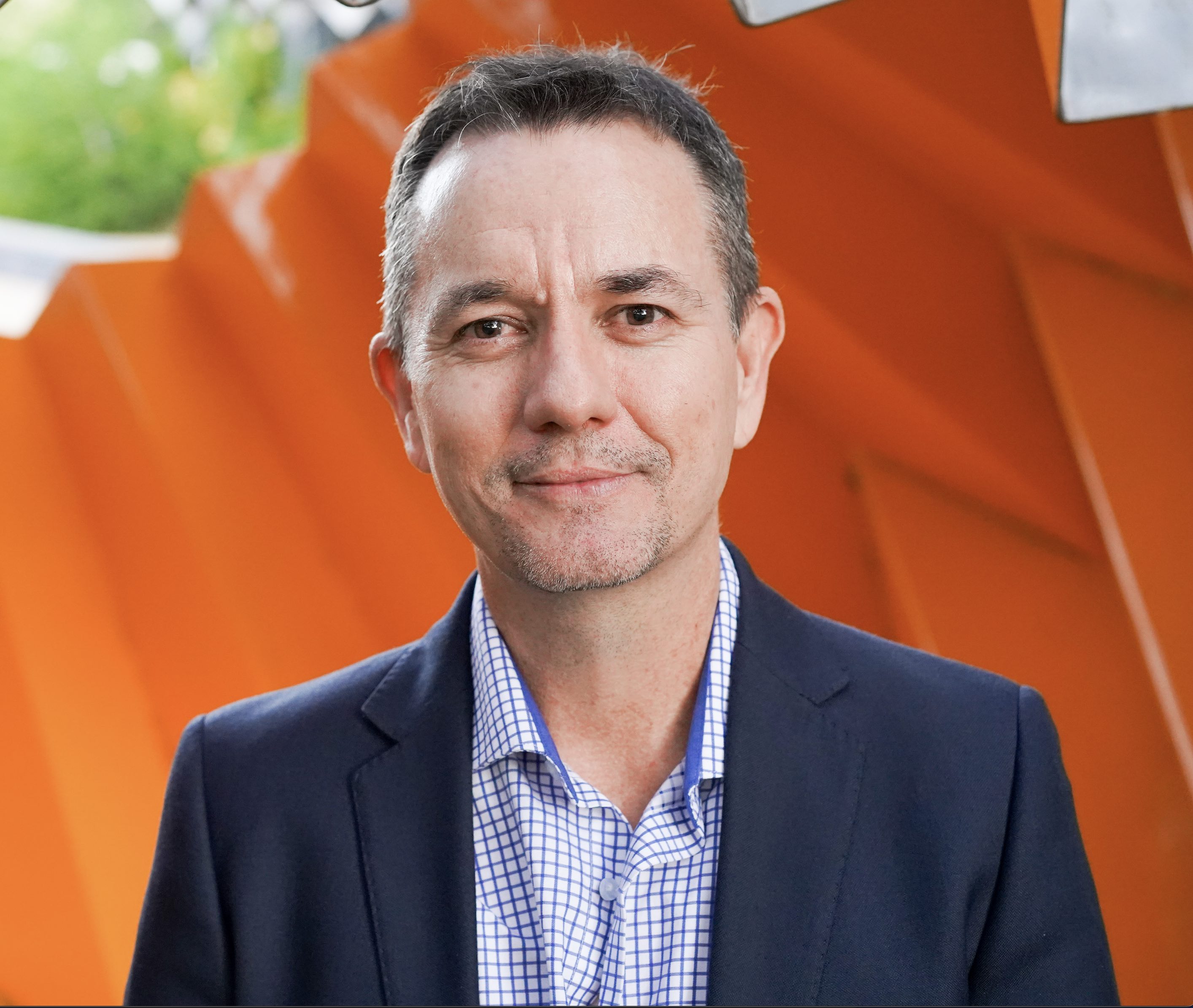
Ron White
- Deputy Vice Chancellor, Education
- ronald.white@jcu.edu.au

Andrea Lynch
- Dean, Centre for Education and Enhancement
- andrea.lynch@my.jcu.edu.au
Positrons in biosystems (Old ID 26263)
This project aims to improve our understanding of the damage processes in Positron Emission Tomography (PET). PET is a widely used medical imaging technique, but there are gaps in our understanding of the underlying interactions, in particular in the case of the radiation damage induced during the process. By using new models incorporating accurate descriptions of interactions processes, verified by experimental measurement, this project will develop a new model of positron transport in PET. The project will allow validation of predictions from the model by undertaking experiments in liquid water.
Positron Nano-Dosimetry: Fundamental Measurements of Positron Interactions and their use in State-of-the-Art Modelling of Positron Transport (Old ID 21333)
This proposal will provide unique experimental and theoretical information on how positrons - the electron antiparticle - interact with matter, in particular with biologically important molecules. This data will be used in a unique set of modelling approaches which will provide, for the first time, an insight into how positrons are transported through gases, liquids and ultimately, soft matter. It will thus have important ramifications for diagnostic tools such as Positron Emission Tomography. The fundamental research will also shed light on one of the key 'mysteries' of life - why the biological building blocks of life possess a definite "handedness", or chirality.
Improving the accuracy of weed killing robots with new image processing algorithms and near infra-red spectroscopy techniques (Old ID 23146)
Automated weed species recognition remains a major obstacle to the development and industry acceptance of robotic weed control technology. Particular problems occur in rangeland applications, including high light variability and weed-camera distance variability, which cause camera dynamic range problems, image blurring, and occlusion by other plants. This project aims to develop robust image recognition systems combined with Near Infra-Red spectroscopic methods for these complex rangeland environments with special emphasis on the broad-acre grazing pastures in North Queensland. The developed imaging systems will be suitable for all weed killing applications with particular emphasis given to foliar spot-spraying and Herbicide Ballistic Technologies.
Electron transport and scattering within the plasma-liquid interface (Old ID 27888)
The synergistic interaction of low-temperature plasmas with liquids and biological matter has unearthed various technological applications in water treatment, agriculture, biofuels and medicine. Predicitive control of these multiphase plasmas is essential to unlocking the potential of these applications, and this requires predictive models. The absence of the relevant non-equilibrium transport theory describing electrons in these multiphase environments together with fundamental data describing electron interactions with biological and liquid matter severely limits this. The project will develop a state of the art transport model informed by world first measurements of electron cross-sections for biomolecules, radicals and liquids.
An Advanced Ultrafast Laser Spectroscopy Facility in Queensland (Old ID 27154)
The project aims to establish a world-class ultrafast laser spectroscopy facility to investigate how molecules interact with visible or ultraviolet light. Light-matter interactions are key to energy generation in nature through photosynthesis as well as technologies we use on a daily basis including optical communications and displays. This project expects to generate new knowledge in on how light interacts with matter at the molecular level. Expected outcomes of the ultrafast spectroscopic measurements will be understanding the fate of light absorbed by or generated in different materials. Application of the knowledge gained will enable the design of materials for more efficient technologies such as solar cells, lighting, and sensors.
Electron scattering and transport for plasma-liquid interactions (Old ID 23301)
The project addresses the emerging technologies associated with the interaction of plasmas with liquids and biological matter, including plasma medicine. The project expects to generate new knowledge on the role of electron-induced processes through the development of complete and accurate sets of microscopic cross- sections for electrons with biomolecules within tissue. This microscopic data will inform new microscopic models for non equilibrium electron transport in liquids and biological matter, and its coupling to plasmas. The expected outcomes of this project include progress towards the optimization of safety/efficacy of future generation plasma medicine devices through detailed understanding of plasma-biological tissue interactions.
Electron scattering and transport in simple liquid mixtures
- 2024
- IOP Publishing
- Researchers:Greg BoyleRon White